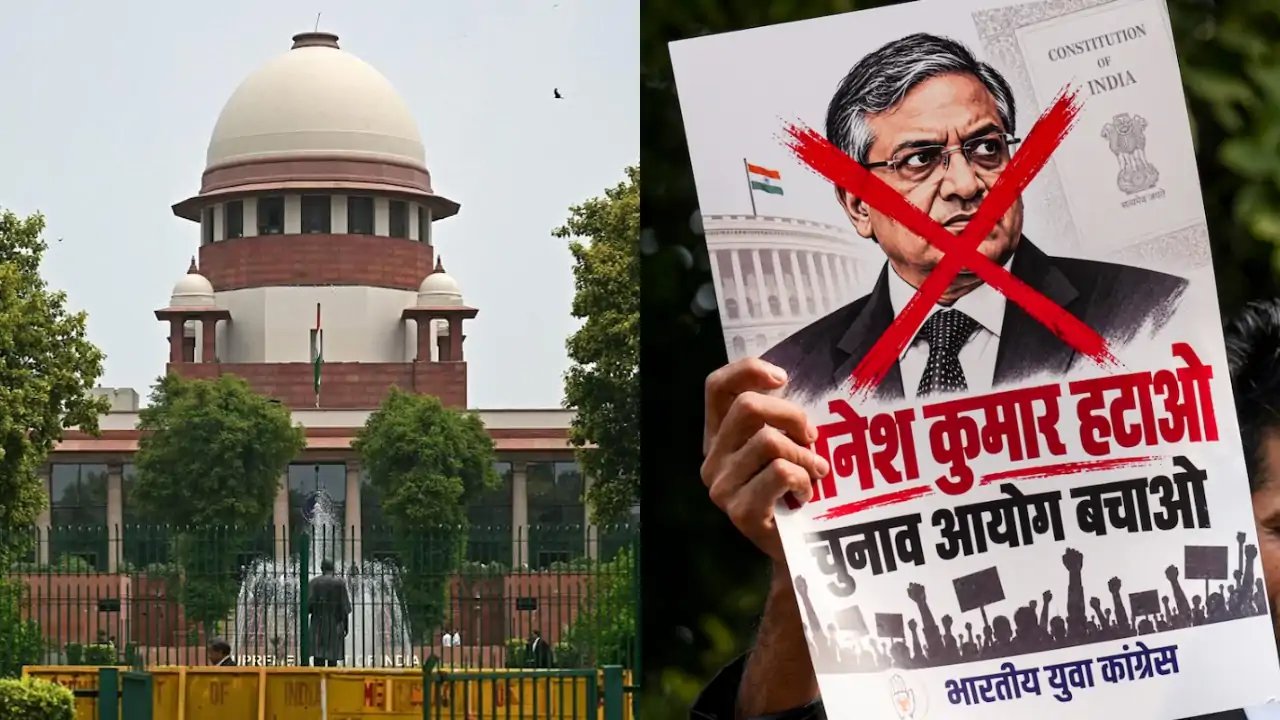
The bench of Chief Justice Surya Kant, Justice Joymalya Bagchi and Justice V. Mohana is set to examine a petition filed by Patna lawyer Rakesh Kumar Singh and advocate Shailendra Mani Tripathi, who argue that Kumar has acted unilaterally without the concurrence of Commissioners Sukhbir Singh Sandhu and Vivek Joshi. The petition cites 14 instances in the past ten months where the two commissioners formally objected to decisions on Special Intensive Revision of electoral rolls, yet the orders were issued under Kumar’s name.
The lawyers allege that Kumar introduced changes to Form 6— the voter registration form— and upgraded the EC’s software to include ancestral details without following the statutory amendment process. They claim the alteration was made without the required majority approval, violating Section 18 of the Chief Election Commissioner and Other Election Commissioners Act, 2023.
In response, the Election Commission maintains that divergent opinions are normal in deliberations and that all orders carry full legal sanction. The Union Law Ministry, the EC, and senior poll panel official Maneesh Garg are named as parties, with the Commission asserting that its decisions remain valid under existing statutory procedures.
The petition also highlights a lapse in Goa where the software failed to restore 97 eligible electors, and in West Bengal where more than 16.10 lakh appeals were filed against voters whose names were restored by judicial officers— appeals that neither Commissioner nor the West Bengal chief electoral officer sanctioned.
The Supreme Court has instructed that, pending the final hearing, Kumar should not exercise the functions of Chief Election Commissioner, and that the remaining commissioners must act by unanimous decision. A judgment is expected within the next month, after which the Court will decide whether to suspend Kumar and mandate a new appointment process involving the Chief Justice of India.