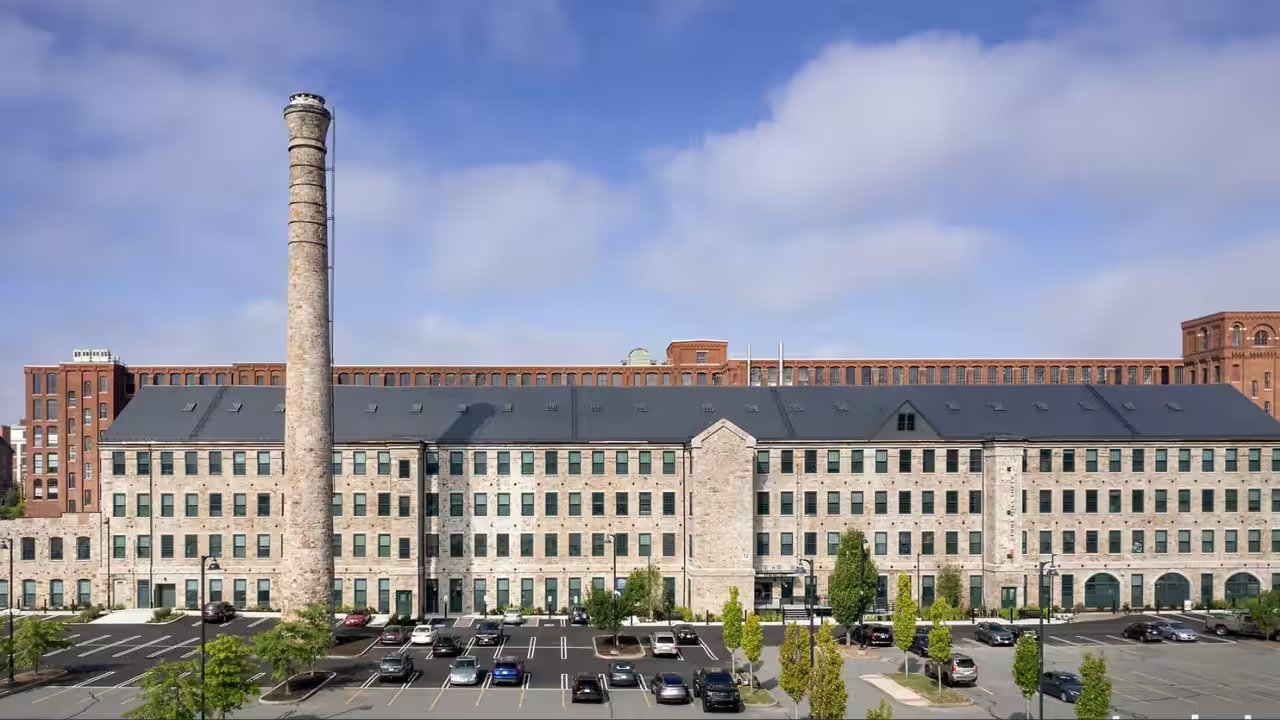
The stone walls of the Abbott Lawrence mill, silent for decades along the Merrimack River, finally echo with the sound of modern life. After a $53 million (£41 million) overhaul, the 170-year-old industrial giant stands reborn as Stone Mill Lofts. This isn’t just a renovation; it’s a resurrection of a piece of New England’s turbulent industrial past, now housing 86 residents.
Built in 1848 by industrialist Abbott Lawrence, the facility once churned out water turbines and heavy machinery. It sat empty for years, a ghost of the manufacturing boom. Now, National Park Service case studies confirm the transformation is complete. The project secured federal and state historic tax credits, with $44 million of the work qualifying for rehabilitation funding.
Housing remains the tightest constraint in the region. The developers carved out 69 of the 86 units for affordability. Fifty-eight are reserved for low-income residents, while 11 serve very low-income families. The remaining 17 units rent at market rates. Inside, the original timber ceilings and wide wooden floors remain, preserving the building’s character while serving a new generation.
Engineering posed a serious challenge. The mill sits directly beside the river, making it vulnerable to flooding. Contractors raised the entire ground floor by 12 inches, lifting living spaces above the designated floodplain. They also installed three-pane windows and thick insulation in the exterior stone. The result is one of the first fully electric multi-family developments in Massachusetts, using heat pumps to cut utility costs.
Residents will share a community lounge, work-from-home pods, and an educational exhibit detailing the mill’s history. The project stands as a practical answer to the housing crisis, proving that adaptive reuse can deliver both economic viability and social equity. As the first tenants move in, the mill’s legacy shifts from production to shelter.