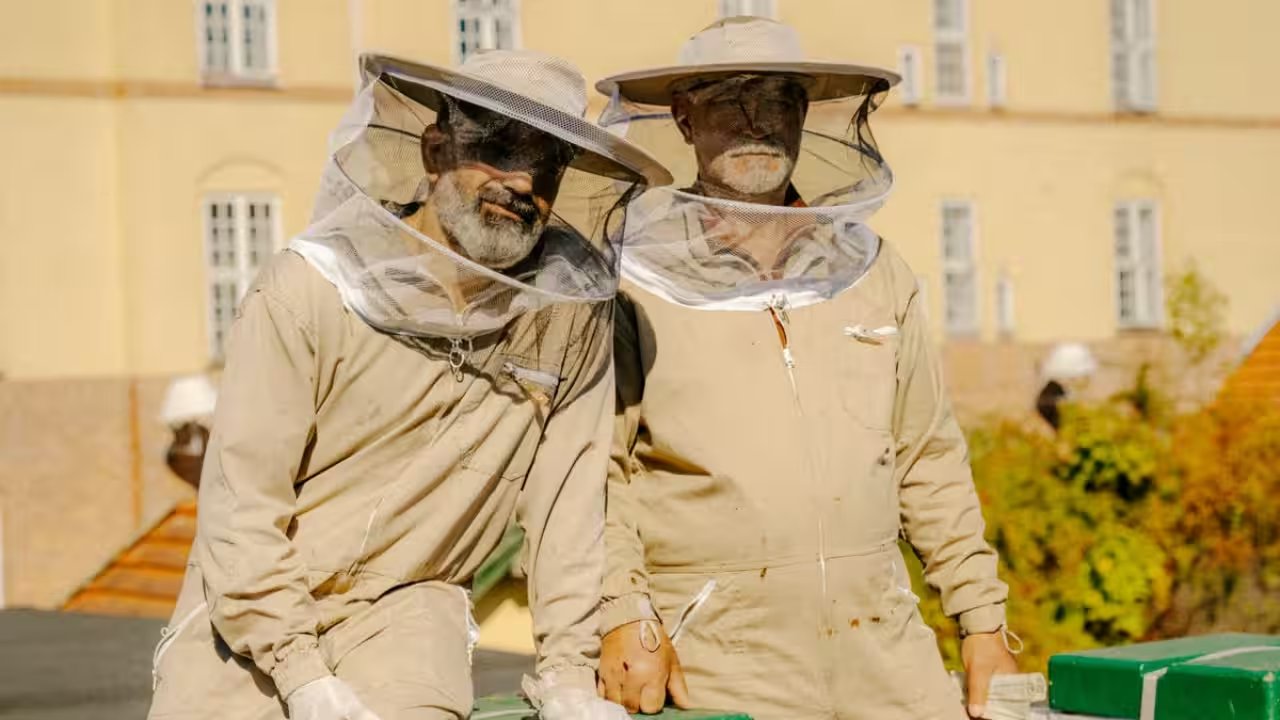
Founded in 2010 by British anthropologist Oliver Maxwell, ByBi began as a rooftop experiment aimed at giving marginalized residents a way to learn practical skills. Maxwell, who first observed the potential of bees to teach responsibility, envisioned a venture that would merge environmental stewardship with social inclusion. The pilot project, built on a vacant roof in the city center, was later expanded to other rooftops and public spaces.
Today, ByBi partners with local businesses, city authorities and community groups across the capital. Companies can sponsor a hive on their premises, while ByBi supplies the bees, manages the hives, harvests honey and handles processing and distribution. In an interview with The Guardian, Maxwell explained that the model challenges conventional productivity metrics by equating care for nature with value creation for people.
The program has trained more than 300 individuals since 2010, many of whom were unemployed or had been on the margins of the labour market. Participants receive hands‑on instruction in hive maintenance, honey extraction, packaging and sales, and are then placed in seasonal work that helps them build confidence and earn a living. According to ByBi’s own data, a sizeable proportion of alumni have secured permanent employment or enrolled in educational programmes.
The success of ByBi has sparked interest beyond Denmark. City planners in Brussels, Berlin and Manchester have requested detailed briefings to assess how a similar relational‑economy model could be implemented in their own urban landscapes. A joint study slated for early 2027 will evaluate the feasibility and scalability of such initiatives across European cities.