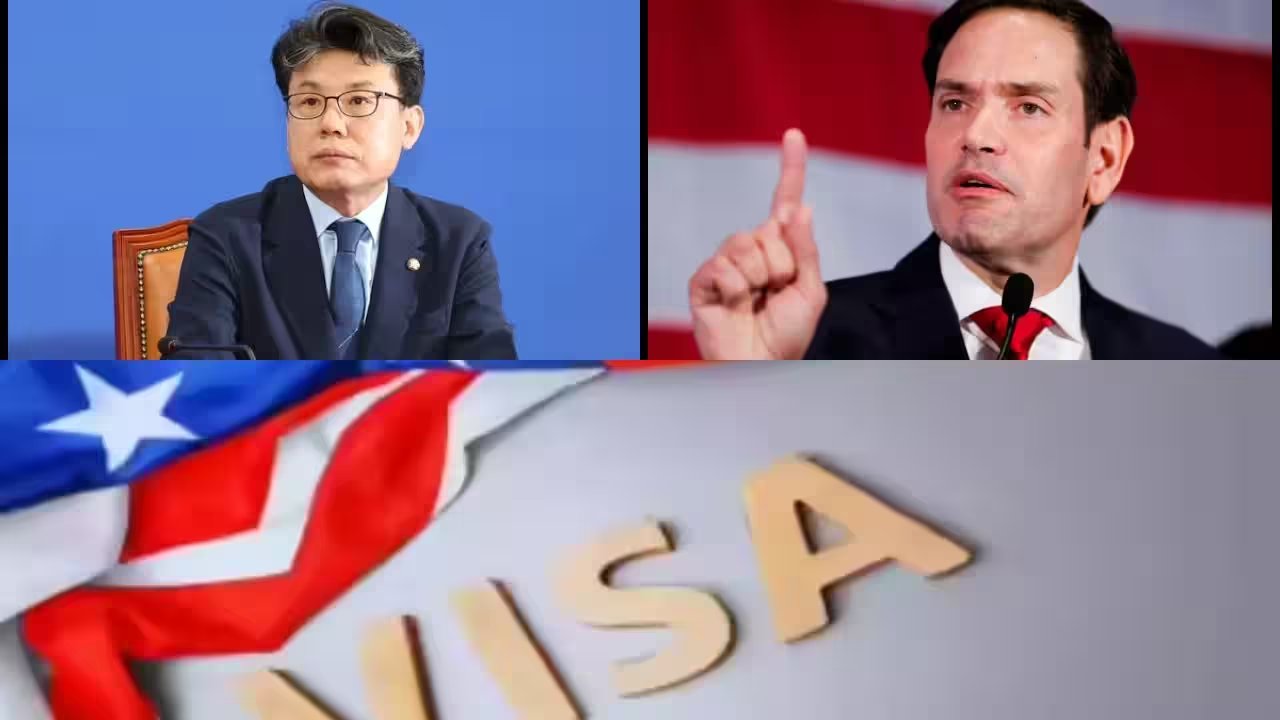
Jin Sung-joon, chairman of South Korea's National Assembly National Defense Committee, held an A-2 visa in his hand on October 31. The document arrived 72 hours after US authorities had formally rejected his application. The turnaround was not organic; it was the direct result of diplomatic muscle flexed by both Seoul and Washington.
The initial refusal, announced by Jin via Facebook on October 28, cited a 1991 conviction under South Korea’s National Security Act. Jin had been sentenced to three years in prison for organizing a group during his military service that spread anti-American and pro-North Korean views. He argued the case was moot, noting he had visited US Pacific Command in March 2014 without incident and had received a presidential pardon in 1995.
Seoul reacted swiftly. Defence Minister Kang Shin-chul raised the issue with US Defence Secretary Pete Hegseth during a meeting in the Philippines on October 28. Two days later, Foreign Minister Cho Hyun met with Rubio on the sidelines of the G20 foreign ministers' meeting in Atlanta. Rubio acknowledged the specific visa issue in a press conference on October 31, describing it as an individual matter involving behavior from decades ago. "We'll work through that at a bilateral basis," Rubio stated, avoiding a public debate on the merits of the case.
By the end of that day in Atlanta, the embassy in Seoul had processed the visa. Jin departed for Hawaii on November 1 with a bipartisan group, including People Power Party lawmaker Lim Jong-deuk. The delegation is scheduled to meet senior US military officials to discuss bilateral security cooperation, a conversation that now proceeds under the shadow of this administrative hiccup.