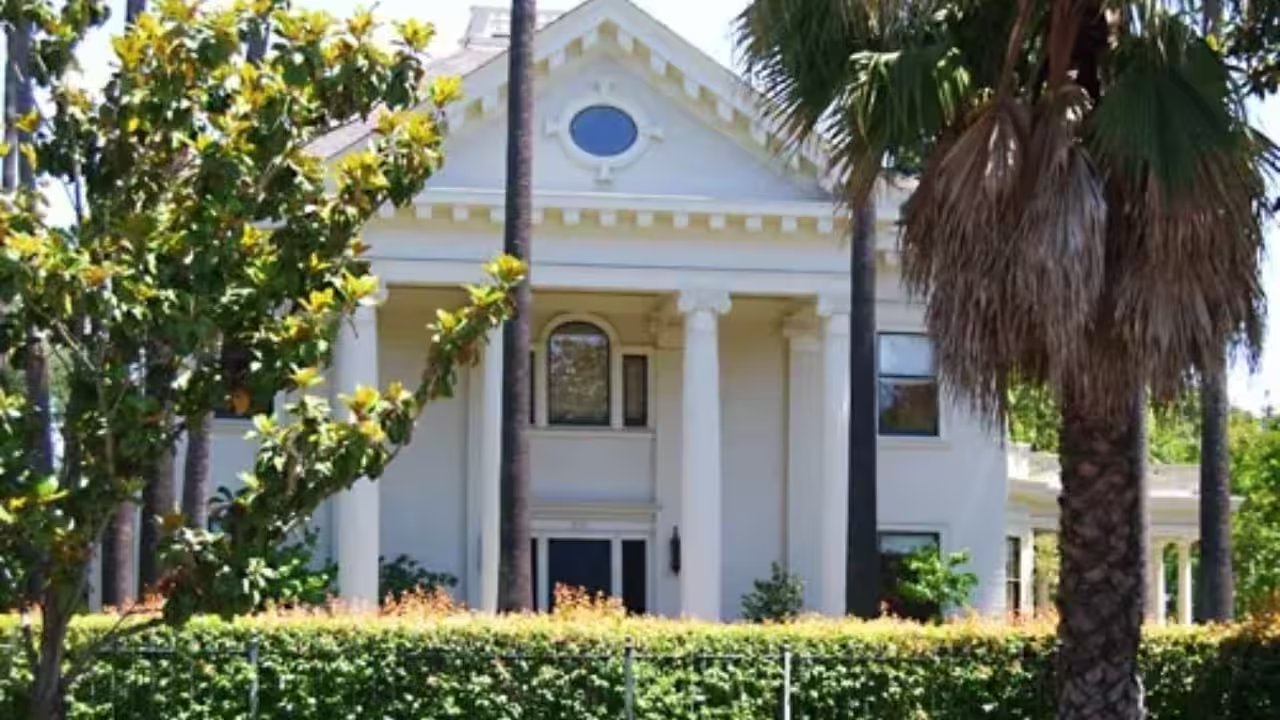
A 1904 Neoclassical mansion on Palo Alto’s University Avenue is asking $19.988 million. The Squire House, a white-columned estate that survived a near-demolition crisis in the 1970s, is back on the market after sitting off-list since 1999. DeLeon Realty currently holds the exclusive listing for the 7,794-square-foot main residence and its 600-square-foot guest house.
The price tag reflects more than just square footage. It’s a direct result of the community’s 1970s intervention. When a buyer planned to raze the home for four new structures, the Palo Alto Historical Association rallied neighbors. Local Girl Scouts even held bake sales to help raise the $90,000 needed for the city’s intervention. That fight earned the house California Historical Landmark No. 857 status in 1972.
Built for John Adams Squire, a Stanford classics scholar and former meat-packing heir, the home embodies his academic passions. Architect T. Paterson Ross designed it in the Roman Classic Revival style, featuring Ionic columns and a triangular pediment. Inside, the interiors retain quarter-sawn oak floors and leaded-glass windows. Historical accounts note the attic served as a roller-skating rink for Squire’s three daughters—a detail that adds a layer of domestic history to the grand façade.
The current listing highlights modern amenities layered over the historic shell. The five-bedroom, six-bathroom layout includes a marble kitchen, a private study, and a finished lower level with a game room and theatre. Outside, a swimming pool and trellis-covered terrace with a fireplace anchor the nearly one-acre Crescent Park lot. A façade easement remains in place, requiring city approval for any exterior changes—a legal nod to the preservation victory of 1972.
This sale tests the market for high-end historic properties in one of the world’s most expensive zip codes. The previous owner, who bought the home in 1999, has held it for over two decades. As Palo Alto continues to balance development with heritage, the Squire House’s fate will likely draw significant attention from both collectors and preservationists. The next step is buyer interest; the asking price suggests only a select few will be in the running.