BEIJING — China accused the United States on Thursday of concocting bogus espionage conspiracies to justify an aggressive technological blockade, dismissing American intelligence allegations linking Nvidia Chief Executive Jensen Huang to a Chinese spy operation.
Beijing rejected the claims outright.
Foreign Ministry spokeswoman Mao Ning told reporters at a press briefing in Beijing that Washington must abandon manufactured security scares aimed at suffocating the country’s high-tech sector, describing the controversy surrounding the American semiconductor giant as a coordinated smear campaign.
China's technological progress is driven by independent innovation and open cooperation. The US side should stop fabricating such 'spy' narratives as a pretext for imposing a technological blockade.
Mao Ning, Chinese Foreign Ministry Spokeswoman
The dispute erupted after reports emerged that Huang, who co-founded Nvidia and turned it into the world's preeminent supplier of artificial intelligence silicon, had become embroiled in a suspected intelligence operation. Huang acknowledged an extramarital affair involving Alice Huang, a former executive at Singapore-based Megaspeed.
United States security officials allege Alice Huang maintained ties to Chinese intelligence services while pursuing the relationship with the chip executive.
Beijing fired back immediately, branding the allegations "groundless speculation" designed to manipulate public opinion and weaponize corporate executive conduct for geopolitical advantage.
| Chip & Espionage Dispute Parameter | Official Status / Fact |
|---|---|
| Corporate Executive Implicated | Jensen Huang (Co-founder & CEO, Nvidia) |
| Alleged Intelligence Asset | Alice Huang (Former Executive, Megaspeed Singapore) |
| Accusing Authority | United States Intelligence Officials |
| Chinese Ministry Response | "Groundless speculation" & fabricated narrative |
| Export Hardware Under Debate | Nvidia H200 Artificial Intelligence Accelerators |
| Upcoming Diplomatic Engagement | Trump-Xi Bilateral Talks at APEC (Shenzhen) |
Huang has spent years walking a fine geopolitical wire, lobbying relentlessly across Capitol Hill and the White House against blanket export restrictions that choke off Nvidia's sales to Chinese commercial buyers. His pushback frequently pitted him against national security hawks across both American political parties who warn that cutting-edge AI accelerators will supercharge China’s military modernization.
Yet the executive secured major ground last year.
US President Donald Trump bypassed bipartisan congressional resistance to clear Nvidia's advanced H200 graphics processors for shipment to Chinese customers, overruling national security factions determined to lock down domestic processor dominance.
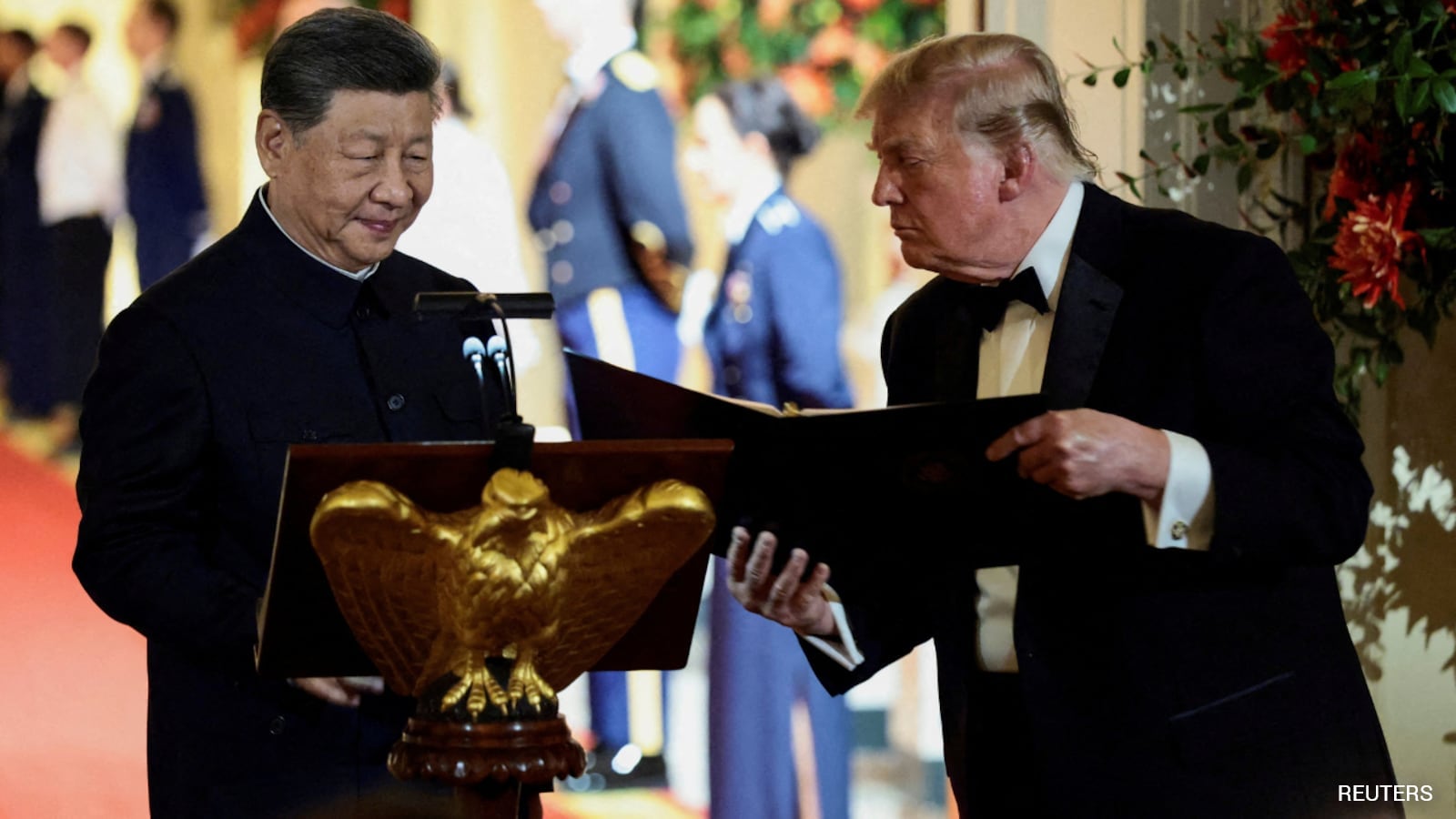
The diplomatic fireworks now set the stage for an explosive face-to-face encounter. Trump and Chinese President Xi Jinping are scheduled to convene next week in southern China at the Asia-Pacific Economic Cooperation summit in Shenzhen, where semiconductor sovereignty and trade sanctions are poised to dominate the bilateral docket.