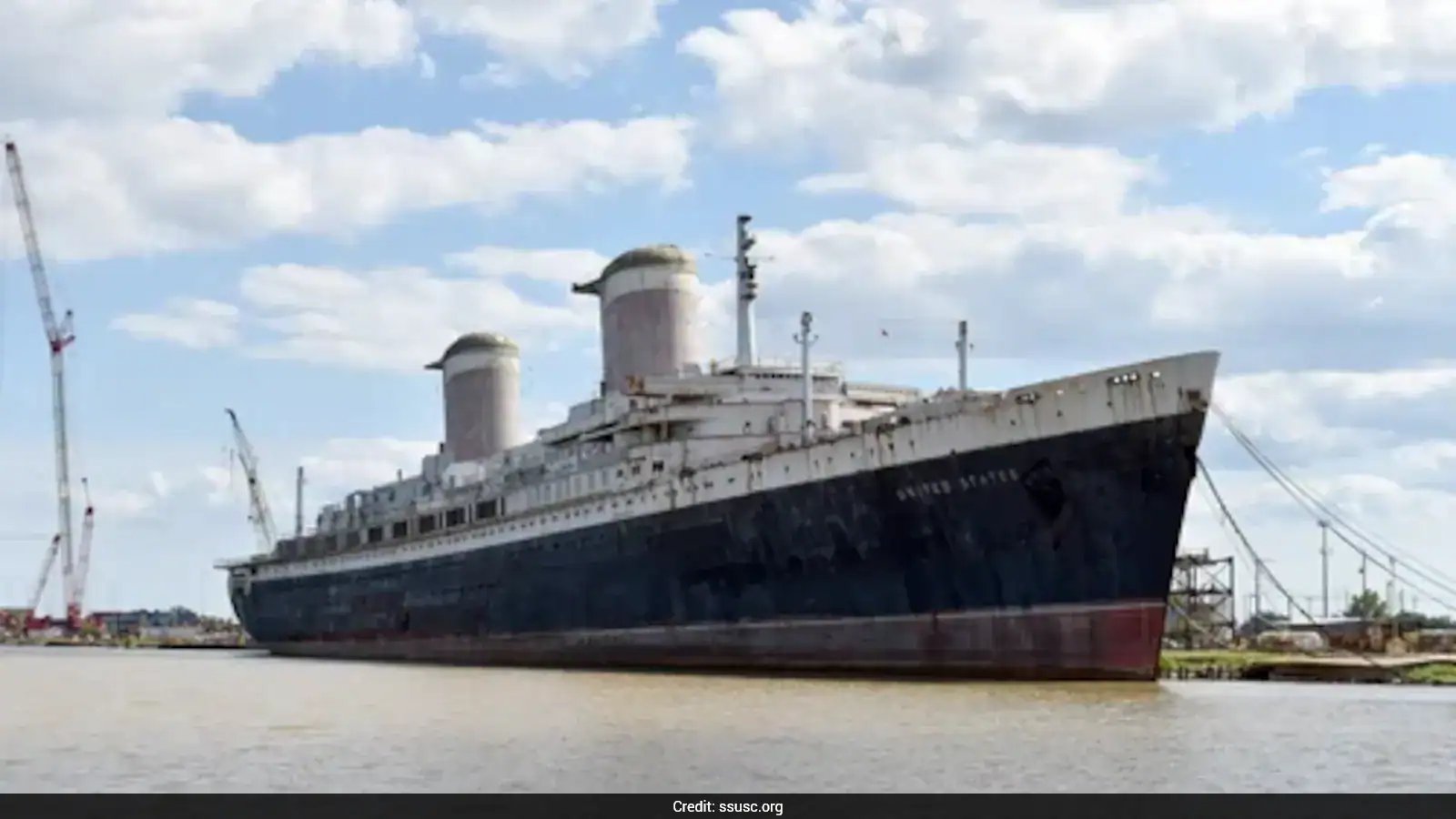
DESTIN, Fla. — The S.S. United States plunged 180 feet to the floor of the Gulf of Mexico on Wednesday, November 11, concluding a 73-year saga that took the vessel from Cold War naval triumphs to the seabed off the Florida panhandle.
Crews began scuttling the historic liner around 1 p.m. It went down smoothly. The 1,000-foot vessel—longer than the Titanic and once the fastest commercial liner afloat—will now anchor what marine authorities project will become the largest artificial reef system on the planet.
Designed by naval architect William Francis Gibbs, the ship conquered the Atlantic on its maiden round-trip voyage in July 1952, shattering transatlantic speed records that remain unbeaten to this day. Gibbs built the hull with unprecedented power and paranoia. Cold War defense planners classified its top speed as a state secret, viewing the liner as an emergency troop transport capable of outrunning enemy submarines.
You can't set her on fire, you can't sink her, and you can't catch her.
William Francis Gibbs, Naval Architect
During the 1950s and 1960s, the ship served as a transatlantic cultural corridor between New York and Western Europe. Cocktail lounges buzzed. Orchestras played nightly. Its passenger manifests carried mid-century titans, including Marilyn Monroe, Walt Disney, Duke Ellington, and Princess Grace of Monaco. In 1963, armed couriers escorted Leonardo da Vinci's Mona Lisa across the Atlantic inside its reinforced bulkheads for exhibition in the United States.
Yet speed could not outrun aviation. Commercial jet travel gutted transatlantic ocean liner traffic by the late 1960s.
The ship was pulled from commercial service in 1969. It drifted through decades of legal limbo and deferred maintenance, rusting at a Philadelphia pier while non-profit caretakers, the SS United States Conservancy, fought to repurpose the hull into a hotel, museum, or waterfront commercial complex.
Those plans collapsed. Eviction proceedings forced the vessel from its Philadelphia berth in 2024, leaving the conservancy without a harbor. Facing scrapping yards, the organization accepted a buyout from Okaloosa County, Florida, which purchased the vessel for $1 million to spearhead an offshore marine habitat project under natural resources chief Alex Fogg.
| Specification / Parameter | Official Record |
|---|---|
| Maiden Voyage Record | July 1952 (Fastest Transatlantic Crossing) |
| Purchase Price (2024) | $1,000,000 (Okaloosa County, Florida) |
| Relocation Route | Philadelphia to Mobile, Alabama to Destin, Florida |
| Scuttle Depth | 180 feet below surface, Gulf of Mexico |
| Final Mission | World's Largest Artificial Marine Reef |
Moving a dormant vessel of this scale required months of logistical clearance. Before tugs could pull the hull south in February 2025, the U.S. Coast Guard conducted structural and stability reviews to prevent an accidental sinking in transit. When Coast Guard Captain Kate Higgins-Bloom formally handed Fogg the transport clearance, the county official declared he would frame the paperwork.
Tugs towed the ship to an Alabama shipyard in Mobile, where industrial contractors launched an exhaustive environmental remediation campaign. Teams from Coleen Marine—headed by Coleen O’Malley and Tim Mullane, veterans who have scuttled roughly 140 vessels throughout their careers—stripped out hazardous wiring, glass, overhead pipes, and residual fuel from internal tanks to ensure diver safety and marine environmental protection.
"Every ship is different, but every ship is the same," O'Malley said during the prep work.
Minutes before water breached the hull on Wednesday, Fogg described the deployment as an emotional milestone. "I really don't know how I'm going to feel," Fogg said. "Right now it's kind of surreal." He called the scuttling the vessel's "most honorable next chapter."
Fogg plans to conduct the maiden dive down to the wreck once sediment settles, establishing baseline mapping for recreational divers and marine biologists who will track marine colonization across the hull over the coming decades.