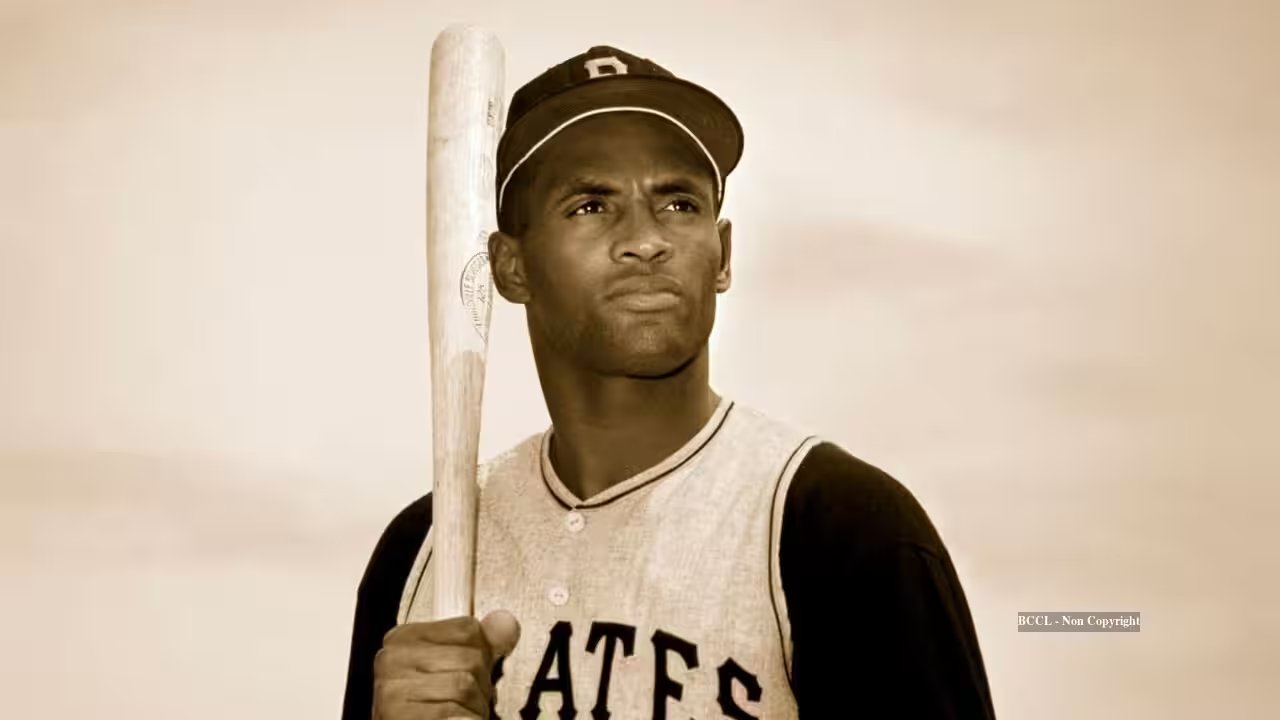
The U.S. Supreme Court turned away a $45 million damages claim by the sons of baseball icon Roberto Clemente on November 9, terminating a multi-year legal clash over Puerto Rico’s commemorative vehicle license plates.
The justices issued no explanation.
By spurning the petition, the nation's highest bench left intact lower-court decisions that insulated the territorial government from constitutional claims. Roberto Clemente Jr., Luis Roberto Clemente, and Roberto Enrique Clemente had sued to recover $45 million in damages alongside $3.15 million for alleged trademark infringement after San Juan monetized their late father's image, uniform number, and athletic milestones without securing their consent.
The conflict ignited in 2022 when Puerto Rico launched special vehicle registration tags and plates honoring the 50th anniversary of Clemente's death. The metal tags featured his portrait, his iconic No. 21, and an explicit salute to his 3,000 career hits.
Motorists paid mandatory surcharges of $21 and $5 to secure the commemorative items. The initiative generated $15 million for Puerto Rico's treasury.
Yet the Hall of Famer’s sons maintained that officials never consulted them before printing the plates. The family asserted that the proceeds rightfully belonged to their private corporate entities—businesses organized to police the Roberto Clemente trademark, protect his legacy, and fund international charitable initiatives.
And the timing struck a raw nerve. The family argued that Puerto Rico extracted those fees while local residents wrestled with severe economic strain as the island clawed its way out of bankruptcy.
The sons pressed their offensive in the U.S. District Court in San Juan, charging that the government breached the Fifth Amendment's prohibition against seizing private property without just compensation. They demanded an injunction halting all future production of the plates alongside the multimillion-dollar financial payout.
The case pivoted on a core constitutional question: Can intangible assets—such as a personal trademark or likeness—be claimed as protected property under the Fifth Amendment in the same manner as physical land? The family's attorneys argued that the lower courts' narrow reading opened the floodgates for public agencies to confiscate valuable intellectual property at will.
Puerto Rico pushed back in its Supreme Court briefs, maintaining that the First U.S. Circuit Court of Appeals had adhered to long-standing precedent rather than crafting a blanket exclusion for intangible assets.
| Case Parameter | Legal & Commercial Details |
|---|---|
| Accused Entity | Government of Puerto Rico |
| Claimants | Roberto Clemente Jr., Luis Roberto Clemente, Roberto Enrique Clemente |
| Damages Sought | $45 million in damages; $3.15 million for trademark infringement |
| Revenue Collected | $15 million via $21 and $5 vehicle registration surcharges |
| Constitutional Basis | Fifth Amendment Takings Clause |
| Final Disposition | Certiorari denied; First Circuit dismissal affirmed |
The San Juan federal judge originally dismissed the lawsuit after concluding Puerto Rico held sovereign immunity. The First Circuit in Boston subsequently affirmed that dismissal in part, ruling that the Clemente family could not deploy the Fifth Amendment's takings clause to claim damages for intangible property like trademarks. The Supreme Court's refusal to intervene preserves that boundary.
The legal defeat does not dull Clemente’s athletic stature across Latin America and the United States.
He commanded right field for the Pittsburgh Pirates across 18 seasons from 1955 through 1972, collecting 15 All-Star selections, two World Series championships, and the 1971 World Series Most Valuable Player award. He closed his career with a .317 batting average, 240 home runs, 1,305 runs batted in, and exactly 3,000 hits.
He was an undisputed icon. The National Baseball Hall of Fame waived its traditional five-year waiting rule to induct him posthumously in 1973.
Tragedy defined his exit. Clemente died at age 38 on December 31, 1972, when an overloaded cargo aircraft crashed into the sea off the Puerto Rican coast as he personally ferried emergency humanitarian supplies to earthquake survivors in Nicaragua.
With the Supreme Court's refusal to docket the appeal, all avenues for judicial review are exhausted, leaving Puerto Rico’s $15 million commemorative plate revenue permanently intact.