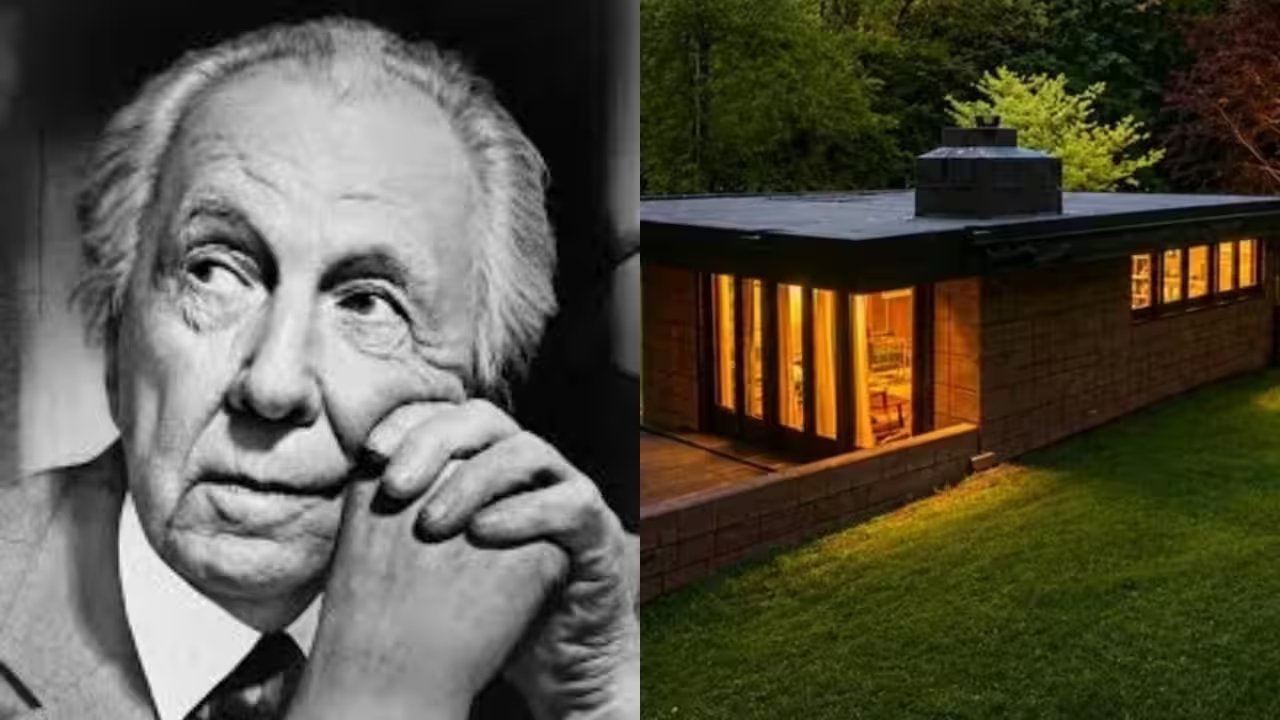
The Samuel Eppstein House in Galesburg, Michigan, just hit the market at a $2.1 million price tag. But the real story isn't the concrete blocks or the mid-century lines. It’s the cash flow. Current owners Marika Broere and Tony Hillebrandt have turned the 2,500-square-foot residence into a lucrative short-term rental, raking in roughly $200,000 a year while living there only half the time.
Built in 1953 for Upjohn scientists Samuel and Dorothy Eppstein, the home is one of just four structures in The Acres, a 70-acre community designed by Frank Lloyd Wright. Wright originally planned a larger collection, but only four homes saw completion. The Eppsteins worked closely with the architect, even casting some of the distinctive red concrete blocks themselves. That hands-on history gives the property a depth of provenance that standard real estate listings rarely touch.
The Broere-Hillebrandt duo purchased the property in 2016 when it had fallen into disrepair. Their restoration focused on modernizing utilities—adding air conditioning and updating bathrooms—while preserving the original wood surfaces and expansive windows. They combined two smaller bedrooms into a single primary suite, a practical move for long-term tenants. Much of the original furniture is included in the sale, adding a layer of authenticity for prospective buyers.
The location is as significant as the structure. Situated on two acres within the shared 70-acre landscape, the house sits among mature trees and rolling meadows. Wright’s design philosophy here was to blur the line between interior and exterior, using window placement to pull the changing Michigan landscape directly into the living spaces. For buyers, this means living inside a working architectural experiment, not just a museum piece.
The rental income stems from a mix of leisure travelers, corporate retreats, and photo shoots. Guests have flown in from across the US and internationally, drawn by the rarity of the asset. With the listing now active, the next owner will inherit both the heritage status and the established business model.