The federal government is putting taxpayer dollars behind one of the most volatile psychoactive compounds on earth.
Health Secretary Robert F. Kennedy Jr. announced Thursday that his department is awarding up to $4.9 million to prepare the first American clinical trials for ibogaine. The target is post-traumatic stress disorder, an agonizing psychological condition that drives elevated suicide and drug abuse rates among military veterans. The money will not fund direct patient dosing just yet. Instead, scientists will use the grant to solve basic pharmacological hurdles: stabilizing manufacturing, calculating precise doses, and structuring rigorous clinical trial protocols.
U.S. research on the compound stopped decades ago. Regulators locked ibogaine into the strictest federal drug schedule, bracketing it alongside ecstasy and LSD.
Derived from the root bark of a shrub native to West Africa, the substance triggers profound, multi-hour hallucinations. But the physical toll is brutal. Patients endure violent nausea, uncontrollable tremors, and vomiting. Most alarming to medical professionals, the drug disrupts cardiac electrical activity, sparking irregular heart rhythms that have turned fatal in unmonitored settings.
Yet military veterans and mental health advocates argue ibogaine succeeds where conventional medicine completely fails.
Because the substance remains federally outlawed, American research pipelines had ground to a halt. Kennedy announced a strategy to bypass that decades-long impasse: mining observational data from offshore medical operations.
The Department of Health and Human Services will ingest safety and treatment guidance from Beond Inc., a Texas-based firm that has administered ibogaine to more than 3,000 patients at its clinic in Mexico, where the botanical drug is unregulated.
That is going to allow us to dramatically accelerate the clinical trial process. We’re going to have, I think, a record drug approval process." >
Robert F. Kennedy Jr., U.S. Health Secretary
Veterans Affairs Secretary Doug Collins joined Kennedy for the rollout, framing the clinical pivot as an urgent duty to combat service-related psychological trauma.
"For veterans living with PTSD, we owe them both urgency and the best science we can produce," Collins stated, noting that early trial stages will focus relentlessly on cardiac safety profiles before doctors expand patient access. Kennedy indicated that subsequent federal funding rounds could expand trials to test ibogaine against chronic opioid addiction.
| Clinical & Regulatory Parameter | Verified Metric / Specification |
|---|---|
| Federal Pre-Clinical Grant Allocation | Up to $4.9 million |
| Primary Clinical Indication | Veteran Post-Traumatic Stress Disorder (PTSD) |
| Offshore Patient Cohort (Beond Inc.) | 3,000+ treated individuals in Mexico |
| Private Clinic Commercial Cost Range | $10,000 to $20,000 per treatment course |
| Pending FDA Psychedelic Reviews | Psilocybin and MDMA applications |
| Key Physiological Risk Factors | Cardiac arrhythmias, tremors, severe nausea |
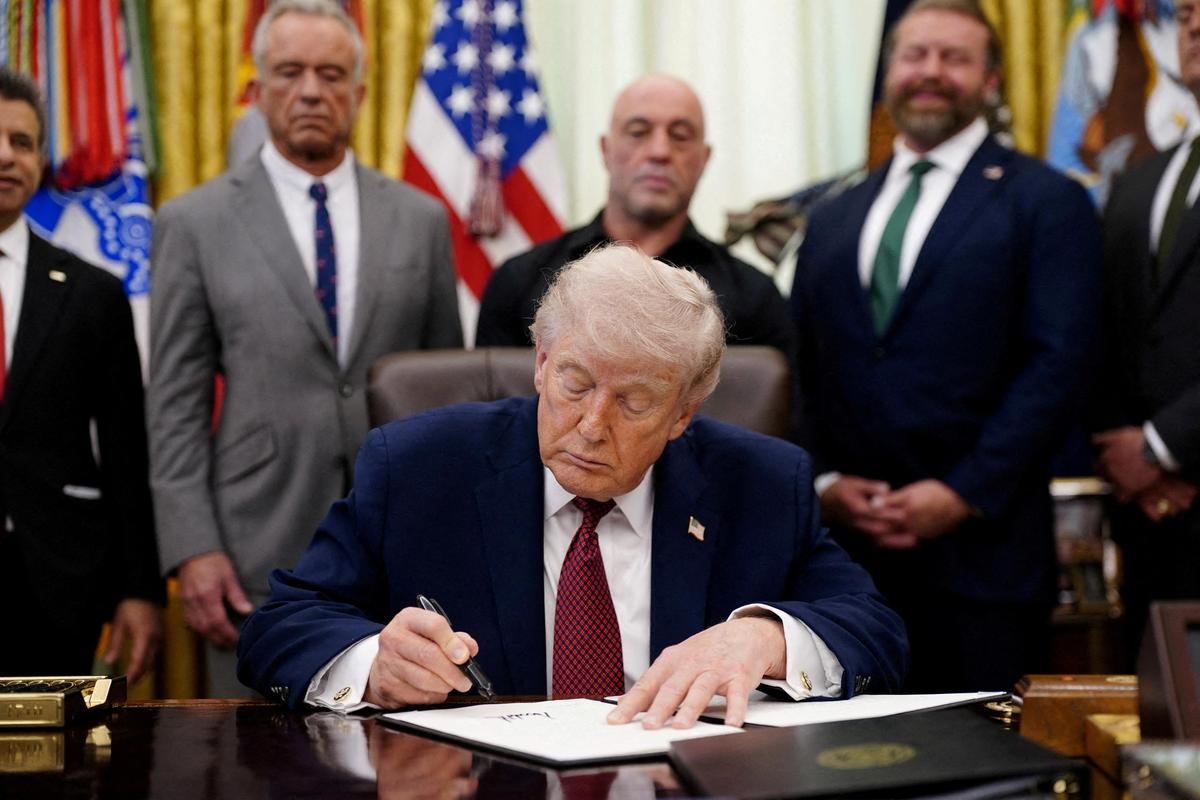
The funding marks the first major deployment under an executive order signed by President Donald Trump in April, which directed federal agencies to accelerate reviews of psychedelic medicines showing promise for severe psychiatric disorders.
That executive initiative gathered momentum after media host Joe Rogan texted Trump directly to urge action on ibogaine. Trump quickly messaged back: "Sounds great. Do you want FDA approval? Let’s do it."
For thousands of suffering veterans, offshore medical travel has been the only alternative to the black market. Private clinics across Mexico routinely charge between $10,000 and $20,000 for a single ibogaine treatment regimen. Because of the compound's cardiovascular liabilities, these specialized centers must continuously run electrocardiogram telemetry while certified trauma personnel and emergency resuscitation teams remain on standby.
The Food and Drug Administration is already weighing the medical legitimacy of synthetic psychedelics. Regulators are reviewing three separate drug applications for psilocybin—the active psychoactive agent in magic mushrooms—and MDMA. Regulatory rulings on those submissions are due within weeks or months. If those compounds pass safety thresholds, ibogaine could stand next in line.