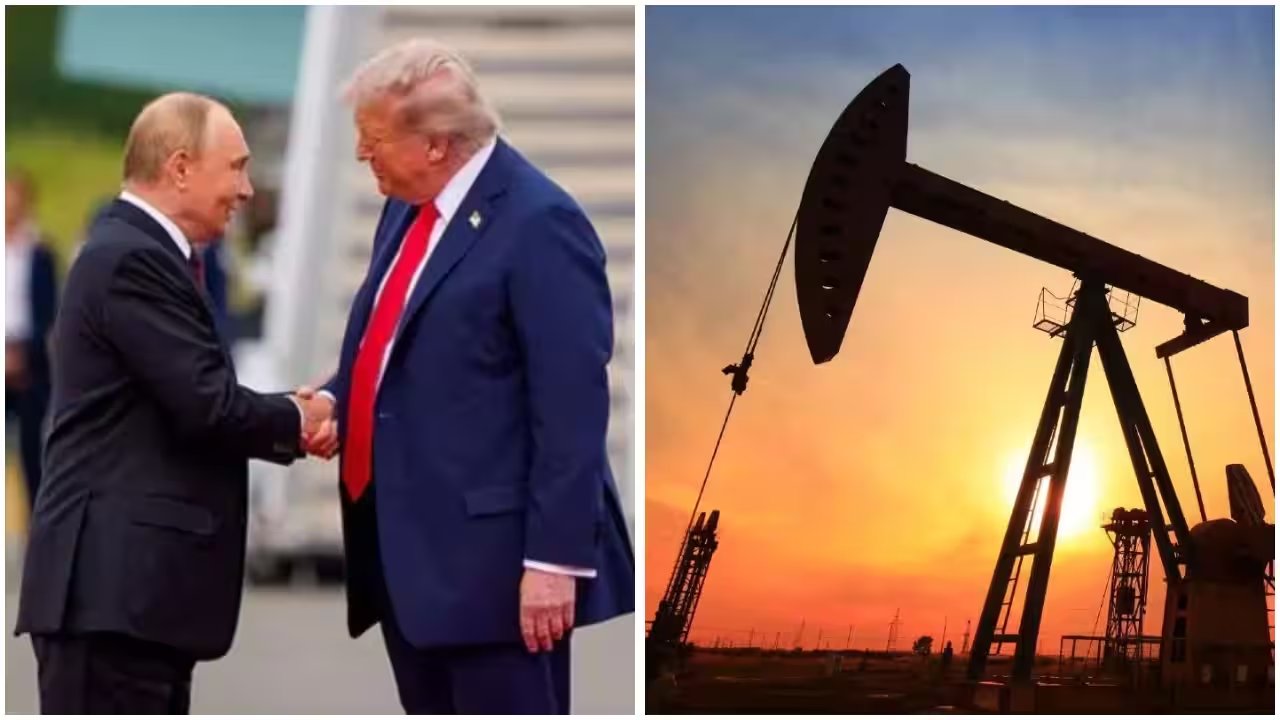
MOSCOW — Russian Foreign Minister Sergei Lavrov announced Tuesday that Moscow has begun pumping diesel toward global markets under a rare sanctions waiver negotiated with US President Donald Trump, claiming the arrangement has already arrested runaway fuel inflation.
Cargoes are moving. Prices, Moscow insists, are falling. But American ports have yet to receive a single drop.
Lavrov defended the controversial bilateral pact in an official policy essay published Tuesday in Moscow, framing the resumption of Russian refined product shipments as a stabilizing force for international energy security. Under the framework unveiled by Trump on October 9, Russia agreed to discharge an initial tranche of 300,000 metric tonnes — roughly 2.25 million barrels — of diesel into the global supply pool, followed by 500,000 tonnes in November and another one million tonnes shortly after. Lavrov reiterated that Moscow refuses to weaponize its natural wealth against geopolitical adversaries, pointing out that Russia has supplied Europe with $320 billion worth of energy resources since 2022.
"An important contribution to energy security was the agreement between the Russian and US leaders to suspend restrictions on the export of Russian diesel," Lavrov wrote. "We have already started implementing it, which immediately brought prices down."
Yet shipping manifests tell an entirely different story. Two sanctioned tankers that originally signaled destinations along the US East Coast abruptly veered off course mid-voyage, while a third vessel crossing the North Atlantic amended its New York routing to open orders. Maritime regulators and trade desks continue to hesitate, fearful of secondary sanctions and logistical entrapment. Energy market data shows US diesel futures shed roughly 11% following Trump's announcement, but retail pump prices surged to fresh highs during last week's midterm elections.
Political resistance inside the United States has hardened swiftly. New Jersey Governor Mikie Sherrill directed coastal terminal operators across the state to reject Russian-origin fuel outright, cautioning that facilities accepting the cargoes face severe legal jeopardy. On Capitol Hill, a bipartisan coalition of senators formally demanded Trump scrap the arrangement, arguing that the fuel revenue directly finances Moscow's war effort.
The US Treasury Department pushed back against the congressional revolt. Department officials confirmed that the administration's temporary waiver — which permits the sale, maritime delivery, offloading, and import of Russian diesel through April 7 — complies with federal statutes and aligns with established executive sanctions authority.
Russian Deputy Foreign Minister Alexander Pankin signaled that the Kremlin views the transaction as an opening wedge to dismantle Western isolation, noting that the fuel arrangement could serve as a foundational bridge to rebuild severed commercial ties between Washington and Moscow.
But the physical supply chain remains under violent strain at home. Ukrainian drone barrages have pounded at least eight major Russian crude refineries over the past fortnight, triggering localized diesel shortages across half a dozen Russian provinces. Ukrainian President Volodymyr Zelenskyy confirmed Kyiv will intensify strikes on Russian fuel nodes, leaving the April 7 import timeline caught between battlefield attrition and an unresolved American port blockade.