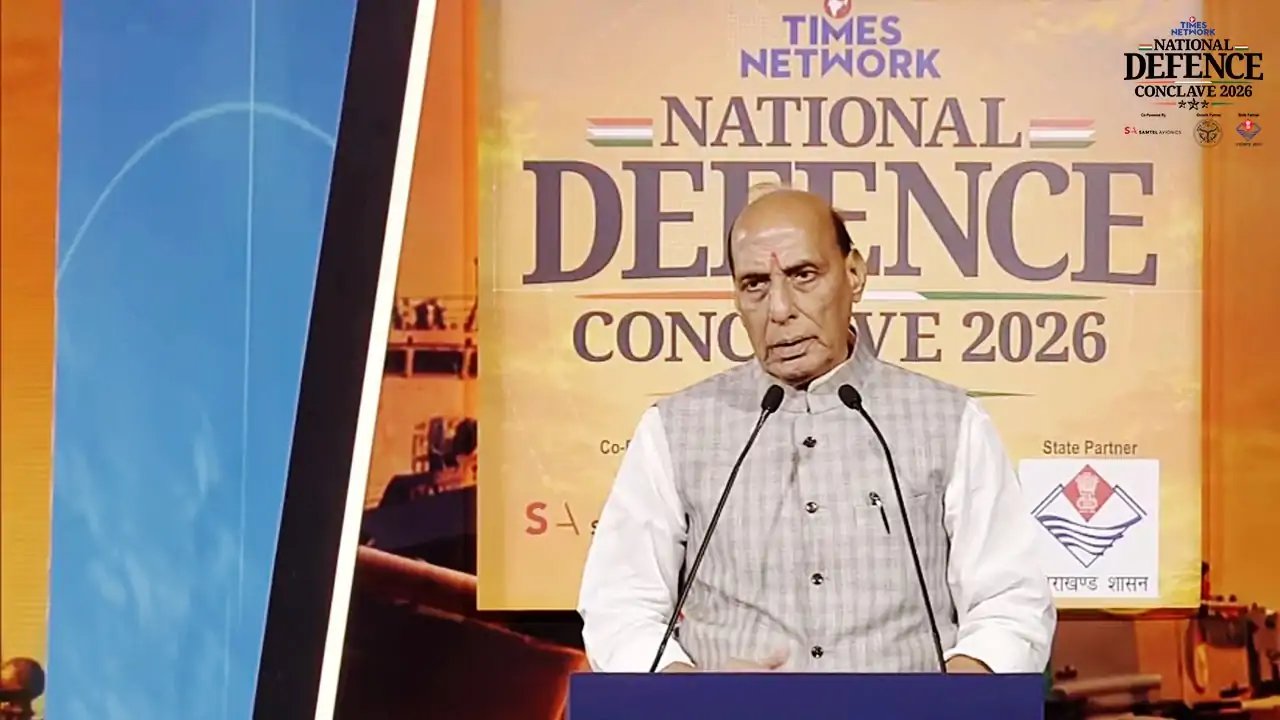
Rajnath Singh’s words cracked the calm of New Delhi’s conference room, his voice cutting through the buzz of microphones. He warned Pakistan that any ‘nefarious act’ would trigger a response stronger than the last one, a reference that sent a ripple through the audience. Singh said India’s commitment to peace should never be mistaken for weakness, but that the possibility of war can never be fully eliminated. He highlighted that the shelf life of terrorists has fallen below one year since 2014, meaning most armed groups are neutralised within months of stepping onto Indian soil.
Singh underscored that this leap in efficacy stems from reforms launched under Prime Minister Narendra Modi’s leadership. “Behind India’s newfound confidence are the reforms undertaken by our government, the changes in our working methods, and the transformation in our approach,” he said. He pointed to a new doctrine that targets not just fighters but the entire supply chain that feeds them, reaching into ‘nurseries of terrorism’ to uproot the roots of extremism.
India is also scaling up its defence manufacturing, with a ₹2 lakh crore production target set for 2026. Singh said that 75 per cent of the capital acquisition budget, roughly ₹1.39 lakh crore, is earmarked for domestic industry. He reminded the audience that in 2014, India’s defence output stood at about ₹40,000 crore, a figure that now is set to swell fifty‑fold.
Exports are a growing pillar of the industry, with bullet‑proof jackets already shipped to more than 100 countries. “We are creating an ecosystem that not only boosts India’s defence but also propels its economy,” Singh added, citing the ripple effect on small‑scale manufacturers in Gujarat and the increased employment of women in Bangalore’s electronics fabs.
Next week, the Ministry of Defence will convene a high‑level review of the procurement plan, and the government intends to unveil the detailed rollout of the ₹2 lakh crore target during the upcoming parliamentary session. In the meantime, a 12‑year‑old from Amritsar, whose family lost a brother in a terror attack in 2016, watches the news with a mix of hope and wary optimism.