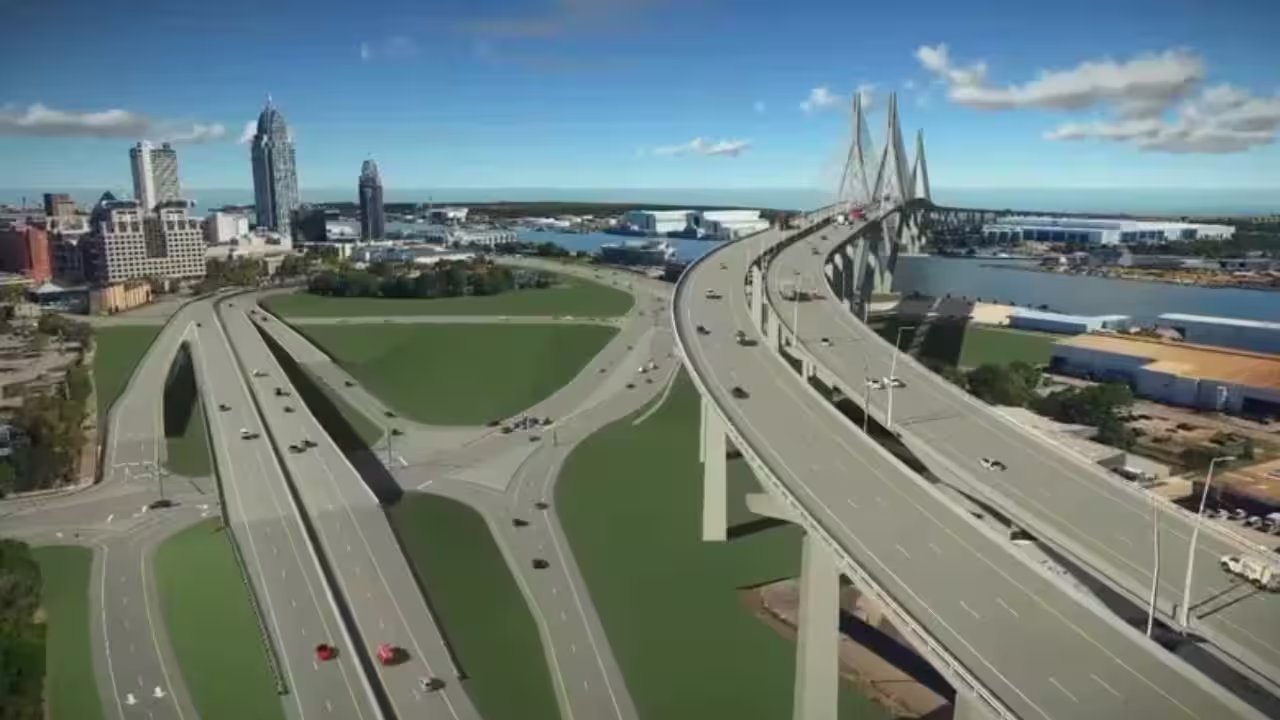
The U.S. Department of Transportation green-lit a massive $2.52 billion loan for the Interstate 10 Mobile River Bridge and Bayway project. Transportation Secretary Sean P. Duffy announced the approval, securing the final piece of financing for what is officially the largest infrastructure undertaking in Alabama’s history. The total project cost sits at $4.15 billion, combining this new federal loan with a previously awarded $550 million grant from the Federal Highway Administration’s Bridge Investment Program and state infrastructure bonds.
For decades, Interstate 10 has choked southern Alabama. The current infrastructure, built in the 1970s to handle 35,000 vehicles daily, now crushes under the weight of 80,000 vehicles. The bottleneck forces traffic through the narrow George Wallace Tunnel, creating miles-long jams during peak hours. The new design replaces this aging system with a six-lane cable-stayed bridge featuring 215 feet of vertical clearance. This height allows large container ships and oil tankers to pass freely to and from the Port of Mobile without forcing their way through low-lying roads.
Safety is the other urgent driver. Federal rules currently ban hazardous materials from the Wallace Tunnel. Chemical tankers and hazmat trucks are forced to detour through downtown Mobile streets and residential neighborhoods. The new bridge provides a direct, designated interstate route for this cargo. This move takes dangerous materials off local streets, directly lowering risks for historic business districts and residents who have lived with the threat of a catastrophic leak in the city center for years.
Repayment comes via a toll road system built around the ALGOpass transponder. Local commuters can buy an unlimited monthly pass capped at $60, locked against increases for the first ten years. Individual trips start at $3.00 for registered users, while out-of-state transponders pay $7.70. Unregistered drivers using pay-by-plate billing will face a $15.40 charge per trip. Existing non-interstate options like the Causeway and Bankhead Tunnel remain toll-free for those seeking slower, cheaper routes.
Construction management is led by the joint venture team Kiewit Massman Traylor. Ground preparation is underway, with full traffic opening expected in 2031. Duffy emphasized the speed of the decision, stating, "Now that the I-10 grant agreement is a done deal, the state can get shovels in the ground and start moving dirt."