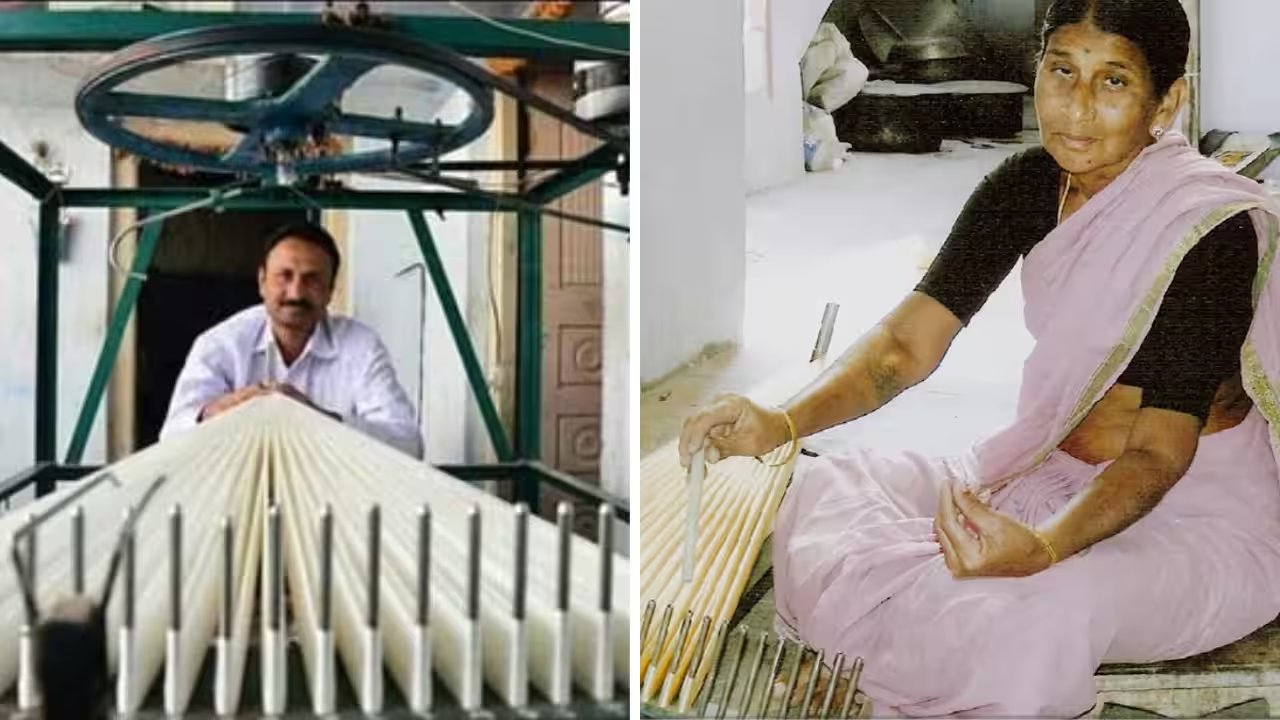
Ever wondered how a Pochampally saree takes hours to prep? The Laxmi Asu machine does the heavy lifting—its motor hums softly as the yarn swirls like a silk ribbon, winding 12 km of thread in a pattern that once took 9,000 hand‑movements.
For a long time, the weavers’ hands were the real hero of the saree, but the strain was brutal—four to five hours of repetitive motion each day, shoulders creaking, elbows aching. Mallesham, who grew up watching his mother Laxmi wrestle the Asu process, saw that pain and decided to engineer a solution.
After seven years of trial, a breakthrough in 1999 turned his vision into a working prototype. The machine, named after his mother, cuts the prep time to 90 minutes and lets a woman produce up to six sarees a day instead of two. That’s an 80‑percent jump in productivity, and it means the same beautiful patterns reach consumers faster and cheaper.
If you love handloom sarees, this tech means you can buy fresher, less worn fabrics without paying a premium. Look for brands like Pochampally Handloom Cooperative or Saroja Handlooms that source from weavers using the Laxmi Asu machine. Ask the shopkeeper about the preparation process—many will proudly point out the machine’s humming motor. And if you’re a DIY enthusiast, keep an eye on small‑scale versions that could fit into a home workshop, so you can support the weavers directly.
Bottom line: the Laxmi Asu machine doesn’t just save time; it lifts the weight off the weavers’ shoulders, keeps the tradition alive, and lets you enjoy the same gorgeous saree with a little more ease and a lot more heart.