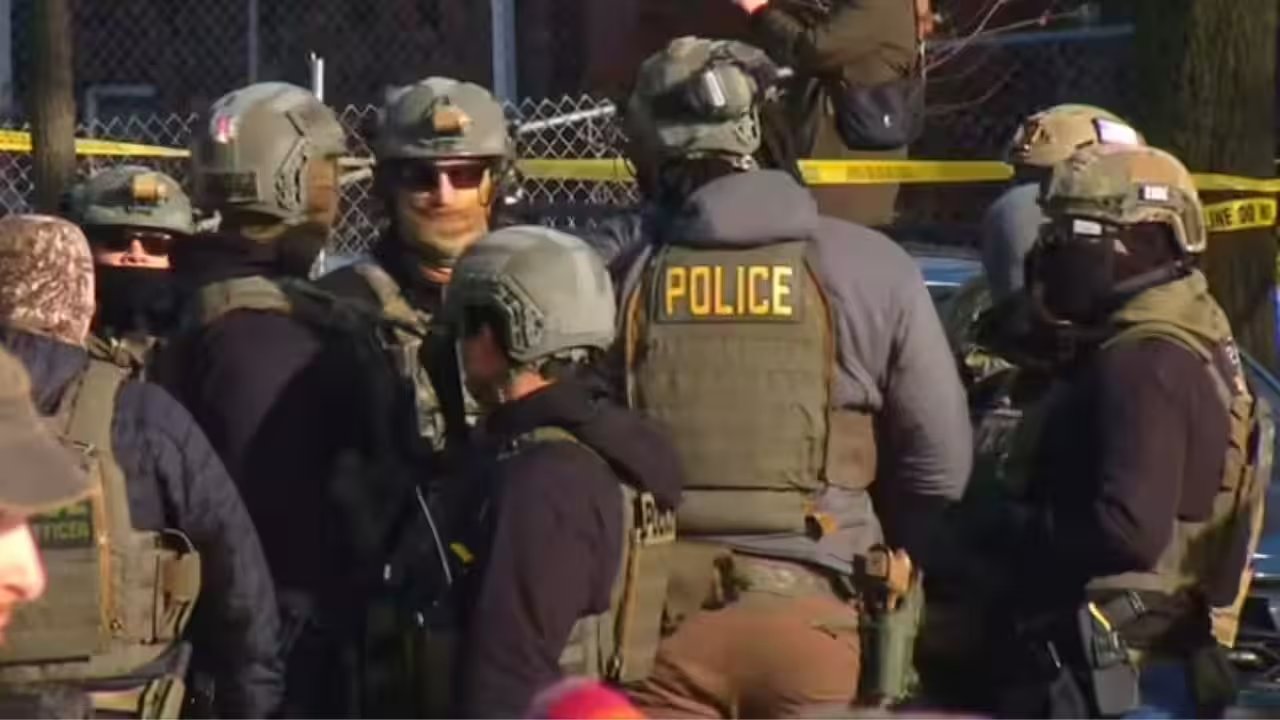
Mario Alberto Morales walked into the Harris County 488th District Court on Monday, trading his federal badge for a grey suit and purple tie. He surrendered after a grand jury formally charged him with second-degree aggravated assault with a deadly weapon. The charge stems from October 10, when his Jeep Cherokee allegedly struck Miguel Parra-Hernandez, shattering the immigrant’s leg and ankle during a chaotic enforcement sweep in Houston.
The court battle is already defined by a sharp divide between federal and local narratives. Prosecutors, led by Harris County District Attorney Sean Teare, leaned heavily on surveillance and body-camera footage released by the DA’s office. The video shows Morales steering his vehicle over a median, chasing Parra-Hernandez, and stopping just feet after impact. Teare argued the footage directly contradicts ICE’s initial claim that the victim ran into the path of the car. “No badge, title, or position places anyone beyond scrutiny or accountability,” Teare stated, aiming to establish a precedent for holding federal agents legally responsible for on-the-ground actions.
Defense attorneys, including former Harris County DA Kim Ogg, painted a very different picture. They argued Morales was performing his duty and that the fleeing suspect created the dangerous conditions leading to the crash. “This officer was doing his job,” said defense attorney David Lindenmuth, labeling the prosecution politically motivated. ICE itself has rejected the allegations entirely, calling the indictment a “political stunt” and questioning the local court’s authority to try a federal officer acting within their official capacity.
Judge Matthew Peneguy set Morales’ bond at $30,000, splitting the difference between the prosecution’s $75,000 demand and the defense’s $25,000 request. The judge cited the violent nature of the incident and alleged prior drug admissions found during the investigation. Morales joined ICE in August 2025, having previously served as a corrections officer and an Army paratrooper. If convicted, he faces up to 20 years in prison. The next step is a preliminary hearing, where the DA will decide whether to proceed to a full trial, testing the limits of federal immunity in Texas courts.