Every city breathes its own invisible ecosystem.
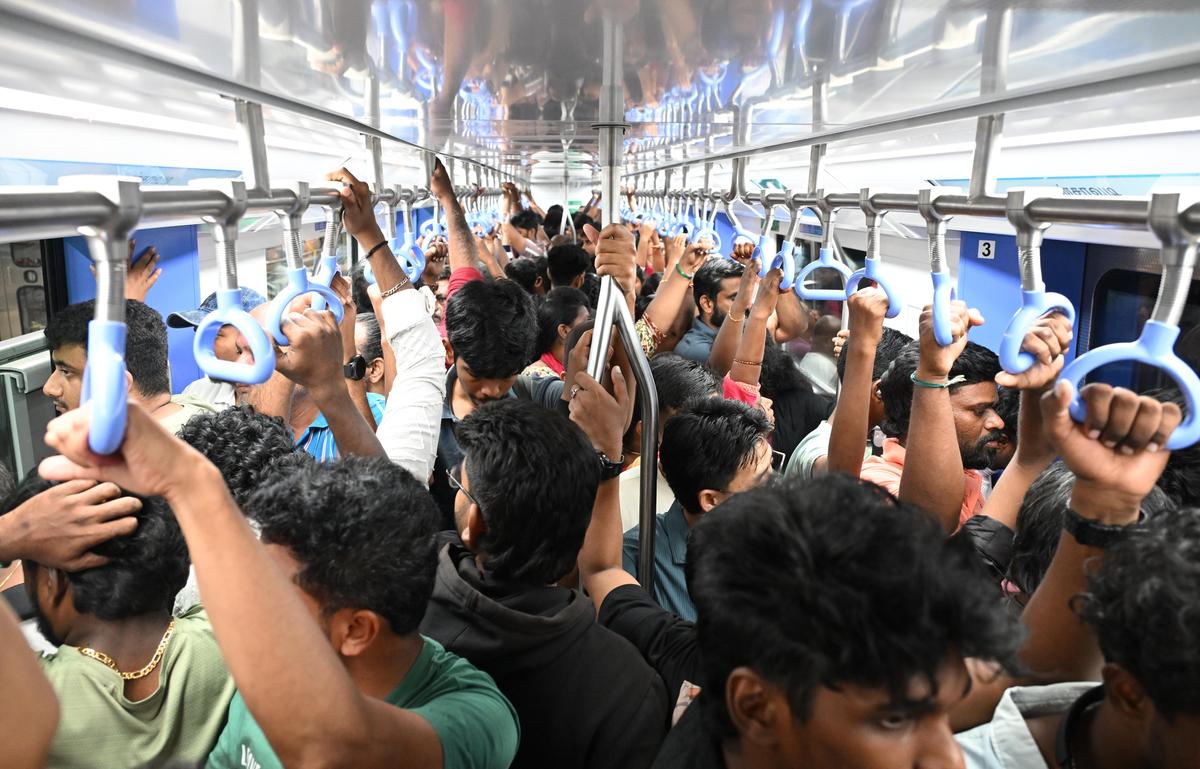
Commuters gripping handrails or tapping kiosk screens leave behind traces of life, and in turn, pick them up. Now, scientists at IIT Madras have decoded the exact living signature coating the Chennai Metro Rail network. Their analysis revealed a distinct "transit biome"—an urban microbial fingerprint heavily shaped by Chennai’s coastal humidity, packed commuter corridors, and nearby agricultural belts.
The findings offer public health officials an unprecedented window into how everyday surfaces carry and spread microbes across transit hubs.
Between December 2021 and January 2022, the IIT Madras research team targeted 12 key stations and train coaches along Chennai Metro’s Blue and Green Lines. They gathered 96 environmental swabs across four specific high-contact commuter touchpoints: station bannisters, train handrails, automated ticket-vending kiosks, and manual ticket counters.
Following strict laboratory quality controls, the team selected 47 clean samples for whole-genome metagenomic sequencing. Metagenomics bypasses traditional lab culturing entirely. Instead, it extracts and reads the total genetic material present in an environmental sample all at once, cataloging known and unknown micro-organisms side by side.
| Surface Category | Sampling Locations | Lines Covered | Analytical Method |
|---|---|---|---|
| Handrails, Kiosks, Counters | 12 Metro Stations & Trains | Blue & Green Lines | Whole-Genome Metagenomics |
| Total Swabs Collected | Quality-Passed Samples | Study Window | Primary Target |
| 96 Swabs | 47 Sequenced Profiles | Dec 2021 – Jan 2022 | Transit Biome & Resistance |
Cities do not share identical microbial populations. International subway surveys—spanning networks from Mexico City to transit hubs worldwide—have shown that every urban transit system carries thousands of localized microbial variants.
Chennai’s transit biome mirrors its geography. High sea humidity fuels specific bacterial communities, while heavy passenger flows blend commuter skin microbes directly into the transport grid. At the same time, runoff and dust from agricultural land on the city fringes contribute distinct environmental bacteria to the metro's metal surfaces.
Yet understanding these transit surfaces gives transit operators and health authorities a practical blueprint for smarter sanitation. Routine baseline testing allows transport authorities to deploy targeted cleanings rather than relying on indiscriminate chemical washdowns that can accelerate bacterial resistance.
Commuters should view these findings as a practical reminder of baseline transit hygiene: wash hands thoroughly after public commutes, avoid touching eyes or mouth immediately after gripping shared rails, and use alcohol-based sanitizer between transit stops.