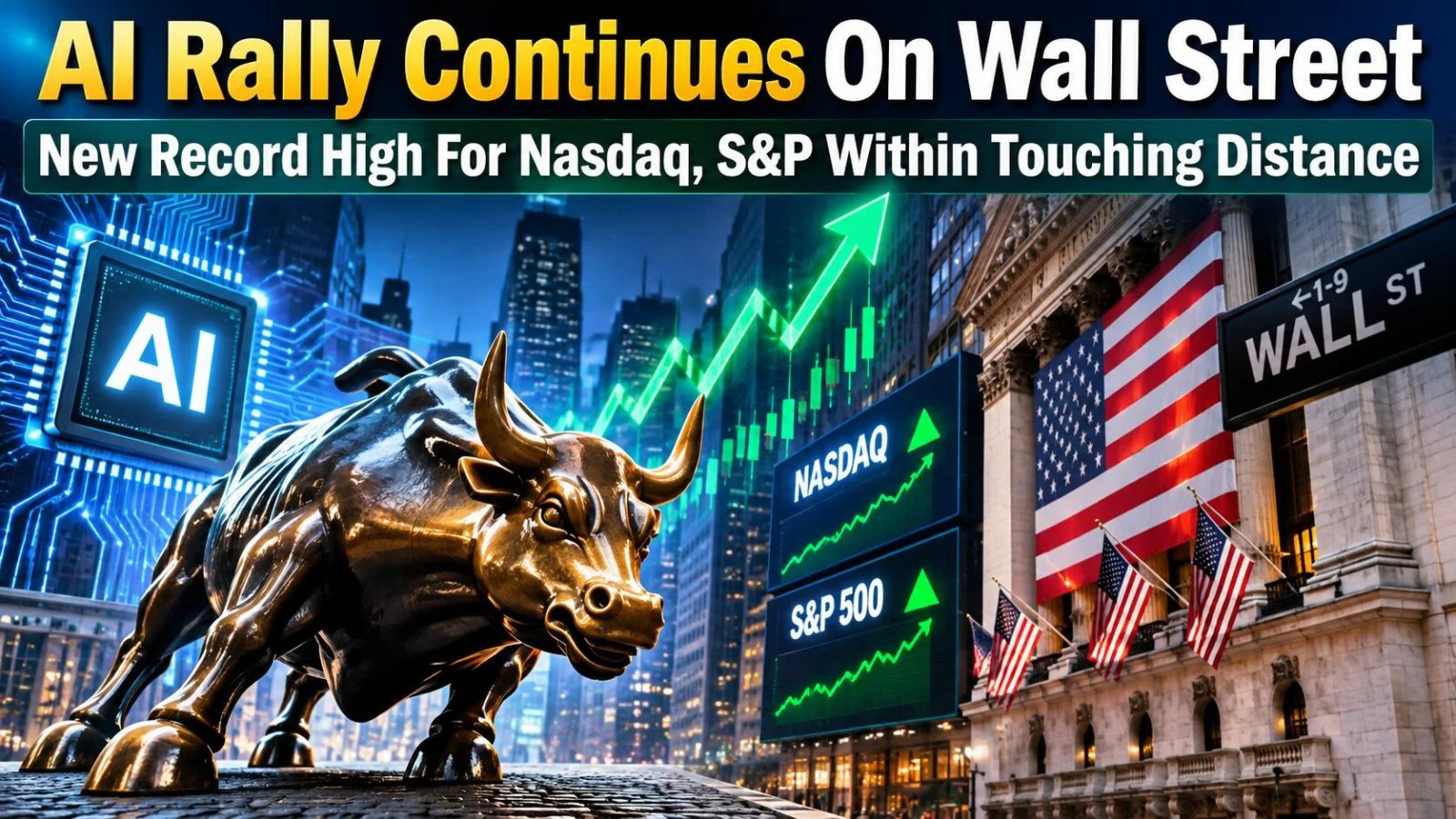
The Nasdaq Composite closed at fresh highs on Monday, October 5, as traders ignored a jarring spike in government borrowing costs to double down on artificial intelligence. The Dow Jones Industrial Average dipped sharply intraday but clawed back over 400 points from its lows, ending the session up 90 points. It was a clear divergence: the old economy lagged, while the S&P 500 gained 0.7% to sit within 40 points of its own record.
The bond market was doing something it hasn't done in two decades. The 10-year US Treasury yield jumped to 5.349%, the highest level since April 2002. Even more stark, the 30-year yield pierced 5.703%, a mark first breached after May 2002. BMO Asset Management analysts called a 6% yield on the 30-year note "inevitable" this month, a level last seen in 2000. Yet, the equity market didn’t blink. Buyers kept coming.
SpaceX was the engine behind the Nasdaq’s climb, surging 7% in pre-market and regular trading sessions. Nvidia, Tesla, and Meta each added over 2%, proving that the AI trade is still the primary driver for institutional flows. The rally wasn't broad-based; it was tech-specific. The S&P 500’s proximity to its record high suggests that unless tech stumbles, the index will likely break out soon.
Oil provided a small buffer. Brent Crude hovered near the $100-per-barrel mark, easing off recent highs as Gulf producers, including Kuwait, ramped up output to 75% of pre-war capacity. This cooling in energy costs helped offset the inflationary pressure from rising rates. Principal Asset Management noted that strong earnings and sustained AI investment are keeping the market resilient, even as the Street digests higher energy bills and rate hikes.
Not all analysts are as bullish. Morgan Stanley pointed out that US stock valuations have corrected enough to make some sectors attractive, given that earnings growth shows no signs of slowing. UBS offered a more cautious take, suggesting equities have room to rise over the next 6-12 months but warned the path will be "anything but smooth." For traders, the message is clear: volatility is the new normal as the market balances AI momentum against a 2002-era rate environment.