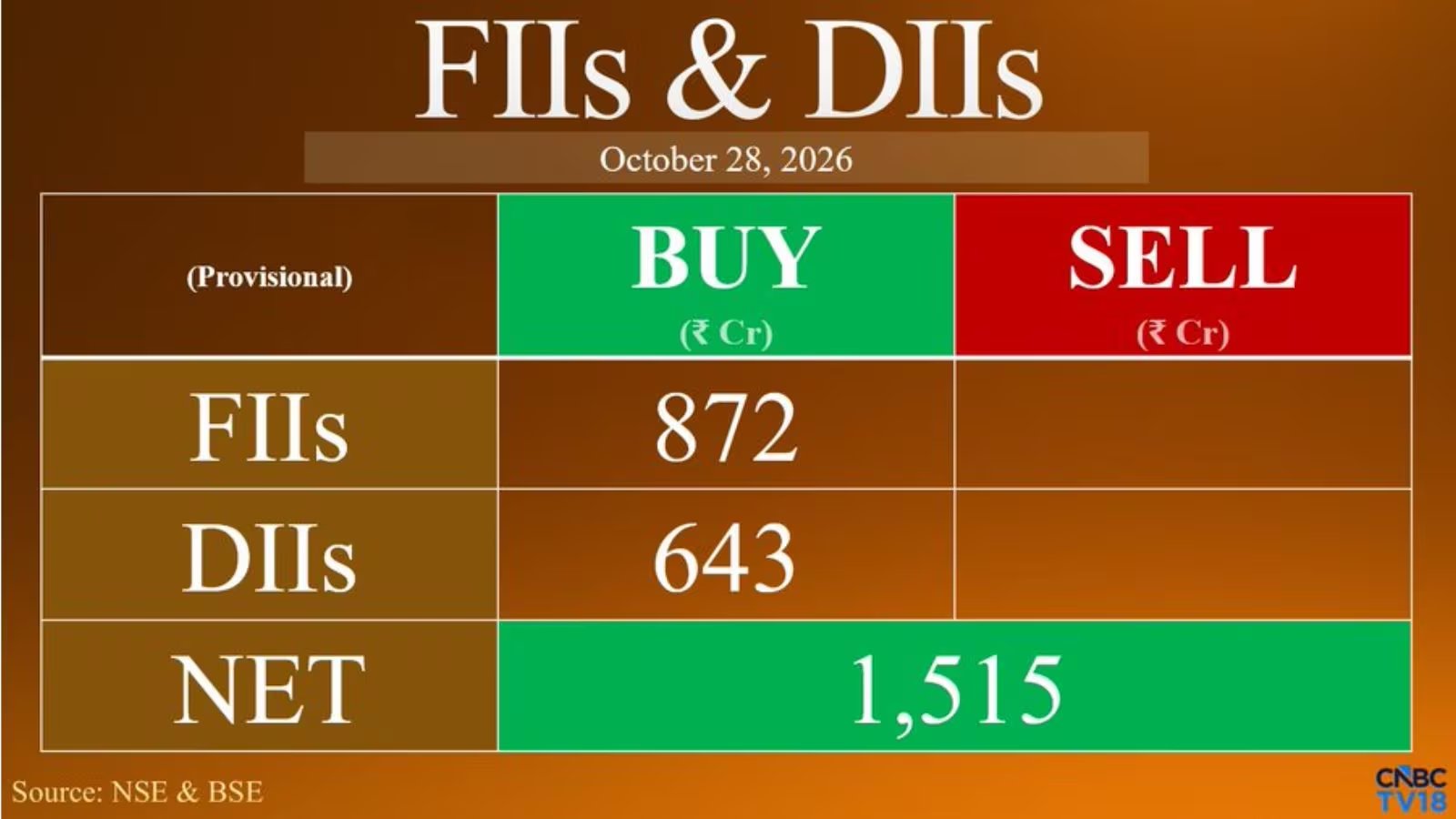
The tape flipped. Not a massive surge, but a decisive shift in direction. On Wednesday, October 28, both foreign and domestic money flowed into Indian equities, a stark contrast to the previous session where DIIs were net sellers. According to provisional exchange data, FIIs bought ₹24,517.65 crore worth of shares and sold ₹23,645.82 crore, netting a buy of ₹871.83 crore. It was a quiet accumulation, a far cry from the ₹4,240.39 crore they swept in the day before. DIIs, facing a different dynamic, stepped in with net buying of ₹643.35 crore, having purchased ₹15,702.74 crore against sales of ₹15,059.39 crore. This marked a reversal from their net selling of ₹1,250.03 crore on October 27.
The market reaction, however, was anything but celebratory. The Sensex dropped 353 points to close at 73,246, while the Nifty slipped 51 points to 22,699. Why the divergence? Tech was the culprit. The Nifty IT index fell over 2%, weighed down by global AI earnings that rattled investor sentiment in the sector. It was a case of selective buying. While IT bled, other sectors absorbed the FII and DII inflows.
But not all was red. The midcaps and banks defied the broad market weakness. The Nifty Midcap index climbed 245 points to 57,275, and the Nifty Bank index gained 293 points to 54,267. The buying was concentrated in high-beta names and sectors with fresh catalysts. L&T jumped over 4% following its Q2 results and a bolstered order book. Piramal Pharma was the runaway winner, surging more than 17% on its September-quarter numbers. Apollo Hospitals rose over 4% to top the Nifty gainers list, while TVS Motor added nearly 4%. These stocks likely absorbed a significant portion of the institutional buying.
The debut of Jio Platforms also made waves. The stock closed at ₹1,419 per share, well above its listing price of ₹1,358. On that strength, its market capitalization crossed the ₹13 lakh crore mark, instantly making it the second-largest company by market cap on the exchange. This was the day's other major story, capturing attention and liquidity.
The takeaway is clear: institutional money is still in the market, but it's rotating. The FII buying, while positive, was a fraction of the previous day's volume, suggesting caution rather than aggressive chasing. The DII shift to net buying is a supportive factor, providing a floor under the market. Watch the IT sector closely in the coming sessions, as global AI earnings continue to set the tone. The next data point to watch will be the final FII/DII numbers for the day, which will confirm the provisional trends.