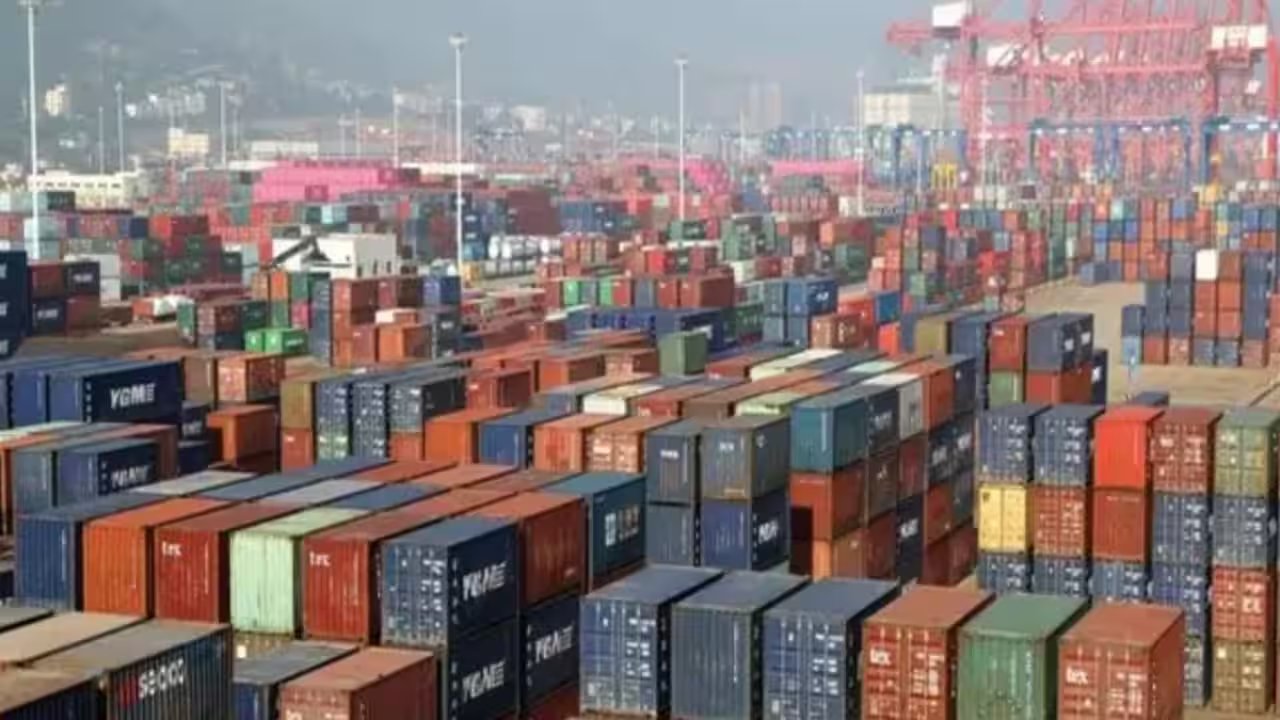
China piled up a record $1.04 trillion trade surplus in the first ten months of the year. Official customs data released Tuesday showed outbound shipments jumped 35.2% in October, propelled by an insatiable global appetite for semiconductors and artificial intelligence hardware. The figures mark the second consecutive year China has breached the trillion-dollar threshold. It hit the benchmark a month faster than it did in 2025.
Global buyers want Chinese tech. But domestic consumers stayed home. As a crippling property slump hollowed out household wealth across mainland cities, Chinese manufacturers turned outward, dumping goods into export channels to offset anemic demand at home. While imports rebounded 41.6% in October on stronger raw material intake, China's monthly surplus still clocked in at $105.3 billion.
| Trade Metric | October Performance | Comparative Baseline |
|---|---|---|
| 10-Month Cumulative Surplus | $1.04 Trillion | Surpassed 2025 Pace by 30 Days |
| October Total Surplus | $105.3 Billion | Down from $133.5 Billion in September |
| Outbound Shipments (Exports) | +35.2% Year-on-Year | +36.3% in September |
| Inbound Shipments (Imports) | +41.6% Year-on-Year | +31.0% in September |
| Bilateral Surplus with US | $32.71 Billion | Narrowed from $34.01 Billion in September |
Much of the export engine runs on the worldwide race to construct data centers and server farms. Chipmakers and electronics suppliers across southern China have booked full order books well into next year. “The outlook for exports depends on how long the AI boom will last,” Macquarie analysts cautioned, projecting strong fourth-quarter momentum before an inevitable cooldown by early 2027. Dave Chia, an economist at Moody’s Analytics, noted that automotive and consumer electronics shipments will keep trade balances heavy through year-end.
Yet the sheer scale of the surplus is drawing immediate Western pushback. European Union officials have already demanded fresh limits on shipments after negotiating curbs on Chinese hybrid vehicles. Trivium China lead macroeconomist Joe Peissel warned that protectionist barriers will escalate through 2027 as Chinese industrial capacity overwhelms overseas competitors. Manufacturers are currently accelerating dispatches to beat impending European border levies.
Behind the dazzling export totals lies a distorted domestic economy. Automobile exports climbed steadily through October, but domestic vehicle sales shrank for the twelfth straight month. Factories are producing more than local buyers can absorb. “It comes down to product quality, or rather the lack of it across the industry, since there's significant homogenization,” said Cinders Zhou, an eyewear exporter based in Linhai. “That has forced everyone to compete on price.” Natixis chief economist Alicia García-Herrero warned that sustained reliance on external markets to clear domestic gluts is fundamentally unsustainable.
Washington has extended a bilateral trade truce by two months to avert immediate escalation, but relations remain brittle. Beijing insists that expanded purchases of American agricultural products require reciprocal tariff rollbacks. All eyes now pivot to Shenzhen, where President Xi Jinping and US President Donald Trump are scheduled to hold bilateral talks on the sidelines of the Asia-Pacific Economic Cooperation summit later this month.