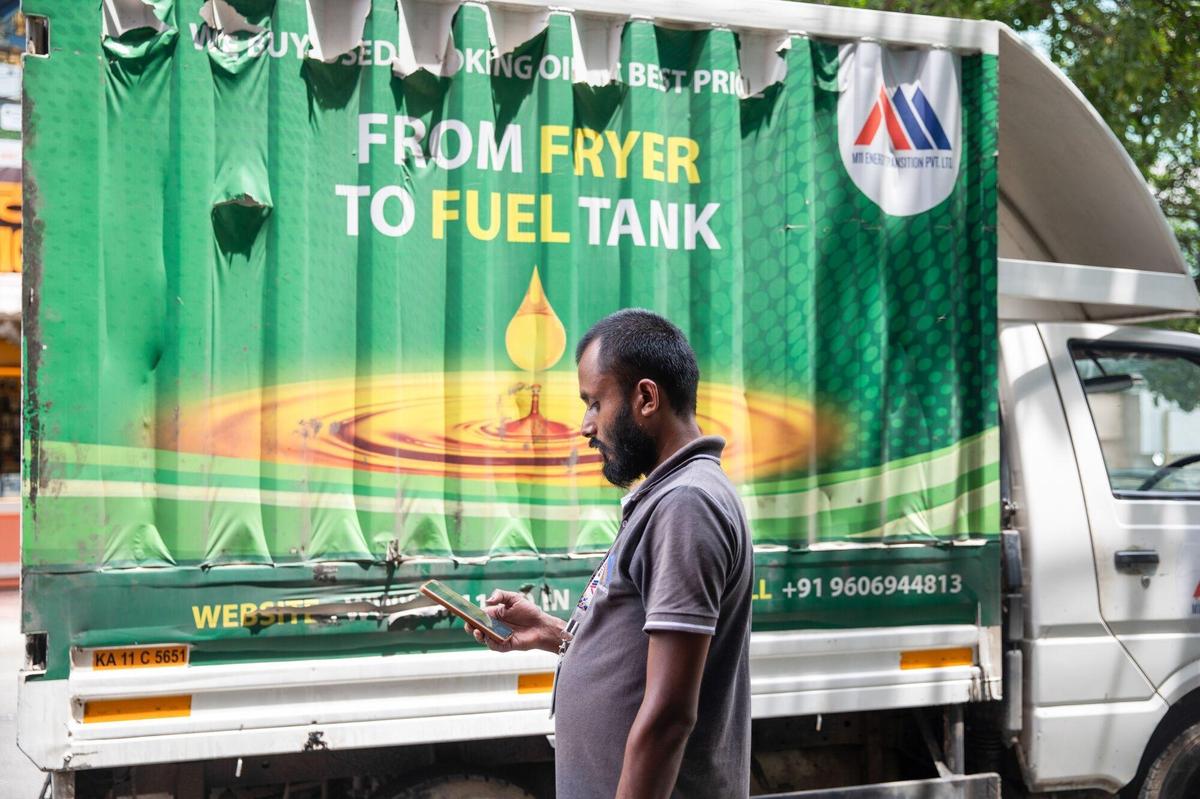
Toxic, repeatedly boiled cooking oil will no longer slip quietly back into restaurant deep fryers across Karnataka.
The state Health Department is developing a dedicated mobile surveillance platform to trace commercial cooking oil from its first purchase to its final industrial destruction or processing, Health Minister U.T. Khader announced on November 12 in Bengaluru. Slated for deployment within three months, the tracking system aims to choke off an illicit black market that diverts spent oil—often destined for soap factories and biofuel refineries—straight back into small roadside eateries and hotel kitchens. Over 45 lakh litres of used cooking oil have been seized or collected across Karnataka since 2024 as authorities intensify a broader campaign to wipe trans fats from the state food supply.
The public health stakes are severe. When vegetable oil is subjected to repeated high heat, its chemical structure breaks down, spawning toxic compounds and dangerous industrial trans fats. These oxidized lipids stiffen human arteries, spike low-density lipoprotein (bad cholesterol), and sharply elevate the lifetime risk of coronary heart disease, stroke, and systemic cellular inflammation. For consumers grabbing a quick snack at an unmonitored fry stall, repeated exposure quietly damages cardiovascular health.
The driving force behind this public health hazard is straightforward economics. Industrial recyclers pay licensed vendors roughly ₹80 per litre to collect used oil for conversion into commercial biodiesel, soap, and sustainable aviation turbine fuel. Yet unscrupulous collectors quickly discovered that small eateries, eager to shave operating overhead, will happily shell out ₹120 to ₹125 for that same burnt litre.
That ₹40-to-₹45 margin per litre has sustained a dangerous underground supply chain, feeding hazardous, degraded lipids directly back onto consumer plates.
Why would someone sell it for ₹80 when they can get ₹120 by supplying it to a small hotel? If a hotel uses 500 litres of oil in a month, it must account for the 50 to 75 litres of used oil generated, assuming a 10% to 15% recovery. It must submit details of whom it handed over the used oil to. The person who collects it must record whom he has sold it to. The entire chain has to be tracked.
| Operational Parameter | Baseline Metric / Regulatory Target |
|---|---|
| Application Rollout Timeline | 3 Months from November 12 |
| Managing Agency | Food Safety and Drugs Administration Department |
| Pilot Cities | Bengaluru, Mysuru, Mangaluru, Hubballi |
| Mandatory Volume Accounting | 10% to 15% spent oil recovery log |
| Industrial Purchase Price | ~₹80 per litre (biodiesel/soap/aviation fuel) |
| Illegal Eatery Resale Price | ₹120 to ₹125 per litre |
Run directly by the Food Safety and Drugs Administration Department, the digital registry will mandate end-to-end accounting. Every commercial food operator, cloud kitchen, and large manufacturer must register on the platform. When a kitchen purchases 500 litres of fresh vegetable or mustard oil, it must record the volume and vendor invoice. By the end of the operating cycle, it must log the mandatory 50 to 75 litres of discarded grease generated by frying.
And the audit does not stop at the kitchen door.
Authorized collectors must immediately log every volume intake on the app, tagging the commercial transaction with the buyer's official industrial license and the exact payment receipts. The digital trail follows the consignment until it is chemically transformed into soap, synthetic fuel, or processed industrial grease.
Regulators will launch the initial operational trial across four major urban hubs: Bengaluru, Mysuru, Mangaluru, and Hubballi. These cities hold the highest density of commercial kitchens and industrial aggregators in Karnataka.
Yet the administration is already looking past commercial fryers. Karnataka plans to formally write to the Union government requesting policy flexibility regarding used oil exports, seeking to capitalize on skyrocketing global demand for second-generation aviation biofuels.
Domestic households will follow. Mirroring urban wet and dry municipal garbage separation, the Health Department is drawing up an urban pilot where families store spent cooking oil in dedicated household canisters for periodic municipal collection. Medical experts urge consumers never to reuse cooking oil at home more than once, as domestic reheating triggers the exact same toxic lipid breakdown now facing a statewide commercial crackdown.
| State Collection Volume Since 2024 | Over 45 lakh litres |