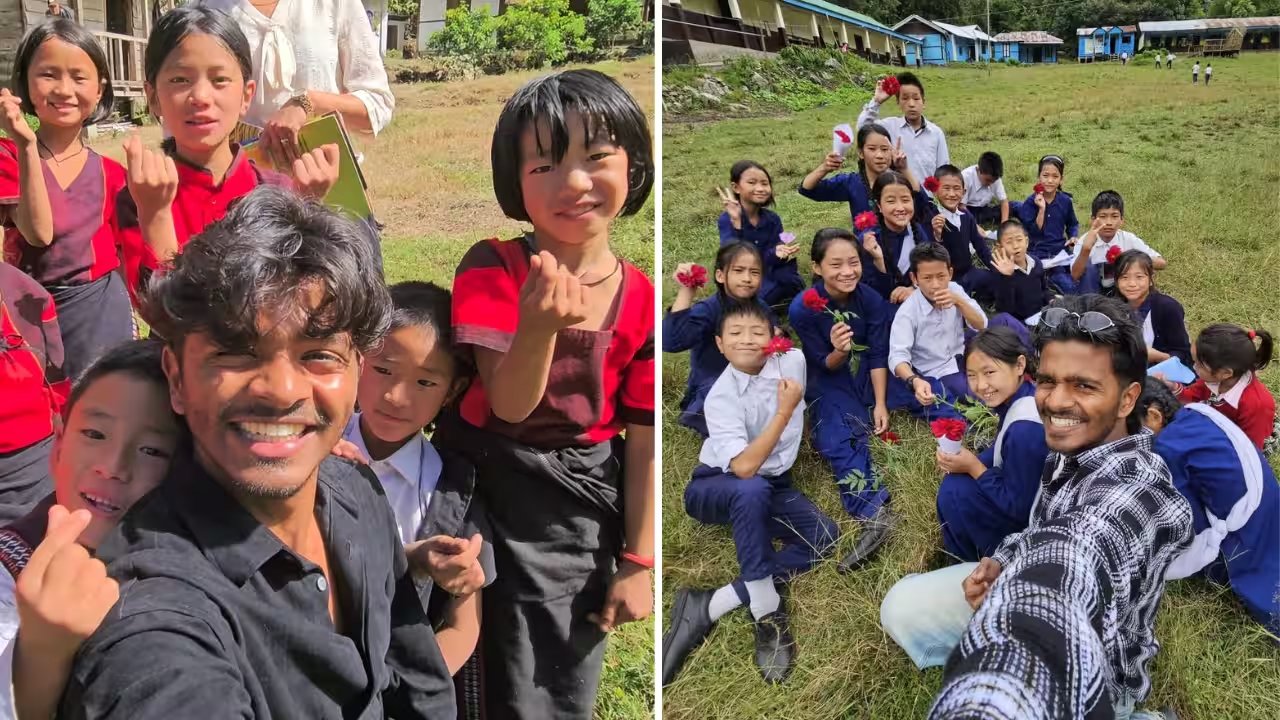
KAPO, SHI-YOMI — Ali Ashqar packed his bags in Areekode, a quiet town in Kerala's Malappuram district, and set off on a 3,000-kilometre trek to the rugged northern frontier of Arunachal Pradesh. His destination was Karo. The remote village sits perched high in the hills of Shi-Yomi district, just miles shy of the India-China border. The local school stood on the brink of collapse. Classrooms were emptying, dropouts mounted, and the facility lacked a hostel to house children from isolated mountain hamlets. Ashqar stepped in to change that. Today, the 28-year-old educator leads instruction at the Netaji Subhash Chandra Bose Avasiya Vidyalaya (NSCBAV) School, where student strength has climbed to 102.
He did not choose an easy post. Life in Karo runs against the elements—monsoon landslides snap road access without warning, power lines go dead for days, and mobile data flickers erratically. Essential groceries and emergency medical centers sit several hours away over rutted mountain tracks. Yet Ashqar, who arrived under an NGO deployment supported by state authorities, took on responsibilities stretching far beyond routine syllabus coverage. He trains fellow instructors, organizes village-wide youth events, counsels hesitant parents, and rebuilds public trust in the classroom.
Ashqar built an unconventional path to Arunachal Pradesh. He completed his undergraduate studies in Kerala, crossed into northern India to secure a master’s degree in Punjab, earned his Bachelor of Education in Puducherry, and completed a teaching assignment in Kashmir. Between 2022 and 2024, he enrolled in a Master of Education program at a university in Shi-Yomi district. That two-year stay cemented his ties to the border communities. He saw the acute teacher shortages hobbling outpost schools and resolved to settle in Karo permanently.
The institution was sliding toward shutdown when he took charge as a language teacher. And the turnaround demanded heavy groundwork. Local administrators and partner social groups moved in with structural aid, while Ashqar rebuilt daily attendance by knocking on doors across the ridges.
| Institutional Milestone | Operational Detail | Source Metric |
|---|---|---|
| Travel Distance | Areekode (Kerala) to Karo (Arunachal) | Nearly 3,000 km |
| Current Student Roll | NSCBAV School, Shi-Yomi District | 102 Students |
| Supply Run to Nearest City | One-way transit over unpaved hill tracks | 200 km (Approx. 8 hours) |
| Academic Background | Degrees earned across India | Kerala, Punjab, Puducherry, Shi-Yomi |
| Viral Cultural Reach |
Physical logistics in Shi-Yomi test basic endurance. Procuring everyday school supplies requires an arduous 200-kilometre haul over damaged roads that swallow nearly eight hours each way. Ashqar faced that exact hurdle while organizing an Onam cultural festival for his Himalayan students.
The village is very far from the city, so procuring everything was difficult. It is around 200km away, but because of the condition of the roads, the journey can take almost eight hours. There is also limited electricity and internet connectivity here.
Villagers rallied behind the effort. Farming families contributed native squash and greens, while Ashqar brought rice, sambar spices, rasam ingredients, pappadams, pickles, banana chips, and payasam from urban markets. Students and teachers combed home gardens across Karo for wild blossoms to lay out an intricate floral carpet, or pookkalam, on the school grounds. When celebration day arrived, the staff draped themselves in traditional Kerala mundus and sarees, while the students paired the festival with their own heritage, donning indigenous 'gal' woven wraps.
The children performed an eight-minute choreography blending Malayalam folk tunes, Tamil melodies, and popular social tracks, serving the complete sadya on fresh banana leaves. Ashqar filmed the festivities and posted them to his social media channel, @teacher_tales__. The clip exploded across national networks, racking up over five million views and drawing personal commendation from Union Minister Kiren Rijiju.
Onam is a celebration where people come together regardless of religion or background. I wanted the children to understand that spirit of different traditions coming together and the sense of togetherness it carries.
Ashqar refuses to let the viral spotlight distract from his primary objective. The immediate priority remains academic modernization. The school still battles severe infrastructural shortages, from unreliable winter heating to zero digital instructional tools. Ashqar has opened discussions with regional education officials and community donors to install interactive digital boards and construct a fully equipped smart classroom at NSCBAV Karo before the next academic cycle.
Held back for decades by geography, the students of this Himalayan outpost are finally finding their voice. Ashqar intends to make sure the country keeps listening.
| Cross-cultural Onam broadcast |
| Over 5,000,000 digital views |