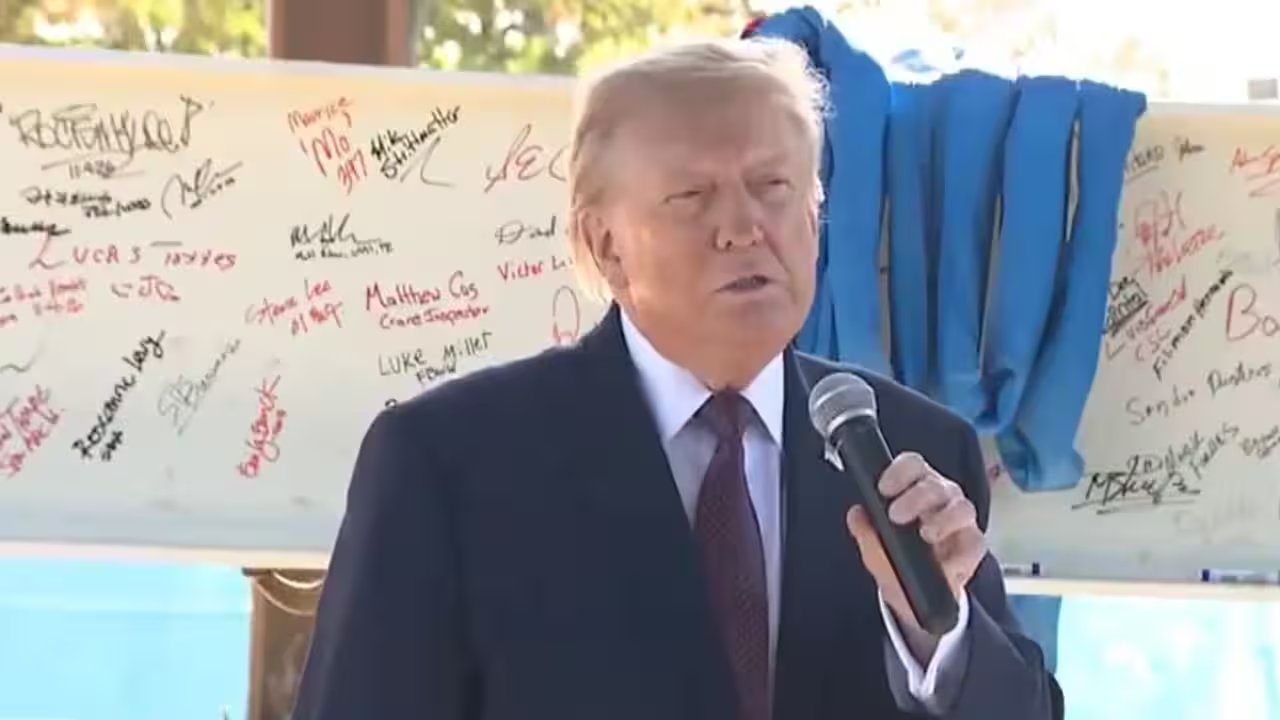
President Donald Trump stood beneath the skeletal roof of the White House ballroom on Wednesday, signing the final steel beam with the word "Love!" before workers hoisted it into place. It was his first public appearance since the Republican Party suffered a catastrophic midterm defeat, losing control of both the Senate and the House of Representatives. The event focused almost entirely on the construction, with Trump praising the structure's design and security features to a crowd of reporters and construction workers.
He dismissed criticism regarding the renovation's cost and timing, calling the White House the "ultimate symbol of America" that must remain "pristine." "When I get criticized, like, 'Why are you working on the White House?' I'm doing it because the White House is the ultimate symbol of America," he told reporters, according to Reuters. Trump described the project as "relaxing" and claimed it would become the most beautiful ballroom in the world, highlighting plans for Corinthian columns and marble flooring. He also touted other projects, including a new helipad and an 18-hole golf course at East Potomac Park, as reported by the New York Post.
The political reality, however, loomed large. Democrats made significant gains, securing majorities in both chambers of Congress. While Trump initially deflected from the election results, he eventually conceded that the US war with Iran played a role in the GOP's poor performance. "I think it's largely true because it drove the gasoline up a little bit short term," he said, aligning with Vice President JD Vance's assessment. Despite this admission, he defended the military campaign, stating he would make the same decision again to prevent Iran from developing nuclear weapons.
Trump appeared unfazed by the prospect of governing with Democratic opposition, though he warned of potential conflict. "But I have the power of the veto," he added, suggesting a path forward unless Congress chose to be "destructive." The coming months will test this dynamic as Democratic leaders move to assert their new authority over the budget and legislative agenda.