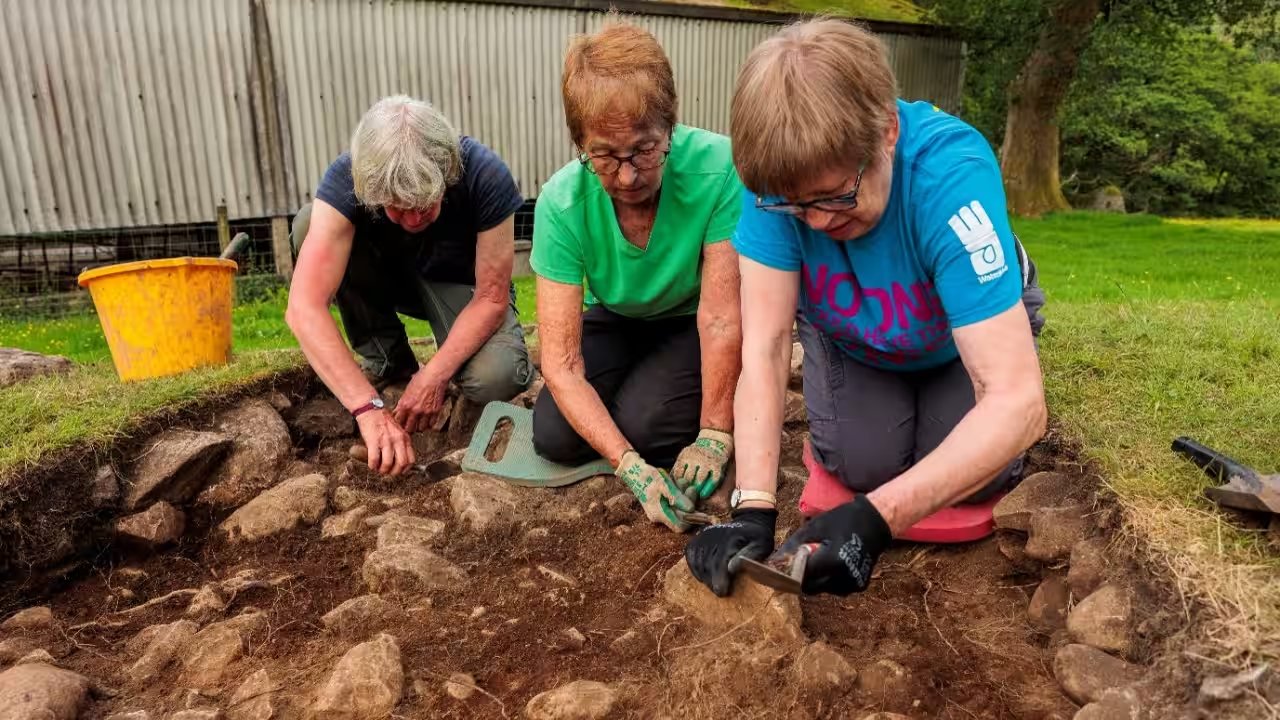
The Deepdale Bridge Settlement, uncovered by a crew of 25 volunteers amid a 2024 survey of 150 sites in the Deepdale valley, sits beneath the shadow of the Lake District National Park’s limestone spine.
The remains comprise multiple hut circles, a central roundhouse, and a small enclosure bounded by a rubble bank, all pointing to a community that lived, cooked, and raised livestock within a shared space.
A trench revealed a timber doorway, internal dividers, and a cobbled yard that likely held animals, while botanical remains of spelt wheat and barley confirm an agrarian lifestyle that survived into the Roman era.
Radiocarbon dating of charcoal pits places the roundhouse’s occupation between 76 and 216 AD, and the enclosure bank’s construction from 40 BC to 118 AD, underscoring a continuous settlement through the late Iron Age‑Roman transition.
Marnie Calvert, a Graduate Historic Environment Assistant, praised the volunteers’ "dedication, enthusiasm and hard work" as the engine that brought the site to light, while Eden Heritage consultant Martin Railton said the find would illuminate other, similar settlements.
Volunteer lead Siriol Hinchcliffe told the Lake District National Park Authority that the two‑year survey effort has now set the stage for a 2026 dig at Lanthwaite Green near Crummock Water, where the team hopes to unearth further evidence of the region’s ancient past.