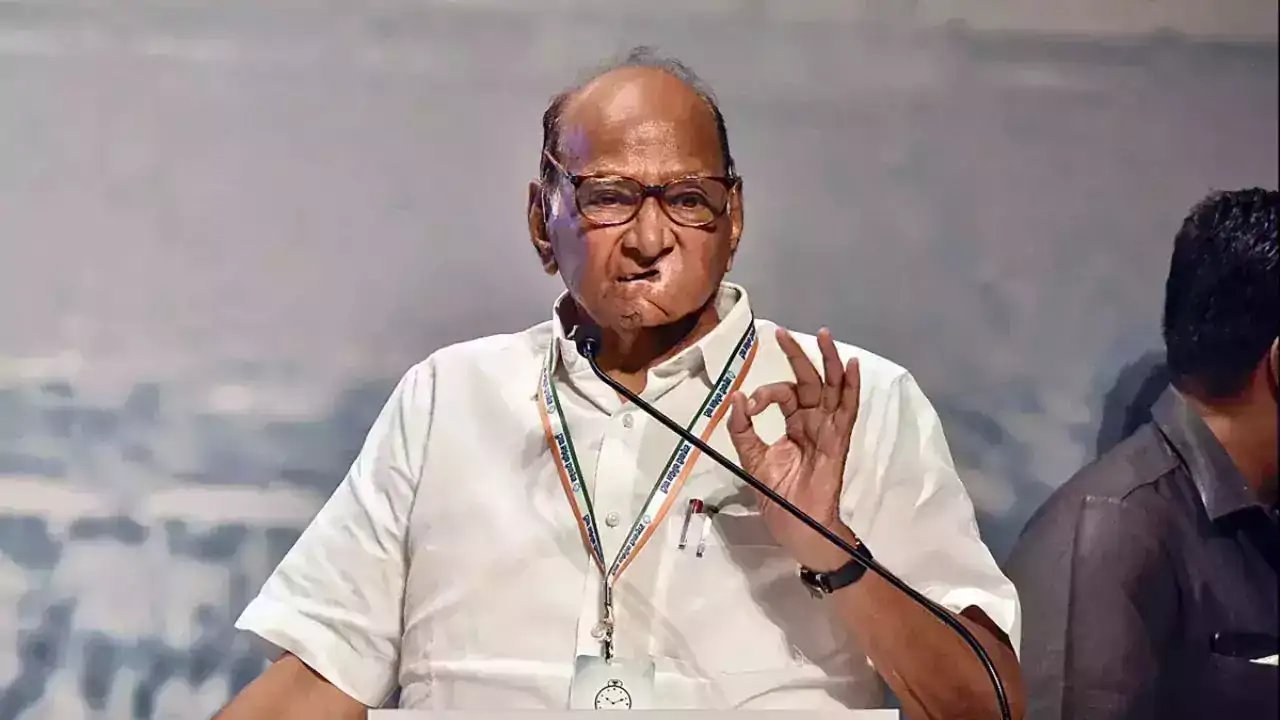
Sharad Pawar, the Nationalist Congress Party (SP) chief, has publicly declared the September 17 board decisions at Tata Sons as procedurally flawed. The veteran leader took to X to argue that the 4-1 majority vote approving N Chandrasekaran’s five-year reappointment and the initiation of a public listing ignored the statutory weight of the Tata Trusts. Pawar’s intervention marks a sharp departure from the usual silence on internal corporate matters, framing the issue as a threat to India’s industrial heritage rather than a standard board dispute. The core of his argument rests on a specific arithmetic: the Trusts hold approximately 66 percent of Tata Sons’ equity.
This ownership structure is not merely financial; it is the engine funding institutions like Tata Memorial Hospital, TIFR, and TISS. Pawar highlighted a critical discrepancy in the voting record. While Noel Tata, the Chairman of Tata Trusts, voted against both the reappointment and the IPO steps, nominee director Venu Srinivasan voted in favor. Under the company’s Articles of Association, Pawar noted, any chairman appointment requires the affirmative consent of a majority of trust-nominated directors present. With only two such directors in the room, unanimity was mandatory. The 4-1 outcome, he argued, rendered the resolution questionable from the outset.
The stakes extend beyond corporate governance. The Tata Group’s dividends have historically underpinned Maharashtra’s social infrastructure, from the National Centre for the Performing Arts to social sciences research. By challenging the validity of the recent vote, Pawar is effectively questioning the legitimacy of the roadmap toward a public listing. If the affirmative consent clause is indeed bypassed, the IPO process could face legal hurdles or require a reconvened board to rectify the procedural error.
Tata Sons has not yet responded to Pawar’s specific critique on voting mechanics. The next critical step will be whether the board issues a clarification on how the Articles of Association were interpreted during the September 17 meeting, or if the IPO timeline shifts to accommodate a governance review. For now, the 66% equity stake remains the ultimate lever in this high-stakes standoff.