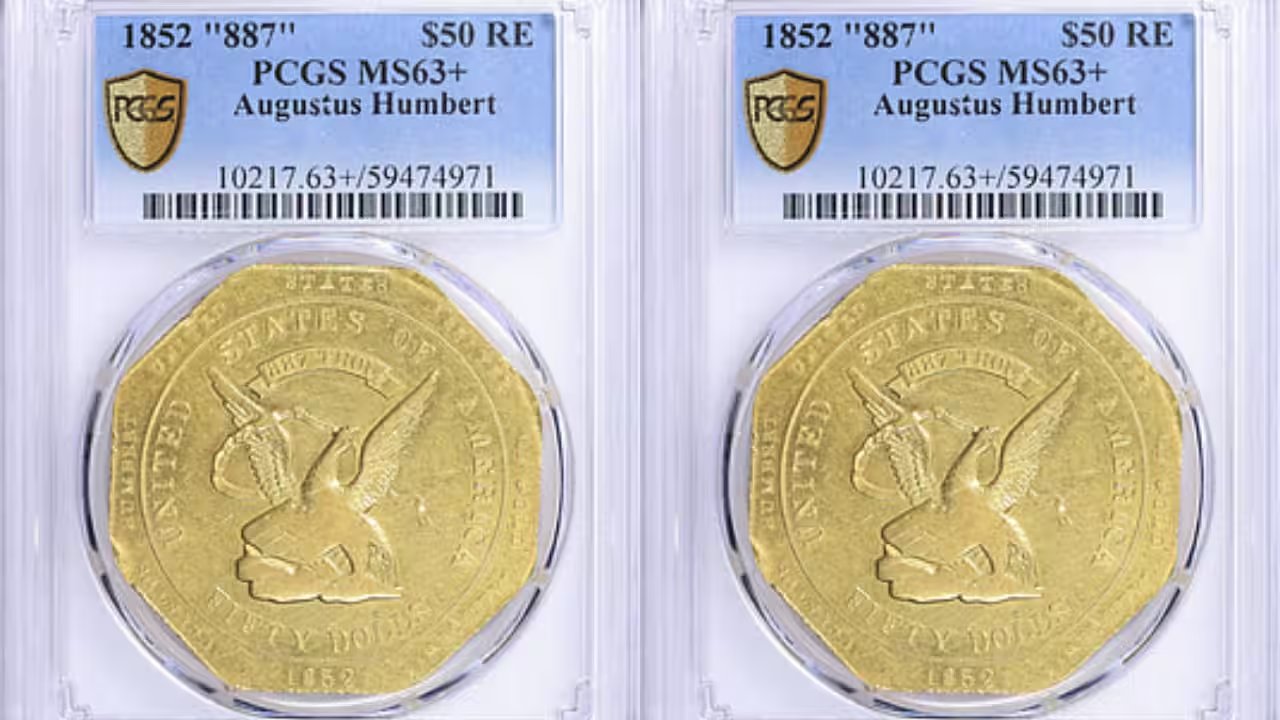
The coin, a 1852 California Gold $50 minted by the San Francisco Assay Office, was struck at .887 fineness and bears Augustus Humbert’s name, making it a rare 887‑reed edge issue. It earned a PCGS MS‑63+ grade, a level of preservation that few surviving slugs reach.
During the early Gold Rush, private and local issuers produced gold “slugs” to meet demand when federal coinage was scarce. These pieces, often larger and less refined than the standard U.S. coins, filled the void created by the sudden influx of gold into California’s economy.
GreatCollections ran its Centennial Collection of Territorial Rarities from September 6 to 27, 2026, attracting 475 bids across eight certified coins. The Humbert $50 alone drew 93 offers, all of which were accepted, with the buyer’s fee included in the $367,875 final price.
Numismatist Donald H. Kagin, co‑author of "Plate Coin in America’s Golden Age," remarked that the coin’s exceptional preservation and strong detail set it apart as the finest example of its variety. Kagin added that the sale underscores the growing demand for well‑maintained Gold Rush artifacts.
Collector Arjun Mehta, who has guarded a family collection of California gold pieces since his great‑grandfather’s camp days, said the auction win "reminds us of the enduring allure of the early frontier money." Mehta plans to showcase the coin at a local museum exhibit next month.
Following the sale, GreatCollections announced plans to feature the Humbert $50 in a special display at its upcoming New York show in February, aiming to highlight the historical significance of territorial gold and attract new investors into the numismatic market.