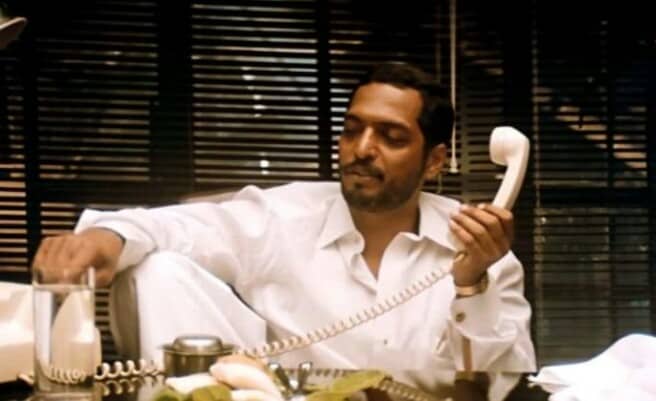
There’s a specific kind of dread that only comes from silence. Most modern villains shout, throw punches, or monologue their evil intentions until the audience is numb. Nana Patekar’s Anna in Parinda does none of that. He just looks at you. And somehow, that is infinitely worse.
I rewached the 1989 Vidhu Vinod Chopra directorial recently, and the performance still hits with the force of a physical blow. Patekar doesn’t perform villainy; he simply exists in a state of unpredictable volatility. Watch his face during a conversation—the pauses stretch just long enough to make your skin crawl, the micro-expressions shifting from amused to lethal before the person on the other side even realizes they’ve made a mistake. It’s not about the violence; it’s about the anticipation of it. The background score doesn’t need to cue the danger because Patekar’s expression has already done the work.
This is the kind of "aura" Gen Z might recognize in social media edits, but it’s grounded in a terrifyingly casual approach to cruelty. Anna behaves as if the world around him is normal, even when he’s orchestrating chaos. His authority is so absolute that the supporting cast seems to flinch before he even moves a muscle. That’s why this role earned him his first National Film Award for Best Supporting Actor. It’s a masterclass in restraint that most contemporary screen villains still can’t crack. They try too hard to be scary. Anna just is.
But Parinda isn’t just a vehicle for one man’s menace. It’s a tightrope walk for Jackie Shroff and Anil Kapoor, who play the brothers Kishan and Karan. Shroff brings a weary, trapped energy to Kishan, a man already deep in the underworld, while Kapoor’s Karan returns from abroad with the idealism of someone who doesn’t yet understand the cost of loyalty. Their dynamic anchors the film’s emotional weight. Anupam Kher’s Prakash, the police officer friend, adds another layer of personal stakes, ensuring the conflict feels human, not just transactional. The film refuses to romanticize the gangster life; Binod Pradhan’s cinematography keeps Mumbai feeling cramped, shadowy, and oppressive, a place where violence intrudes on ordinary life without warning.
With Patekar’s passing on October 8, revisiting Parinda carries a heavier emotional toll. It’s less about nostalgia and more about recognizing a benchmark. The film remains a definitive look at how Hindi cinema can depict the underworld without turning it into a fantasy. It’s gritty, consequential, and deeply human. If you haven’t seen it, or if it’s been years, put on the stream. Just don’t say we didn’t warn you about Anna.