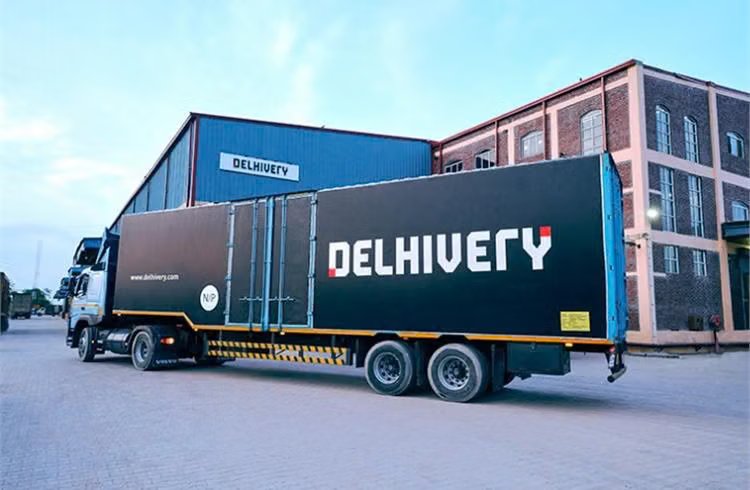
Urban delivery economics are shifting fast. For commercial fleet operators tracking every rupee per kilometre, diesel is losing its grip on city streets.
Delhivery has signed Memoranda of Understanding with Tata Motors, Euler Motors, and Montra Electric to deploy between 1,500 and 2,000 four-wheeler electric commercial vehicles across its intra-city logistics network over the next 12 to 18 months. The initial rollout begins across Delhi-NCR before expanding nationwide.
The agreements anchor an aggressive operational target: Delhivery plans to scale its electric commercial fleet to nearly 5,000 units within three years. The strategy zeroes in on daily routes running under 200 kilometres—an operational band where electric powertrains now consistently beat diesel models on total cost of ownership.
Electric commercial vehicles currently make up 12% to 13% of Delhivery's eligible intra-city fleet. The company plans to push that proportion past 50% within two to three years, before fully electrifying its entire sub-200 km operation over a four-to-five-year horizon.
Energy costs tell the story. On congested city loops, internal combustion engines waste fuel during idle stops and stop-and-go crawls. Electric drivetrains eliminate that idle burn entirely. By focusing strictly on routes below the 200-kilometre threshold, the logistics company secures predictable turnaround times while sidestepping the range limitations that still hamper long-distance electric haulage.
| Fleet Metric | Target & Timeline | Operational Scope |
|---|---|---|
| Immediate Deployment | 1,500–2,000 Electric Commercial Vehicles | Intra-city routes within 12–18 months |
| Three-Year Target | Nearly 5,000 Electric Commercial Vehicles | Nationwide urban logistics fleet |
| Current EV Share | 12% to 13% | Intra-city eligible operations |
| Mid-Term Fleet Target | Over 50% EV penetration | Across sub-200 km routes in 2–3 years |
| Long-Term Electrification | 100% EV penetration | Sub-200 km fleet within 4–5 years |
| Initial Deployment Hub | Delhi-NCR |
Market Context: Last-mile urban delivery fleets operate on tight delivery deadlines and thin margins. Transitioning high-mileage intra-city vans and small commercial trucks to electric platforms offers immediate operating expenditure relief, shielding commercial logistics networks from volatile retail diesel price swings.
Delhivery is staggering the vehicle rollout across multiple small commercial vehicle categories. The fleet will start with compact vehicles dedicated to dense urban drop-offs before graduating to higher-capacity platforms built for larger cargo payloads.
Three commercial vehicle manufacturers will divide the initial supply:
Tata Motors: Supplying the Tata Intra EV to handle high-density intra-city transport requirements.
Euler Motors: Rolling out the Turbo City Plus for small commercial cargo routes, with heavier payload electric models slated for later phases.
Montra Electric: Expanding deployments of the EVIATOR electric commercial vehicle across metropolitan clusters, scaling up its existing role within the logistics firm's network.
Yet vehicle hardware represents only half the challenge. High battery pack replacement expenses and charger downtime often stall commercial fleet conversions before they gain momentum. Delhivery is actively restructuring route planning and vehicle utilisation protocols to weed out empty, non-revenue runs and dead mileage.
Small transport vendors rarely command the capital reserves needed to finance new electric commercial fleets outright. To break that barrier, Delhivery is issuing advance payments directly to its vendor partners, absorbing the initial liquidity strain that typically stalls fleet upgrades.
Simultaneously, the company is building proprietary charging and parking infrastructure across its operational depots, piloting the setup in Delhi-NCR. Vendor partners who run Delhivery routes will receive low-cost charging access alongside free depot parking.
Prashant Gazipur, Chief Operating Officer for In City Operations at Delhivery, outlined the operational rationale behind the supply tie-ups and infrastructure buildout:
The partnerships allow us to expand our electric fleet across different vehicle categories while maintaining operational efficiency. The charging facilities being piloted will help reduce adoption costs for vendor partners.
Delhi-NCR will serve as the testing ground over the coming months. As charging depots and vehicle duty cycles stabilise across the capital region, Delhivery plans to duplicate the model across secondary and tertiary urban clusters nationwide.
| Pilot charging hubs and vendor terminals |