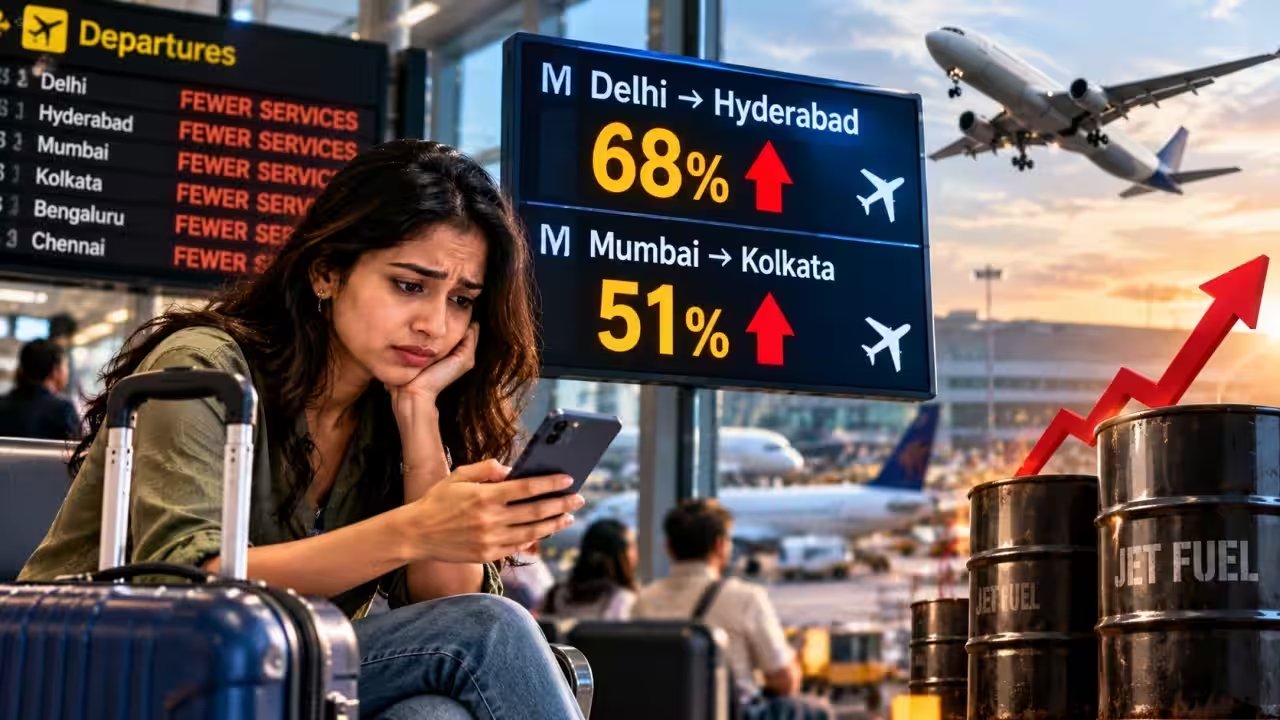
OAG data shows airlines scheduled 5% fewer domestic flights for the Oct‑Dec quarter than the same period last year, yet seat capacity fell only 1.2%, meaning carriers are operating fewer but larger aircraft to keep overall availability steady—an adjustment that leaves passengers with fewer departure options on peak dates.
IndiGo’s surcharge hike now ranges from ₹100 on routes under 500 km to ₹350 on flights between 1,500 km and 2,000 km, while journeys over 2,000 km will see a surcharge of ₹1,300. The airline applies a similar scale to international services, with fees climbing from ₹1,000 on SAARC flights to ₹10,000 on Europe‑bound routes.
Aviation turbine fuel (ATF) prices have surged, climbing 14% month‑on‑month to ₹137 a litre—up ₹16 from October 1—attributed to Middle‑East geopolitical tensions and a broader global supply squeeze. ICRA reports that fuel now accounts for 30–40% of an airline’s operating costs.
For travellers, the impact is tangible. Priya Sharma, a 32‑year‑old Delhi nurse, said her one‑way ticket to Hyderabad went from ₹3,200 to ₹3,550 after the surcharge change, forcing her to cut her holiday budget and postpone a planned trip to her hometown in Karnataka.
IndiGo will review the surcharge quarterly as ATF prices remain volatile, and regulators are monitoring the trend to assess whether further consumer‑price safeguards are needed. The airline’s decision is expected to ripple across domestic carriers, potentially tightening flight schedules further as they balance capacity with cost pressures.