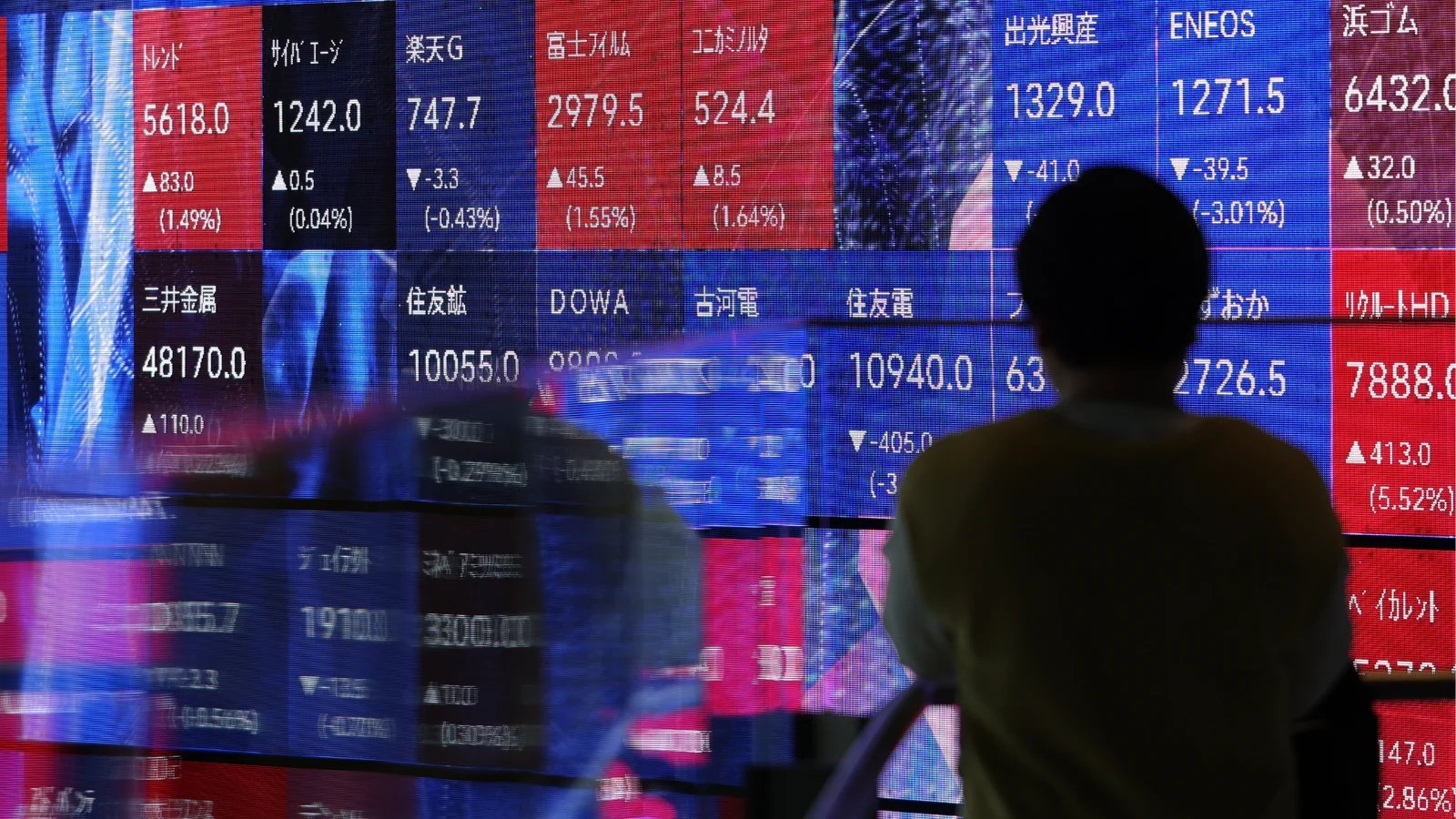
South Korea's KOSPI surged 4.5% on Tuesday morning to pace broad gains across Asian equity floors, tracking Wall Street's steepest relief rally in seven months.
Cheap valuations brought buyers stampeding back. The regional advance cut across major electronics and semiconductor hubs, with Taiwan's TAIEX vaulting higher and Japan's Nikkei climbing 3%. Across the wider geography, the MSCI Asia Pacific Index leaped more than 2%. The buying frenzy followed a massive overnight turnaround in New York, where institutional dip-buyers swarmed battered chip stocks while a sudden slide in crude oil prices eased immediate cost pressures across import-heavy manufacturing economies.
Sentiment reversed on a dime after days of relentless selling. In Seoul and Taipei, heavy capital flows rotated directly back into semiconductor bellwethers. Speculative appetite on the artificial intelligence front found further momentum on reports that AI developer Anthropic PBC could formally begin investor marketing for its initial public offering as early as Tuesday, providing a fresh valuation yardstick for the entire tech complex.
| Index | Session Move | Key Catalyst |
|---|---|---|
| KOSPI (South Korea) | +4.5% | Tech dip-buying, crude relief |
| Nikkei 225 (Japan) | +3.0% | Semiconductor export tracking |
| MSCI Asia Pacific | +2.0%+ | Broad regional risk rotation |
| US Equities (Overnight) | 7-Month High | Chip rebound, falling oil prices |
The relief was immediate. "The sharp drop in oil prices has given markets some much-needed breathing room," said Dilin Wu, a strategist at Pepperstone Group. "Investors are also buying back into stocks after last week’s brutal selloff. We still need to see whether buying interest can hold up."
Yet institutional traders are refusing to chase the tape indiscriminately. Wall Street index futures held largely flat through early Asian trading hours, signaling that institutional desks have shifted into a wait-and-see stance. The real test arrives later this evening, when the United States publishes fresh consumer inflation data that will dictate interest-rate expectations into the next quarter.