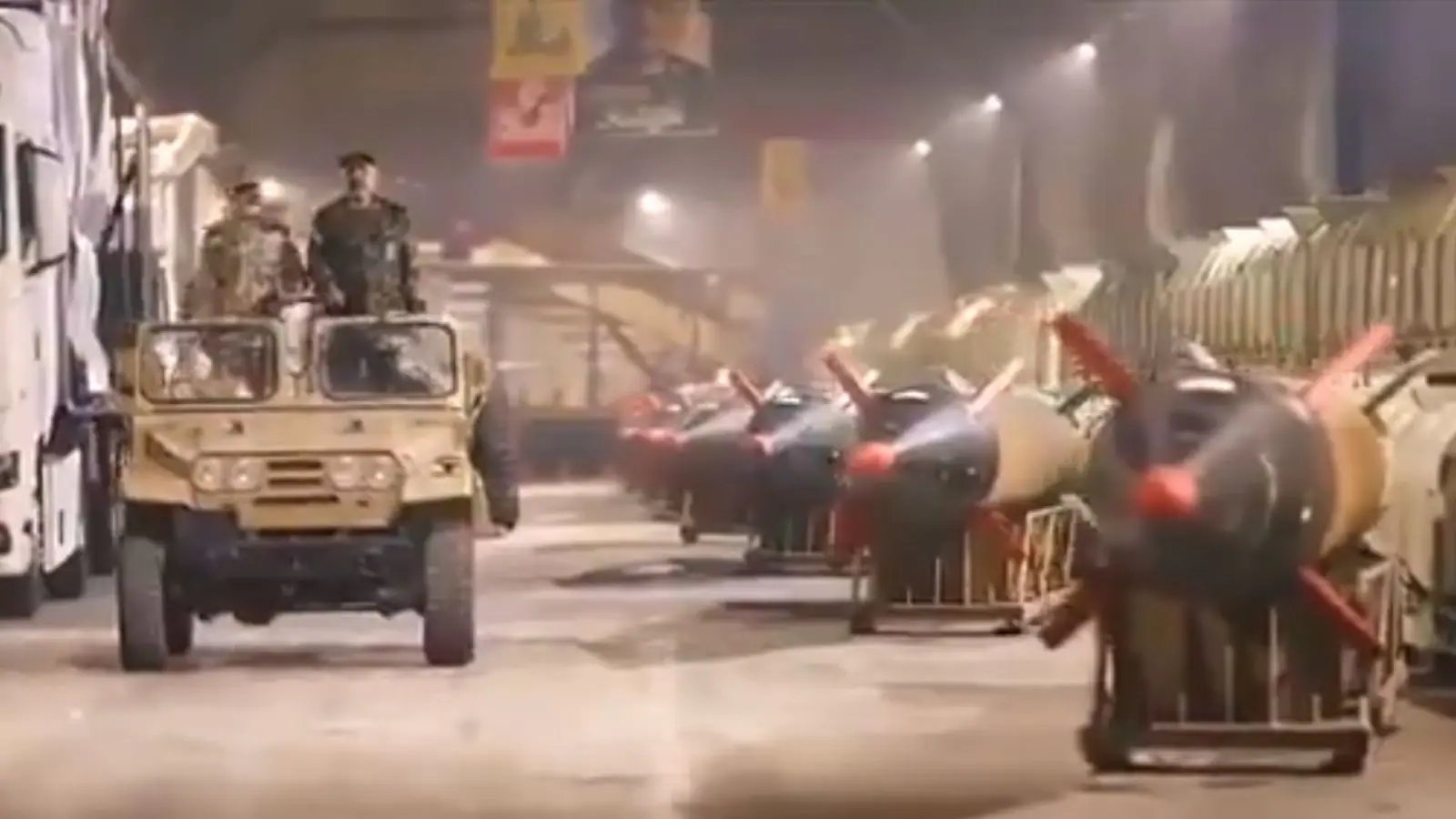
Tehran has pulled back the curtain on a vast subterranean missile base, showcasing fortified tunnel networks packed with heavy ballistic hardware in a direct military signal to Washington.
Broadcast footage released Tuesday by Iranian military channels showed armed forces chief of staff Ali Abdollahi walking alongside Revolutionary Guards Aerospace Force commander Majid Mousavi inside the cavernous facility. Rows of heavy missiles sat mounted on mobile haulers and transport racks beneath banners of the Islamic Revolutionary Guard Corps. The location remains secret. Officials declined to state when the footage was recorded.
The inspection arrived with an unvarnished ultimatum for the United States.
"If the enemy makes another move against us, our response will extend beyond the region," Abdollahi said during the walkthrough.
Plans to present the site were signaled days earlier by IRGC spokesperson Hossein Mohebbi, who confirmed that defense planners moved critical manufacturing lines into hardened mountain tunnels. The subterranean shift shields production lines against bunker-busting aerial munitions and keeps assembly runs operational during high-intensity conflict.
Mohebbi issued an additional warning regarding Tehran's undisclosed arsenal, cautioning that commanders hold back advanced weapon systems that will deploy immediately if confrontations with American and Israeli forces intensify. Tensions remain boiling after U.S. forces launched direct strikes against targets on Qeshm Island earlier this month.
Iran's network of so-called missile cities serves a dual purpose: storing pre-fueled ballistic hardware while providing survivable launch corridors beneath reinforced stone. Israeli air operations targeted these subterranean depots and launch vehicles during last year's combat operations to suppress Tehran's return-fire volleys. But repair efforts moved rapidly. Satellite imagery reviewed in February documented extensive reconstruction across targeted military bastions, alongside accelerated earthworks to conceal sensitive military and nuclear installations.
| Military Infrastructure Parameter | Operational Status | Details Grounded in Official Releases |
|---|---|---|
| Inspected Facility Type | Fortified Subterranean "Missile City" | Deep-tunnel launch and storage network |
| Senior Inspecting Officers | Armed Forces & IRGC Leadership | Ali Abdollahi (Chief of Staff), Majid Mousavi (Aerospace Cmdr) |
| Stated Operational Strategy | Hardened Munitions Dispersal | Moving active production underground to bypass airstrikes |
| Recent Theater Precedent | Hostile Territorial Strikes | U.S. strikes conducted on Qeshm Island earlier this month |
U.S. national security planners continue weighing further punitive options against Iranian assets, while Iranian military units maintain hardened missile batteries across the subterranean grid pending further combat orders.
| Deterrence Posture | Extended Retaliatory Mandate | Threat of strikes reaching outside Middle Eastern theater |