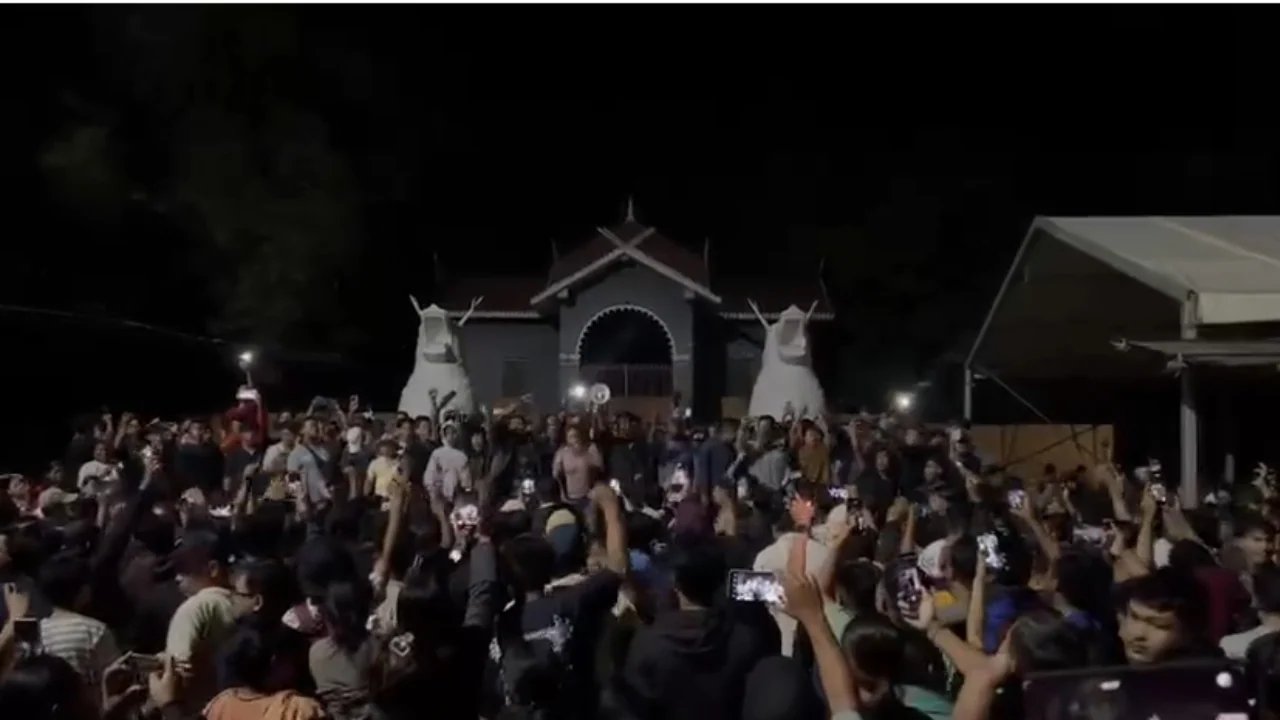
Friday evening turned into a cacophony across Imphal. From 7:30 pm to 8:00 pm, residents in the state capital’s five valley districts synchronized a deafening assault on their neighbors’ eardrums. They clanged steel utensils, hammered electric poles, and blasted vehicle horns. The air vibrated. It was loud, chaotic, and entirely deliberate.
The Federation of Haomee issued the call. They framed this noise as an "ultimate call for awakening" against the government’s continued failure to stop the killings. The target was clear: the state’s inability to restore normalcy since the ethnic conflict erupted in May 2023.
The action moved from static noise to physical movement near Kangla Fort. Thousands gathered inside the historic complex, the former seat of the Manipuri kingdom. They marched through the premises, chanting slogans. The tension spiked as the crowd swelled near the western gate, a mere 300 meters from Raj Bhavan.
Police reacted swiftly. They erected barricades on the approach road, blocking the path to the high-security zone. When the crowd pressed forward, officers fired several rounds of tear gas. The smoke hung over the fort’s perimeter. No injuries were reported, but the standoff signaled how close the situation had come to tipping.
The protest wasn’t just about noise; it carried a specific political weight. Protesters demanded the implementation of the National Register of Citizens (NRC) and the abrogation of the Suspension of Operations (SoO) agreement with armed groups. For many residents, these are not abstract policy points. They are the missing keys to security in a state that has bled for over three years.
The state government has yet to announce a new timeline for a political settlement. Meanwhile, the silence following the 30-minute outburst feels heavier than the noise itself. The next move likely rests with the Union Ministry of Home Affairs, which must decide whether to engage with the NRC demands or let the tension simmer until the next drumbeat.