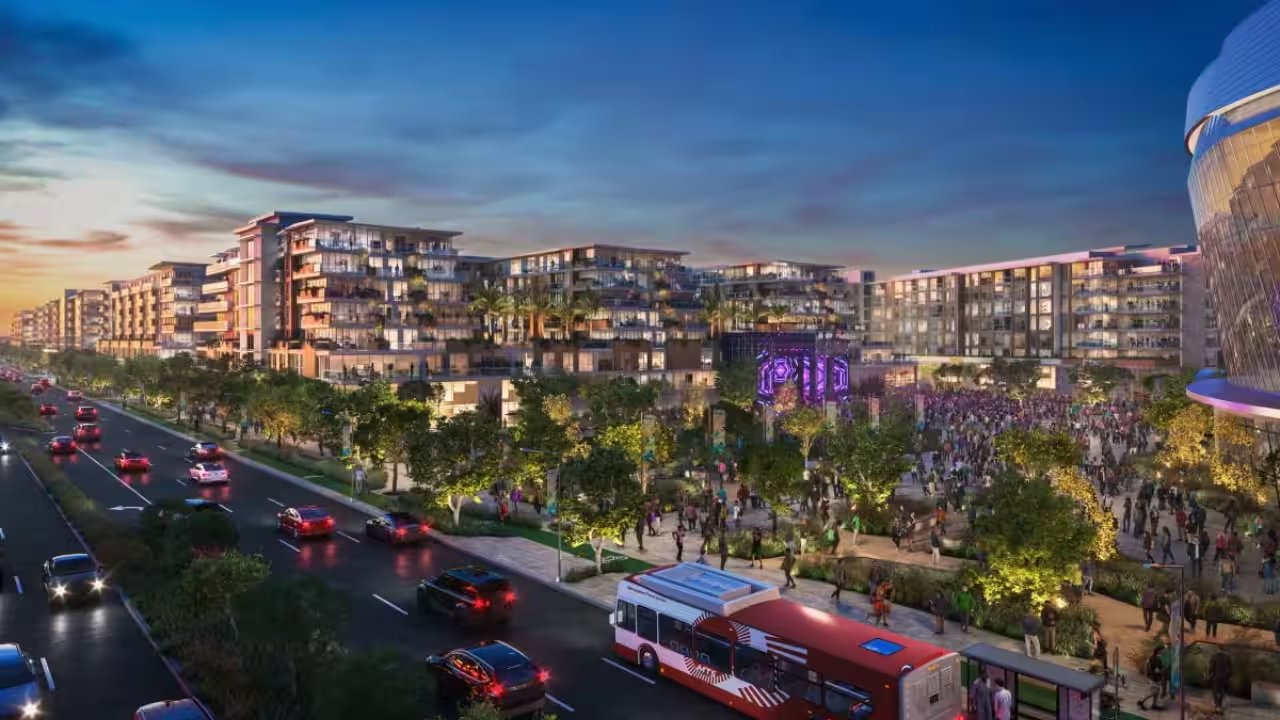
San Diego’s Land Use and Housing Committee voted unanimously on October 16, 2026, to advance the $4.2 billion Midway Rising proposal. The decision pushes the long-stalled redevelopment of the 48.5-acre Pechanga Arena site to the full City Council. This is the final administrative hurdle before construction can legally begin.
The plan is dense. It replaces the aging, parking-heavy arena complex with a mixed-use district containing 4,254 homes. That includes 2,000 affordable units and 2,254 market-rate apartments. A new 16,000-seat multipurpose arena, estimated at $526.4 million, anchors the entertainment core. The consortium behind the project—Zephyr, The Kroenke Group, Legends, and Chelsea Investment Corporation—finances the upfront costs.
Public money is on the line. The proposal bundles $460.3 million in infrastructure upgrades, covering street improvements, pedestrian routes, and 14.5 acres of new park space. San Diego’s Independent Budget Analyst estimates the city will recoup up to $378 million of these costs through an Enhanced Infrastructure Financing District. This mechanism taps future property tax increases to reimburse the developer, ensuring public benefits land before the city sees full financial returns.
Timeline disputes remain. The city’s analysts project a full 20-year buildout, while developers push for a 10-to-15-year window. Phase one prioritizes the new arena and initial housing blocks, keeping the existing Pechanga Arena operational until the replacement is ready. This phased approach aims to avoid disrupting scheduled events during the transition.
The path to the construction site was rocky. Years of legal battles over coastal height limits previously stalled progress. Governor Gavin Newsom signed legislation in September 2026 to clear these regulatory hurdles, retaining environmental reviews but unlocking the project. The full City Council must now vote on the development agreements. If approved, the Midway District transforms from a sports parking lot into a residential and commercial hub, reshaping the city’s southern skyline and housing landscape for decades.