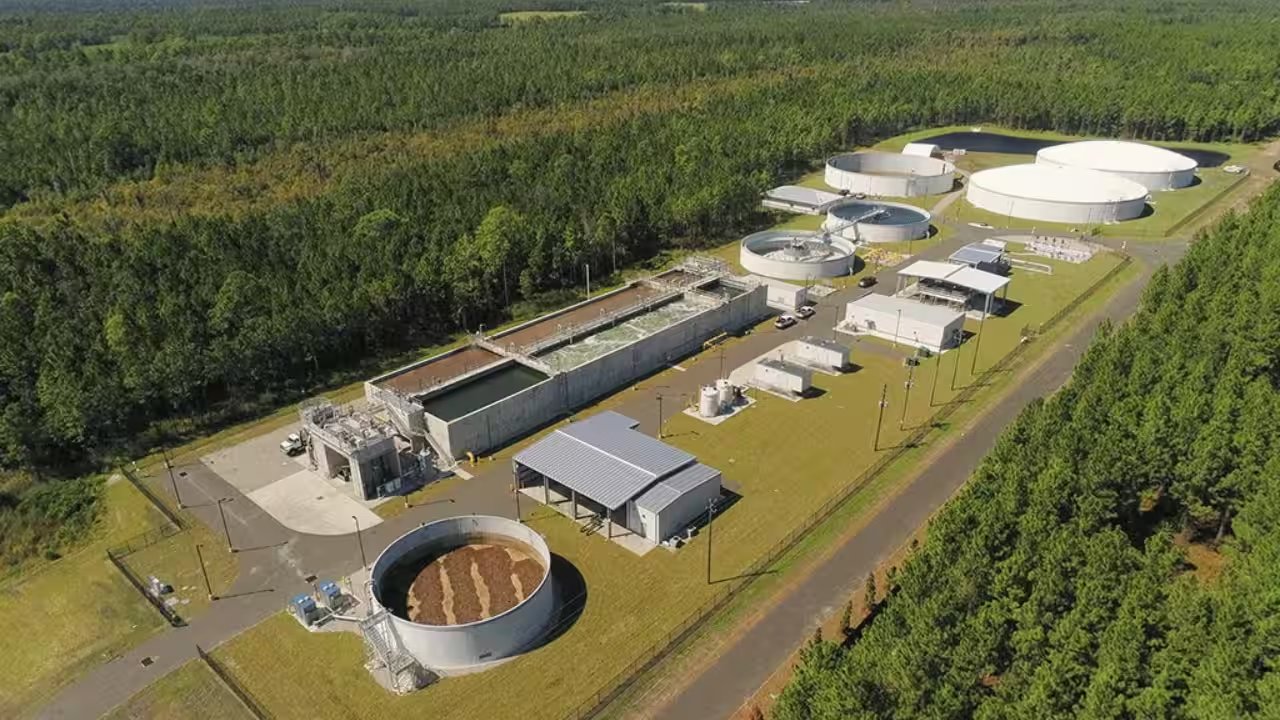
The State Road 207 Water Reclamation Facility in Elkton is now online. St. Johns County Utilities officials cut the ribbon on the $191.8 million project, officially ending years of construction and marking the largest capital improvement in the county’s history. The plant sits at 3055 State Road 207, treating wastewater into reclaimed water suitable for irrigation but not human consumption.
This move is urgent. The St. Johns River Water Management District’s Phase III Extreme Water Shortage Order remains in effect after rainfall levels dropped more than eight inches below the 12-month average earlier this year. By supplying treated wastewater for lawns and landscapes, the county hopes to extend the useful life of the Floridan Aquifer, Northeast Florida’s main source of fresh drinking water.
The facility began operational testing on May 11 with an initial capacity of 3.25 million gallons per day. Alan Flood, Senior Engineer for the St. Johns County Utility Department, explained the long-term strategy. “This project allows us to substitute a slightly lower quality of water for irrigation, extending the useful life of our aquifer for many years,” Flood said. The design allows for staged expansion up to 6.5 million gallons daily as local demand grows.
Environmental benefits are concrete. County estimates project the plant will prevent more than one million pounds of nitrogen and phosphorus pollution from entering the Matanzas River over the next 20 years, complying with Florida Senate Bill 64, which mandates the end of treated wastewater discharges into surface waters when they provide no useful benefit. The infrastructure was built under a progressive design-build contract with Jacobs, an international engineering firm, allowing design and construction to proceed simultaneously to accelerate the timeline.
The integration required significant external work, including approximately 15 miles of new transmission pipes and two major pumping stations. Funding came entirely from the utility’s enterprise fund, driven by service charges and connection fees rather than general property taxes. County records indicate average monthly residential utility bills remain about 10 percent below the regional average.
The next phase involves monitoring the plant’s performance during peak summer irrigation demand. County engineers will track nutrient levels in the Matanzas River to verify the projected pollution reductions. Additionally, officials will assess whether the initial 3.25 million-gallon capacity meets current consumption needs before initiating the first stage of expansion.