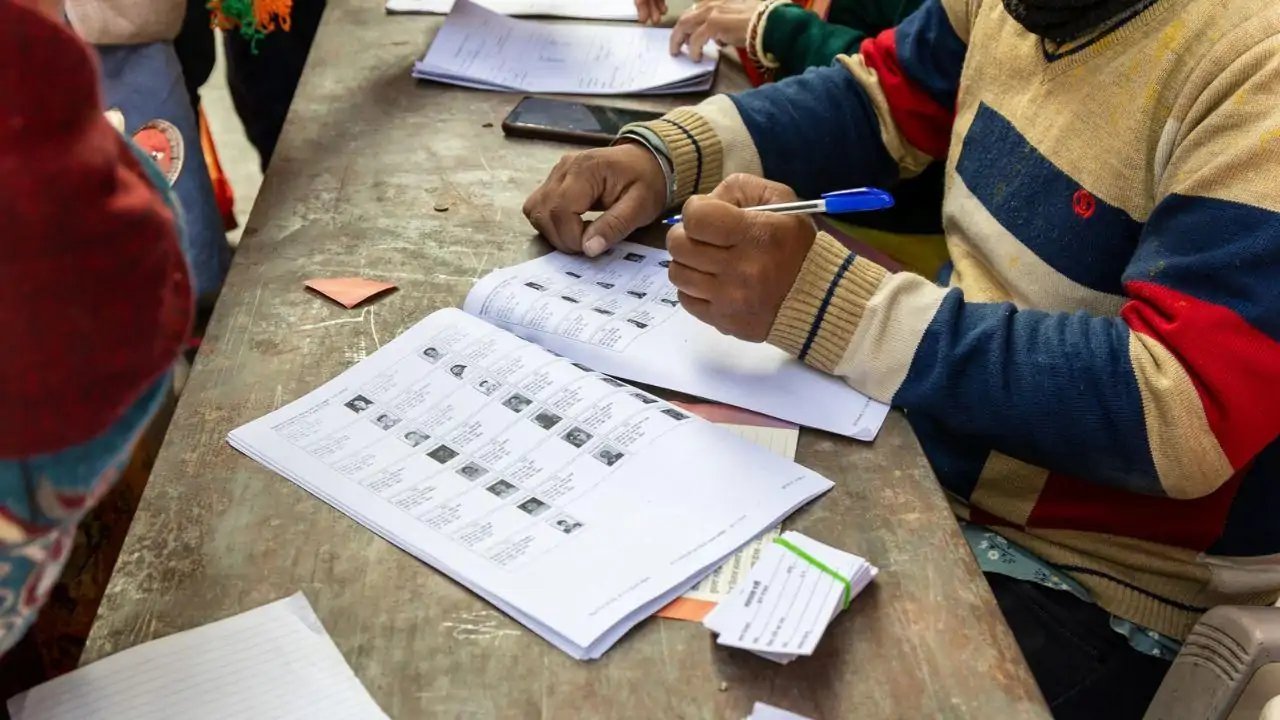
JAIPUR — Three official registers. Three wildly conflicting totals. All within a single calendar year.
The Election Commission released Rajasthan's draft electoral roll on Thursday under the Special Summary Revision (SSR) 2027, establishing the state’s preliminary voting strength at 5.26 crore citizens. But the tally immediately exposed a deep bureaucratic fracture. The new draft stands roughly 11 lakh voters higher than the 5.15 crore recorded during the final Special Intensive Revision (SIR) roll concluded in February.
Yet the confusion runs far deeper.
Just weeks ago in early October, the State Election Commission published its own final registry, locking the electorate at 5.45 crore. The math defies simple explanation. Between October and November, Rajasthan's recognized electorate effectively plunged by nearly 19 lakh voters on paper—leaving political parties questioning how state and central election bodies arrived at three drastically divergent headcounts for the same populace.
The numerical swing has thrown election watchdogs and opposition benches into open revolt. A single state cannot house three different democratic baselines.
| Electoral Register | Publishing Authority | Voter Count | Divergence from Current Draft |
|---|---|---|---|
| Special Intensive Revision (SIR) – Feb | Election Commission of India | 5.15 crore | -11 lakh voters |
| State Election Commission (SEC) Roll – Oct | State Election Commission | 5.45 crore | +19 lakh voters |
| SSR 2027 Draft Roll – Published Thursday | Chief Electoral Officer / ECI | 5.26 crore | Baseline reference |
The latest revision sets January 1, 2027, as its qualifying eligibility date. Electoral officers uploaded the draft files directly to the Chief Electoral Officer's portal and handed copies to recognized party representatives. But the data handover offered little reassurance to opposition strategists tracking assembly constituencies.
Congress leader Pooja Tripathi seized on the wide statistical gulf, attacking the credibility of the entire revision mechanism. She warned that aggressive administrative pruning risks stripping legitimate citizens of their franchise behind closed doors.
An electoral roll is not merely an administrative document; it's a gateway to democracy. The Election Commission must ensure that the process of cleaning voter lists does not end up disenfranchising genuine voters. No eligible Indian should have to fight the system to prove their right to vote.
Pooja Tripathi, Rajasthan Congress Leader
Tripathi demanded to know why dual administrative bodies operated in complete isolation instead of synchronizing their data prior to publication.
"If 26.63 lakh names were retained in one government electoral database but removed from another, what individual-level verification supports these deletions?" Tripathi asked. "Why were the two electoral authorities not required to reconcile their databases before publishing the respective roll?"
She argued that voter list verification must prioritize access over automated purging, insisting that systemic anomalies across state borders warrant scrapping the SIR exercise altogether.
The statutory countdown is already running. The Election Commission opened the public claims and objections window on November 12, giving voters and booth-level agents until December 11 to submit correction, addition, or deletion paperwork. Field teams will process these challenges over the coming weeks before releasing the binding, final electoral roll on January 4, 2027.