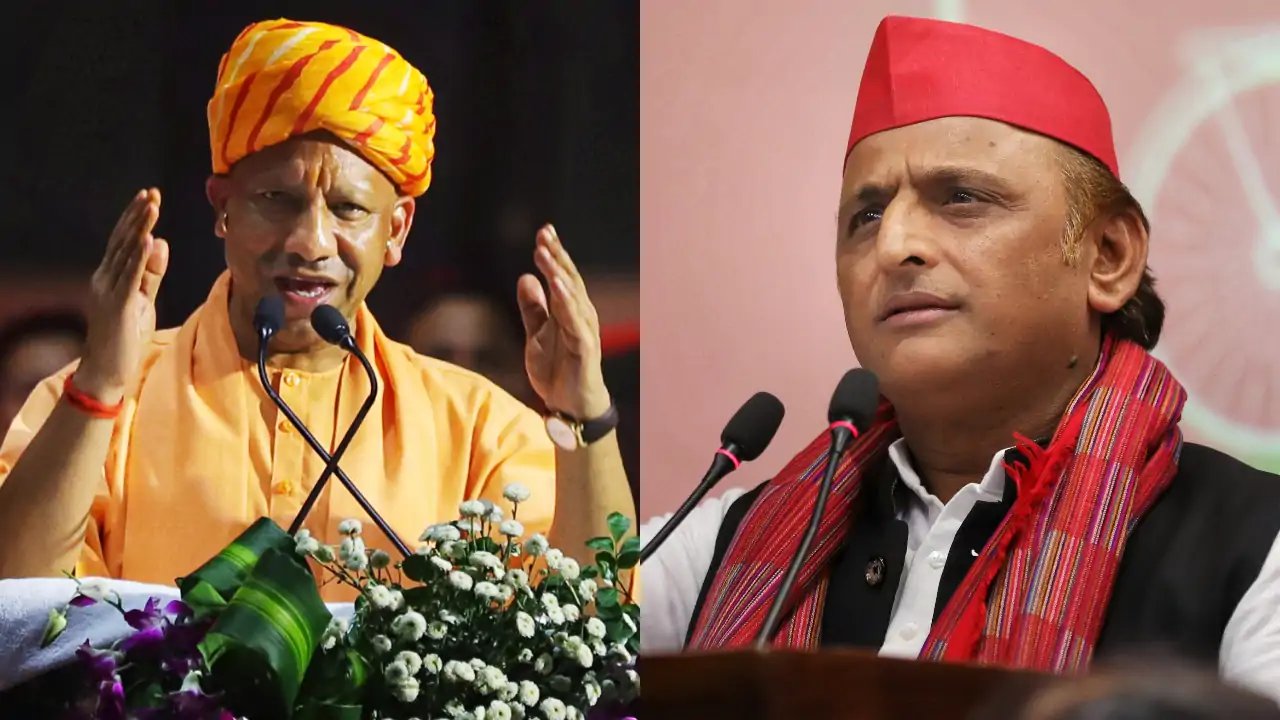
LUCKNOW — Chief Minister Yogi Adityanath remains the frontrunner to retain power in Uttar Pradesh even as acute anti-incumbency grips sitting legislators across party lines, according to findings from the Vote Vibe 'State Vibe' survey released ahead of next year's high-stakes Assembly elections.
The survey pegs the ruling Bharatiya Janata Party alliance at 41.9% in voter intention, clinging to a narrow 2.8 percentage point lead over the Samajwadi Party alliance at 39.1%. Yet the race tightens to a dead heat when measuring street-level perception. About 42.2% of respondents believe Akhilesh Yadav's Samajwadi Party holds the tactical upper hand, compared to 41.2% who perceive the BJP ahead.
The margins are razor-thin.
In the race for Chief Minister, Adityanath outperforms his party machinery. The incumbent commands a 44.1% personal preference rating—running 2.2 percentage points ahead of the BJP coalition's overall voting intent. Samajwadi Party chief Akhilesh Yadav trails at 34.5%, followed distantly by Congress leader Priyanka Gandhi at 6.5% and Bahujan Samaj Party supremo Mayawati at 5.8%.
Satisfaction with the state government stands at 41.3%, while 38.2% voice explicit dissatisfaction. But local anger flares intensely at the constituency tier. A staggering 50.2% of respondents express dissatisfaction with their local Members of Legislative Assembly, against just 23.6% who approve of their performance. Bahujan Samaj Party legislators face the sharpest ground backlash, registering an 81% dissatisfaction rate.
The numbers point to severe ticket cullings ahead of nomination deadlines.
Jobs dominate the electorate's priority list. Unemployment emerged as the single most pressing election issue at 26.5%, spiking to 36% among youths aged 18 to 24. Price rises trail at 16.3%—pinching hardest among urban households at 20.7% and Muslim respondents at 22.3%—followed by agrarian distress at 11.3%, law and order at 9.9%, healthcare and education at 8.9%, and corruption or the Ram Temple donation controversy at 8.0%. The Special Intensive Revision electoral roll exercise registered as the primary issue for only 3.6%.
| Key Survey Metric | Survey Share (%) | Leading Segment |
|---|---|---|
| Preferred CM: Yogi Adityanath | 44.1% | Exceeds BJP Alliance Share (41.9%) |
| Preferred CM: Akhilesh Yadav | 34.5% | Trails SP Alliance Intent (39.1%) |
| Top Issue: Unemployment | 26.5% | Peaks at 36% (Ages 18–24) |
| Top Issue: Inflation | 16.3% | Peaks at 22.3% (Muslim Voters) |
| MLA Performance Dissatisfaction |
Voting drivers reveal a fractured electorate: 24.8% base their choice on party image, 15.9% prioritize ideology, 15.3% focus on development, while the candidate profile and the chief ministerial face capture 15.1% each. Welfare delivery dictates the vote for 7.7%, and open caste loyalty accounts for 5.7%.
Underneath that surface, caste polarization remains stark.
Samajwadi Party consolidates 63% of the Muslim vote alongside traditional dominance among Yadav voters. The BJP counters by capturing 66% of the general category, while securing commanding leads across non-Yadav Other Backward Classes and non-Jatav Scheduled Caste electors. The Bahujan Samaj Party holds its primary redoubt strictly among Jatav Scheduled Castes.
Geography sharpens the split. The BJP dominates urban centers and holds a clear lead across Western Uttar Pradesh, whereas the Samajwadi Party surges across the rural Awadh belt. Purvanchal and Bundelkhand remain contested battlegrounds where rural voters remain evenly split between the two alliances.
Political parties now head into the formal campaign season balancing regional ticket distribution strategies against double-digit anti-incumbency across sitting assembly constituencies.
| 50.2% |
| Highest for BSP MLAs (81.0%) |
| Firm Voter Conviction | 63.6% | Strongest Among BJP Voters (69.8%) |