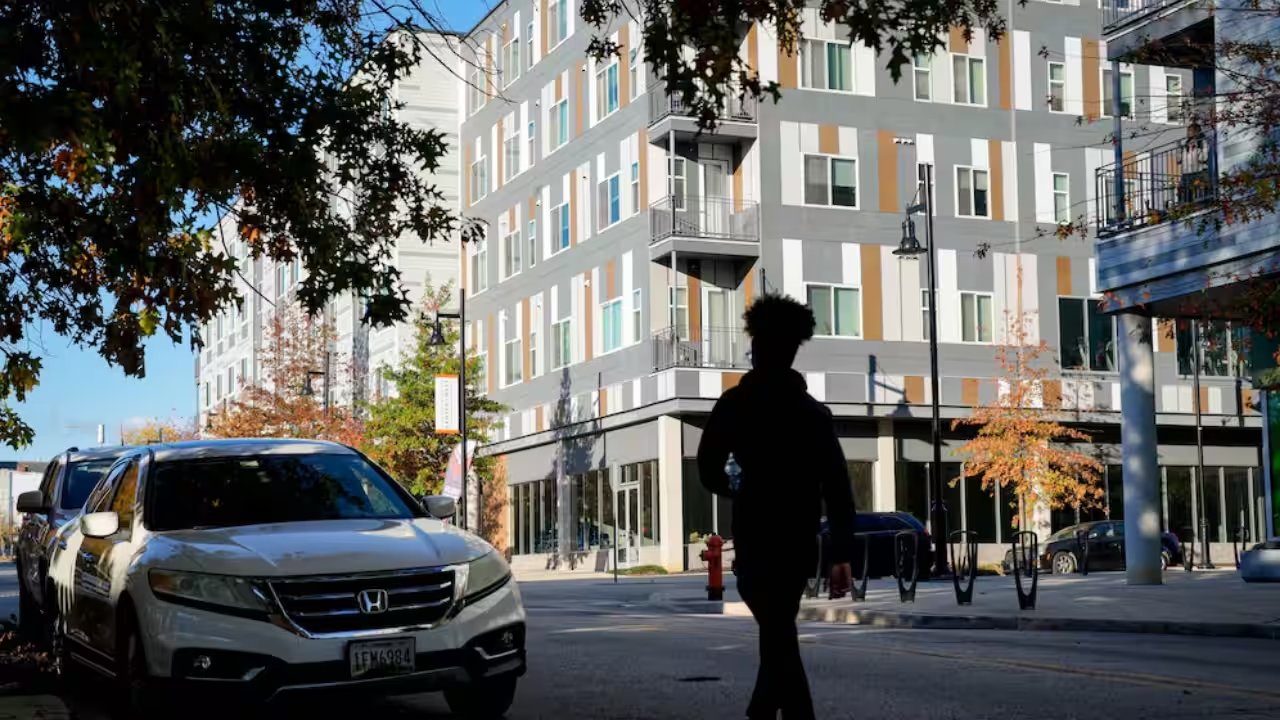
WASHINGTON — The US Supreme Court refused on November 9, 2026, to hear a constitutional challenge brought by West Baltimore residents against the City of Baltimore and New York-based developer La Cité Development, extinguishing the neighborhood’s final legal recourse against a two-decade redevelopment project that displaced hundreds of families but delivered little of its promised renewal.
Eighty words on a Supreme Court order sheet ended a bitter two-year federal battle. And with that single stroke, the court slammed shut the courthouse doors on the historic African American enclave of Poppleton.
Much of the 13.8-acre parcel remains a field of weed-choked rubble. For the families who stayed behind, two decades of urban renewal yielded demolished blocks, shattered equity, and hollow municipal pledges.
Baltimore City officials signed the master redevelopment agreement in September 2006, designating La Cité to overhaul approximately 13.8 acres of Poppleton into a dense commercial and residential hub. The prospectus promised sweeping change: roughly 1,650 housing units—including single-family homes, condominiums, and rental apartments—alongside 100,000 square feet of commercial space, neighborhood retail outlets, and a full-service grocery store.
To pave the way, the city wielded eminent domain aggressively. Municipal crews targeted more than 500 homes across the designated footprint, evicting residents and knocking down rowhouses to assemble contiguous parcels for private builders.
Yet the transformation stalled. The project hit repeated financial bottlenecks, blown construction deadlines, and bitter municipal friction. Baltimore City attempted to terminate the development contract in 2012, but La Cité sued to block the cancellation, successfully retaining its exclusive development rights. Rather than severing ties, the city amended the deal multiple times to salvage the venture.
Public money followed. In 2015, the city cleared approximately $58 million in tax increment financing to fund basic infrastructure and underwrite La Cité’s site work.
But construction crept forward at a glacial pace. The project’s first and only major residential milestone—CenterWest—did not open until 2019, delayed for months by interior water damage. The complex delivered two buildings containing approximately 262 rental units. Nothing else followed. The remaining 1,388 promised residential units were never built. The 100,000 square feet of commercial space never opened. And the promised neighborhood grocery store remained an unfulfilled blueprint.
Sensing the stalemate earlier in 2026, Maryland state lawmakers revoked a $500,000 state grant originally earmarked for the Poppleton grocery store, redirecting the funds to Open Works Baltimore, a nonprofit organization developing a separate makerspace facility in West Baltimore.
| Project Parameter | 2006 Master Redevelopment Plan | Delivered Status (2026) | Official Deficit |
|---|---|---|---|
| Total Footprint | 13.8 Acres | Approx. 13.8 Acres Cleared | Majority Vacant Plots |
| Residential Units | Approx. 1,650 Units | 262 Rental Units (CenterWest) | 1,388 Units Unbuilt |
| Commercial Space | 100,000 Square Feet | 0 Square Feet Completed | 100,000 Square Feet |
| Anchor Grocery Store |
Pushed to the brink by acres of abandoned dirt, the Poppleton Now Community Association joined six neighborhood property owners in 2024 to file a sweeping federal civil lawsuit against La Cité, the City of Baltimore, and municipal officials.
Lawyers for the community argued that the city’s use of sovereign eminent domain powers had unlawfully served private corporate balance sheets rather than a genuine public purpose. They maintained that the developer's prolonged inaction actively damaged surrounding homeowners, gutting property values and forcing remaining families to live inside a permanent demolition zone.
Federal judges showed no sympathy.
In June 2025, a federal district court dismissed the lawsuit in its entirety. The residents appealed to the US Court of Appeals for the Fourth Circuit, which affirmed the dismissal in May 2026. The appellate panel ruled that surviving residents lacked legal standing to assert Fifth Amendment constitutional takings claims over adjacent properties they did not personally own. The court also rejected the plaintiffs' common-law private nuisance claims, holding that the prolonged delay in private construction did not establish an actionable legal remedy under federal doctrine.
Petitioning the nation's highest court represented the residents' final roll of the dice. By declining the petition for certiorari, the Supreme Court leaves the Fourth Circuit’s dismissal undisturbed, permanently barring the community association from using federal courts to halt the arrangement or recover damages.
Researchers with the University of Maryland, Baltimore County's Baltimore Traces project—an academic initiative chronicling decades of urban planning in West Baltimore—have noted that Poppleton's current reality reflects an enduring municipal pattern: aggressive state clearance followed by private paralysis.
La Cité retains its development rights over the remaining acres, while surviving Poppleton residents must now rely entirely on municipal political pressure in City Hall to force construction on the vacant lots surrounding their homes.
| 1 Full-Service Supermarket |
| Never Constructed |
| $500,000 Grant Redirected |
| Public Financing | $58 Million TIF Approved | Subsidies Disbursed | Stalled Broad Deployment |
| Displaced Rowhomes | 500+ Properties Acquired | Demolished via Eminent Domain | Community Displaced |