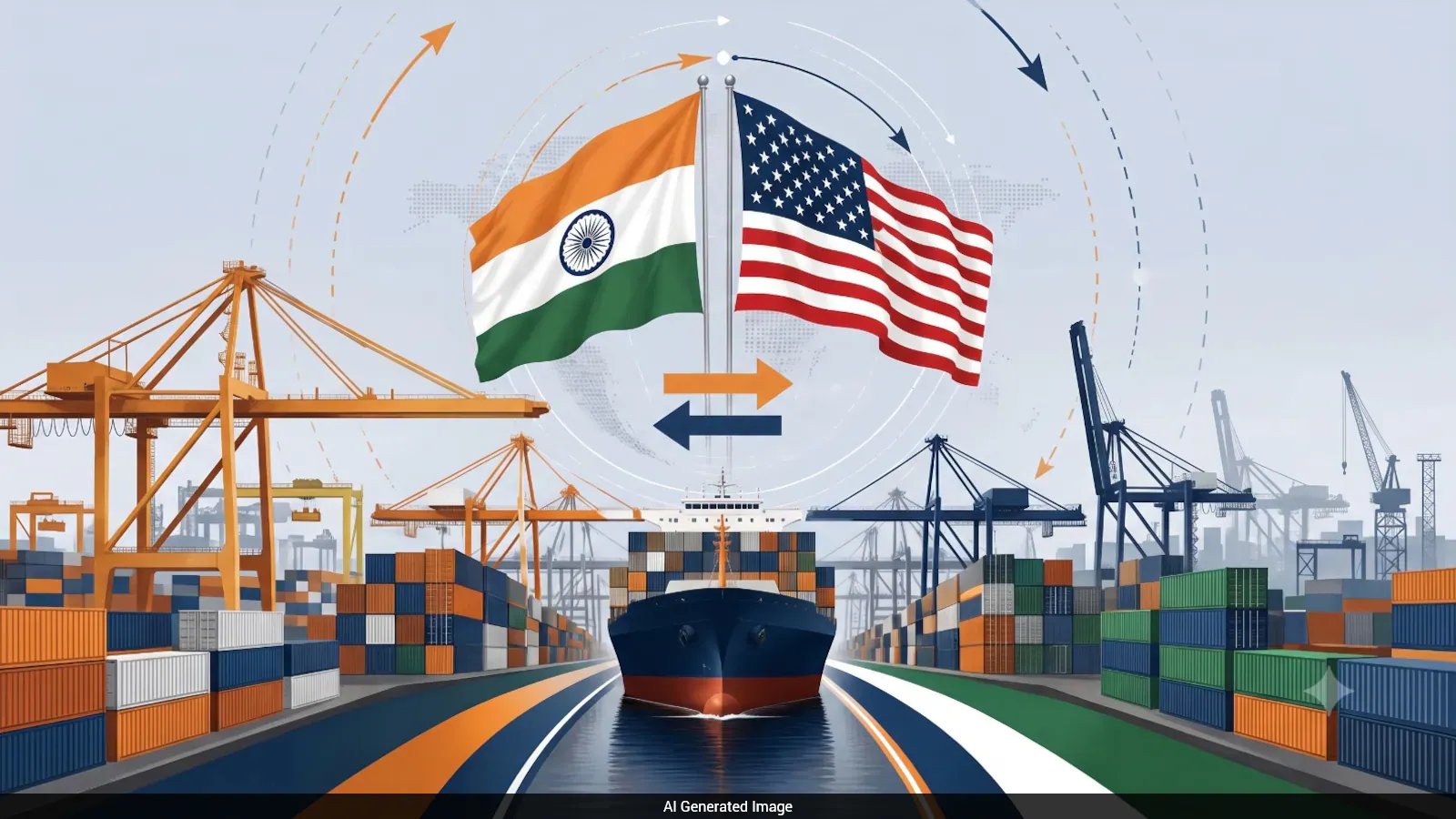
Commerce Minister Piyush Goyal declared the first tranche of the US bilateral trade agreement finalised on Thursday, sending a signal that the long-stalled negotiations have crossed the finish line. Speaking at the SRCC Centenary Conclave in Delhi, he stated that the document is currently in its final legal contours. The operationalisation of this phase is conditional. India will activate the deal only once it secures a comparable or competitive advantage over its peer countries in the global market.
Commerce Secretary Rajesh Agrawal reinforced this optimism to reporters, describing the current state of negotiations as being in a "very good zone." He indicated an anticipation to close and sign the deal at the earliest possible time. However, Agrawal clarified that the signature is contingent on a parallel workstream in Washington. The US must formalize its overall tariff structure, including outcomes from Section 301 investigations, before a mutually agreed signing date can be set.
External Affairs Minister S Jaishankar, addressing the Bloomberg New Economy Forum this week, noted that the talks are heading towards a "landing point." He emphasized that while the core strategic partnership remains unchanged, the technical aspect of securing favorable terms relative to competitive economies is complex. "Not everybody has worked out a deal," Jaishankar said, acknowledging that the US Trade Representative (USTR) and India’s Commerce Ministry are still ironing out these comparative issues.
This progress marks a significant thaw in bilateral relations, which witnessed a major downturn after Washington imposed punitive tariffs on India last year. Tensions escalated further following President Donald Trump’s assertions regarding his role in de-escalating the India-Pakistan military clashes of May 2025, a move that drew sharp reaction from Indian officials. The friction deepened with Washington’s new immigration policy and the decision to increase H1B visa fees.
The strain on ties was further exacerbated by the US decision to restrict a key green-card processing programme. This move directly impacted major global and Indian IT firms, including Tata Consultancy Services and Wipro. With the first tranche now finalised, the focus shifts to the technical alignment of tariff structures. Negotiators aim to conclude the remaining issues before the US formally announces its final tariff adjustments, a timeline that could determine when the full pact becomes active.