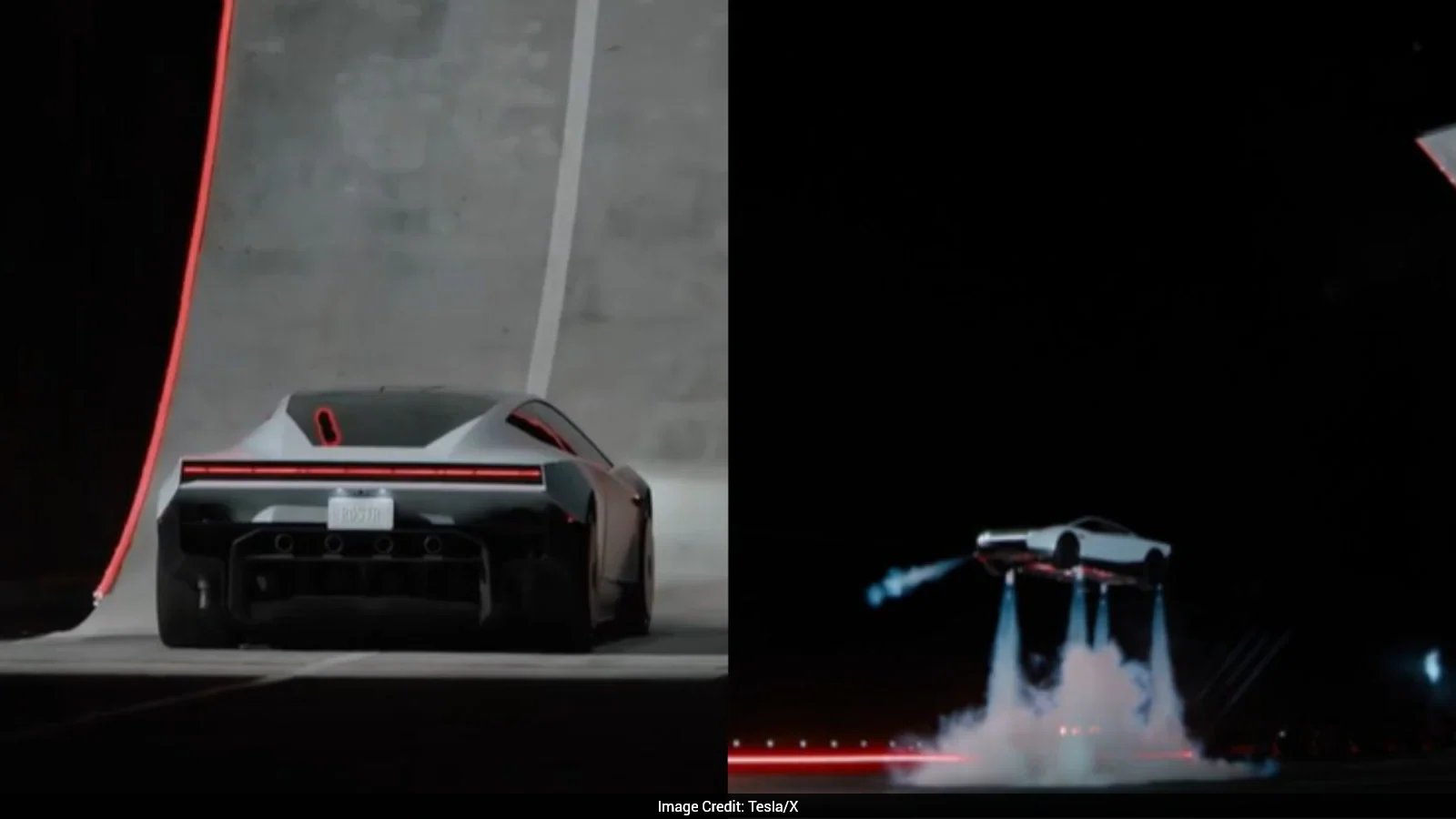
Tesla’s Roadster rolled out of the SpaceX hangar on 15 Oct 2026 with a stunt that could see the car soaring over the Grand Canyon, landing on its wheels, and reaching speeds beyond half the speed of sound.
The showcase took place at SpaceX’s Texas facility, where the vehicle accelerated onto a curved ramp, clipped it, and then flew briefly before a controlled landing. The demo followed a previous upside‑down run that went viral on social media.
Behind the spectacle are 10 cold‑gas thrusters fed by 600 litres of compressed air. Unlike combustion rockets, these SpaceX‑developed thrusters push pressurised gas to lift the car, allowing a short airborne manoeuvre before it returns to the ground.
If the Roadster’s specs hold, it will sit in the same league as the Porsche Taycan Turbo S, which clocks 0‑60 in 2.5 s and a 450 km range. The Roadster’s 10‑thruster system and potential subsonic speed give it an edge that most EVs can’t match.
In India, duty cuts on EVs could lower the price of a high‑performance model, but the Roadster’s exotic nature means it may stay premium. Buyers will need to weigh the allure of a flying EV against the likely premium cost and limited availability.
Tesla plans to launch the Roadster in 2027, with early deliveries likely to start in the US and Europe. If regulatory approvals align, Indian markets could see the car in select cities a bit later, offering a glimpse of what a supersonic, ski‑able EV looks like.