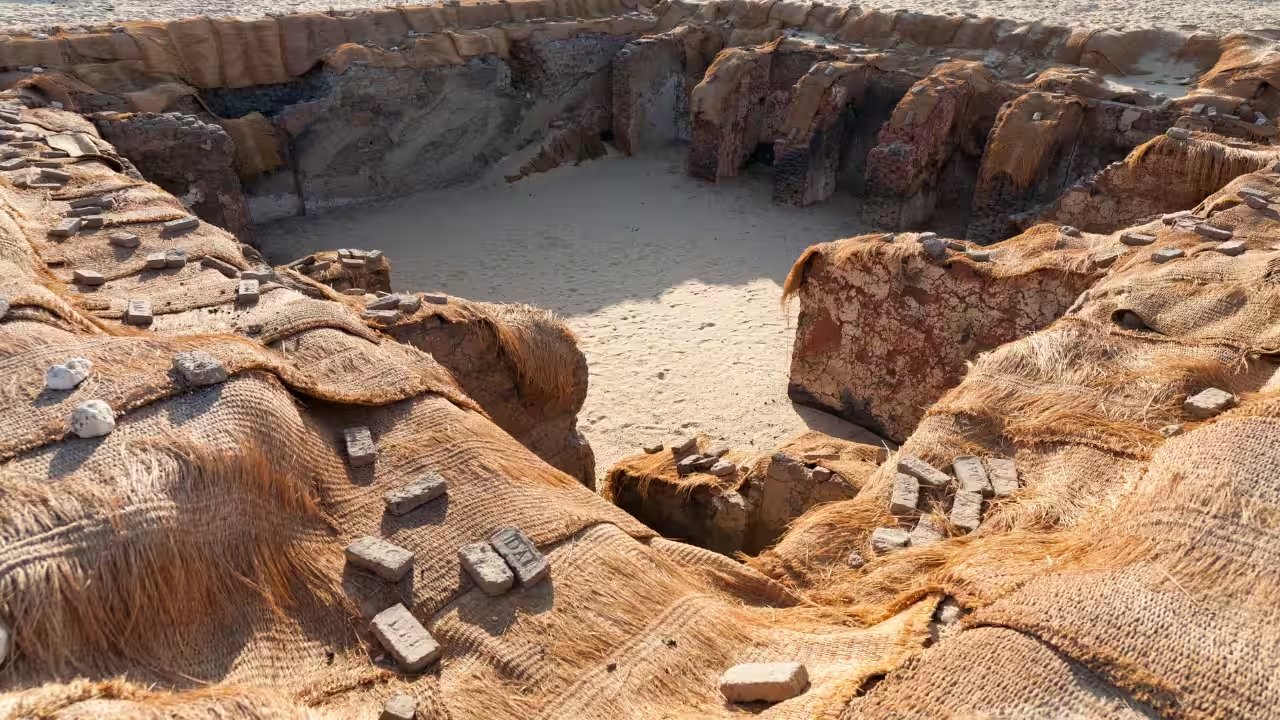
Purdue University bioarchaeologist Roselyn Campbell, whose research was published in Frontiers in Environmental Archaeology on Oct. 5, 2026, reports that 18 of 46 skulls recovered from the royal cemetery at Umm el-Qa'ab near Abydos show fractures that align with death at the time of burial. These injuries—most commonly smooth, linear breaks across the skull's crown—suggest blows from flat, broad objects rather than the blunt force of a mace.
The cemetery, excavated in the 1920s by Flinders Petrie, has long been a focus for debates about retainer sacrifice. Campbell’s team, using modern forensic techniques, re‑examined the very bones that Petrie had catalogued, arguing that his reliance on paraffin wax preservation obscured trauma that would now be distinguishable as perishable bone fractures.
Linear fractures that begin above the hypothesized brim line are typically the result of deliberate, forceful blows. A puncture wound near the eye and a chopping mark on the side of a skull further reinforce the hypothesis of intentional injury, inconsistent with accidental falls or post‑mortem damage. The bones of the hands and feet, however, remain unaltered, indicating that the bodies were not moved from earlier graves.
Egyptologists Salima Ikram and Dawn McCormack welcomed the study, noting that it is rare for modern methods to be applied to these remains. Ikram cautioned that while some retainers may have chosen to serve their king eternally, others were likely coerced. McCormack added that similar sacrificial scenes exist elsewhere, hinting at a broader cultural pattern. The researchers plan to widen their sample in forthcoming excavations, aiming to confirm whether the 39% figure holds across the broader First‑Dynasty burial population.
The findings raise fresh questions about the transition from early, possibly violent burial customs to the more elaborate, non‑sacrificial tombs that followed. As the study circulates, scholars anticipate a flurry of re‑analyses of other First‑Dynasty sites, potentially reshaping our understanding of ancient Egyptian sociopolitical structures.