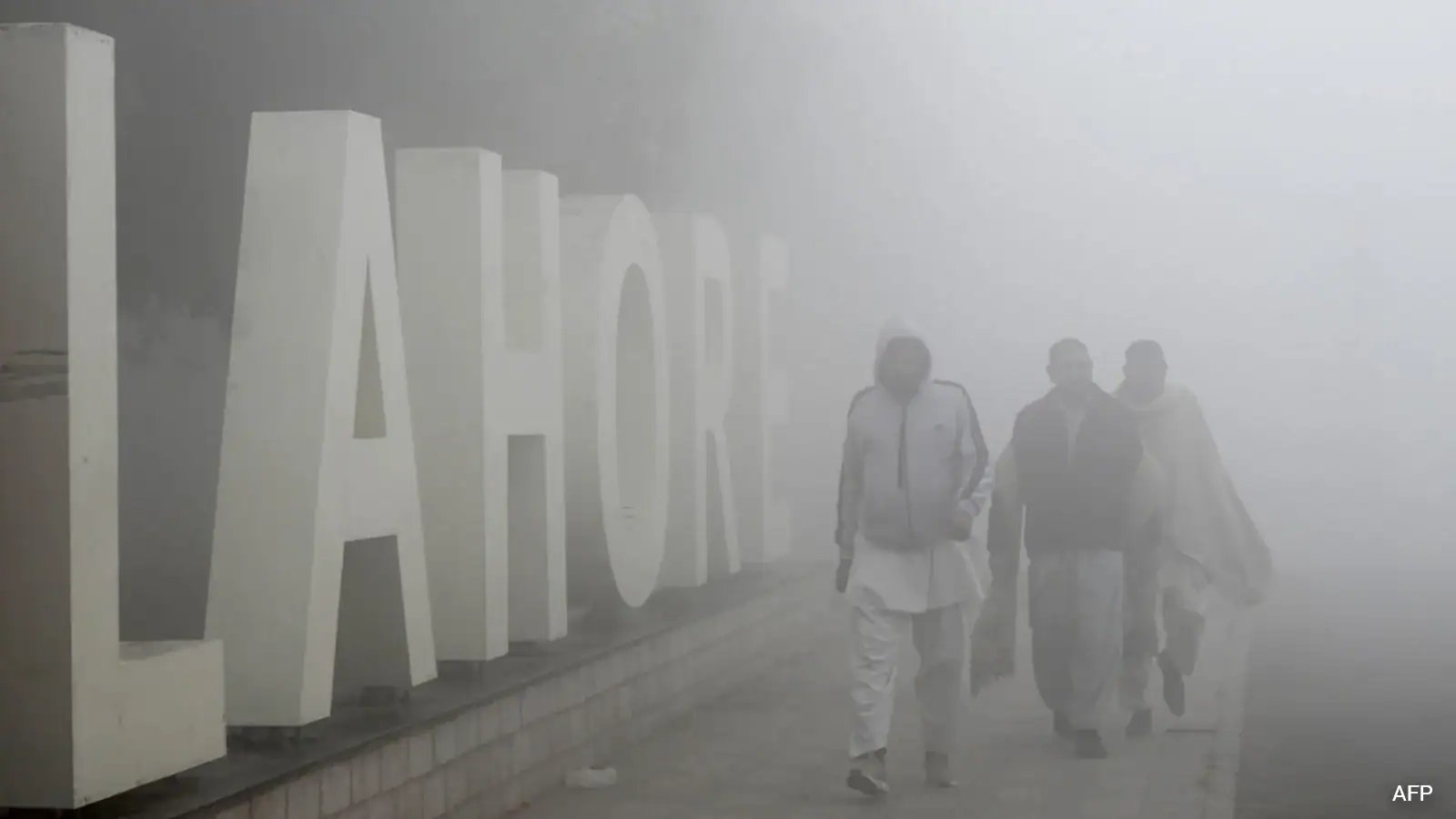
Lahore choked under an apocalyptic dome of grey haze this week as its Air Quality Index spiked to a hazardous 647.
Political leaders in Islamabad swiftly pointed across the border, blaming Indian Diwali fireworks for smothering eastern Pakistan. But their own environmental monitors have now dismantled that official narrative.
The Pakistan Air Quality Initiative released satellite data establishing that approximately 89 percent of the toxic smog blanketing Lahore and surrounding Punjab province originated from local stubble burning, not cross-border celebrations. Between October 1 and November 9, satellite sensors tracked 16,714 crop-residue fires across Pakistani Punjab alone.
Lahore's post-Diwali air showed no evidence of cross-border firecracker contamination. Local smoke did the damage.
Swiss atmospheric monitoring group IQAir ranked Lahore as the single most polluted major city on Earth as readings consistently crossed 590 before touching a peak index of 647. Fine particulate matter—microscopic PM2.5 particles that settle deep into lung tissue and bloodstream corridors—surged to 37.2 times above the World Health Organization's annual guideline limit. Across broader monitoring intervals, average PM2.5 density remained pinned at eight times global safety thresholds.
Yet Punjab Environment Protection Minister Marriyum Aurangzeb blamed cross-border drift for the chokehold. She asserted that light winds carried chemical smoke into Pakistani territory following Diwali celebrations on November 8, telling residents that dirty air would clear once meteorological patterns shifted.
PAQI's analytical audit rejected that theory outright. It ruled that empirical evidence failed to establish any definitive correlation between the Indian festival and Lahore's post-November 8 pollution trajectory.
The available evidence does not support attributing Lahore's poor air quality after Diwali to fireworks across the border.
Pakistan Air Quality Initiative Assessment
| Environmental Metric | Verified Measurement | Official Agency / Baseline |
|---|---|---|
| Peak Lahore AQI Reading | 647 (Hazardous) | Swiss IQAir Real-Time Platform |
| PM2.5 Concentration Surge | 37.2x Baseline | World Health Organization Annual Limit |
| Domestic Farm Fires (Oct 1–Nov 9) | 16,714 Stubble Fires | Pakistan Air Quality Initiative Satellite Data |
| Domestic Crop Burning Contribution | ~89% of Regional Pollution | Pakistan Air Quality Initiative |
New Delhi's Ministry of External Affairs has maintained public silence on Aurangzeb's latest accusations, choosing not to dignify the cross-border barbs as domestic data from Lahore handles the rebuttal. With harvest season ongoing and winter temperature inversions trapping heavy smoke against the Himalayan foothills, municipal emergency wards across Punjab face escalating respiratory caseloads while provincial authorities confront an exclusively domestic farm fire enforcement crisis.
| Disputed Culprit Date |
| November 8 (Diwali) |
| Punjab Environmental Ministry Statement |