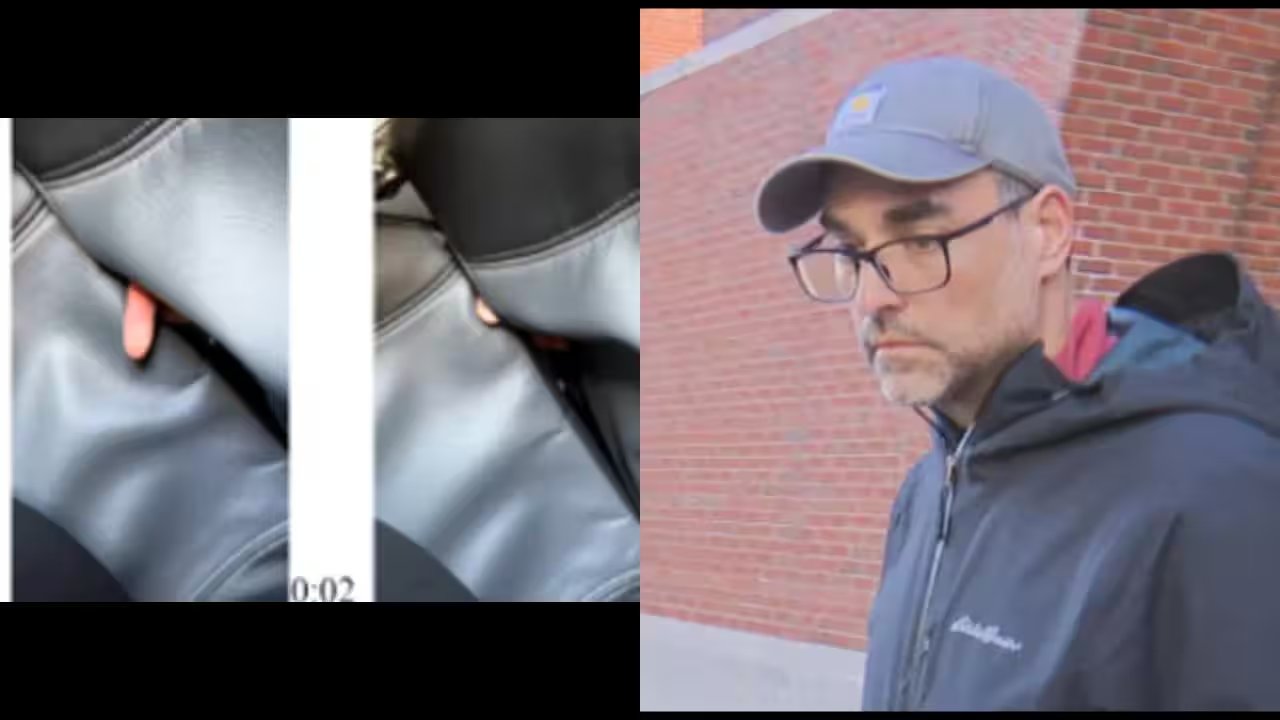
Jonathan Alan Lefman, 48, is officially in the federal dockets after a jury in Boston found him guilty of abusive sexual contact on October 16. The crime happened in the cramped, pressurized silence of a JetBlue cabin. He wasn’t just a passenger. He was a predator using the physical architecture of the plane against a teenager.
The details from the August 30, 2024, flight from San Juan, Puerto Rico, are grim. Lefman traveled with his wife and four children. The 17-year-old victim sat directly in front of him. Court documents reveal Lefman wedged his finger between the back and bottom of her seat to touch her buttocks. He did this multiple times. One moment, he saw his own reflection wedged between the seats in the seatback monitor. On another occasion, the victim managed to record a video of his fingers protruding into her personal space. She also filmed him as he exited the aircraft on the jet bridge.
The incident didn’t end when wheels locked. A female family member of the victim, sitting in a different row, confronted Lefman on the ground. She showed him the video. JetBlue supervisors were notified. Lefman was arrested in February 2025 and indicted by a federal grand jury in March 2025. The charge falls under the special aircraft jurisdiction of the United States, a specific legal bucket for crimes committed on US-registered planes regardless of location.
United States Attorney Leah B Foley called the verdict a clear message. "No one should have to fear being sexually assaulted, whether in the air or on the ground," she said. The law is unforgiving here. The charge carries a maximum sentence of two years in prison, five years to a lifetime of supervised release, and a fine up to $250,000. It’s a heavy price for a man who thought he could hide behind a plastic seatback.
Lefman now waits for the gavel. Judge Julia E. Kobick has set the sentencing date for January 12, 2027. That is a long time for a man to carry the weight of a federal criminal record. The victim and her family will likely be present. The legal process is slow, but the record is permanent.