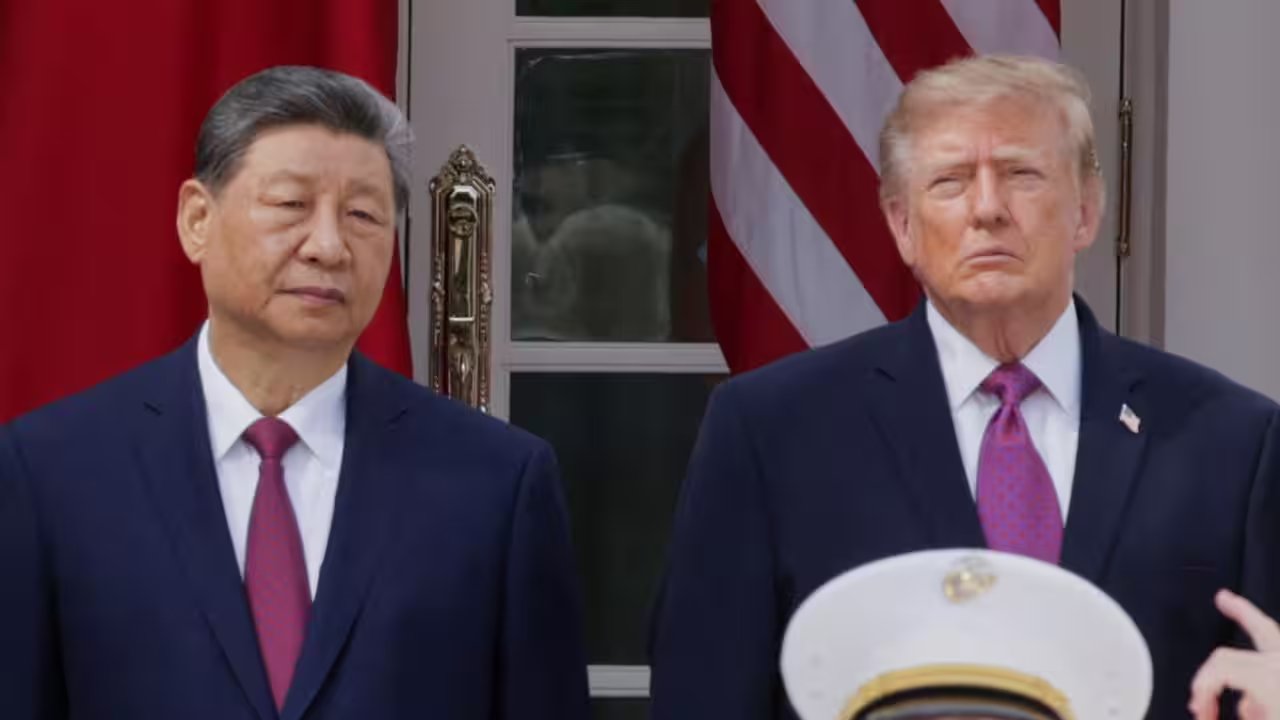
Xi Jinping stood beside Donald Trump at the White House welcome ceremony and delivered a message that cut deep into American strategic anxiety. He explicitly named the "Thucydides Trap," a term coined by Harvard political scientist Graham Allison, to describe the historical pattern where a rising power—Athens—challenges an established one—Sparta, leading to war. In Allison’s analysis of 16 such historical cases, 12 ended in conflict. By invoking this specific framework, Xi implicitly acknowledged that China’s ascent is being perceived as a threat, while simultaneously arguing that this outcome is not inevitable.
The Chinese leader’s rhetoric was carefully calibrated. He did not speak of surrendering geopolitical influence. Instead, he framed the relationship as one where competition is "moderate," differences are "manageable," and peace is "predictable." Xi argued that China’s "great rejuvenation" and Trump’s "Make America Great Again" agenda could proceed in parallel, positioning Beijing as a partner rather than a rival. This was a subtle but potent shift: he placed the burden of avoiding the trap squarely on the established power, suggesting that the US must resist treating China’s growth as an existential threat demanding containment.
Trump’s response was notably warm, a stark departure from the confrontational rhetoric that has defined US-China relations for years. He described Xi as a "great leader" and emphasized the personal bond between them, stating the two nations had a "great relationship." This tone has not gone unnoticed. Critics in Washington, including a headline in The Atlantic, labeled Trump a "Deferential President," mocking the image of him waiting at the bottom of the airline steps for the Chinese president. The criticism centers on the perception that Trump is abandoning the hardline stance that previous administrations maintained against Beijing.
Secretary of State Marco Rubio offered a more sober counterpoint earlier in the day. He argued that engaging Beijing at the highest level is not a sign of weakness but of responsibility, given the scale of the rivalry. "The relationship between the United States and China will define the 21st century," Rubio said. This statement echoes language previously used to describe US-India ties, a comparison that likely stings New Delhi as it watches its strategic partner pivot. For now, the diplomatic theater is set, but the underlying tensions over Taiwan, military expansion, and trade remain unresolved. The next test will be whether this personal rapport translates into concrete policy shifts or remains a superficial gesture amidst deepening structural rivalry.