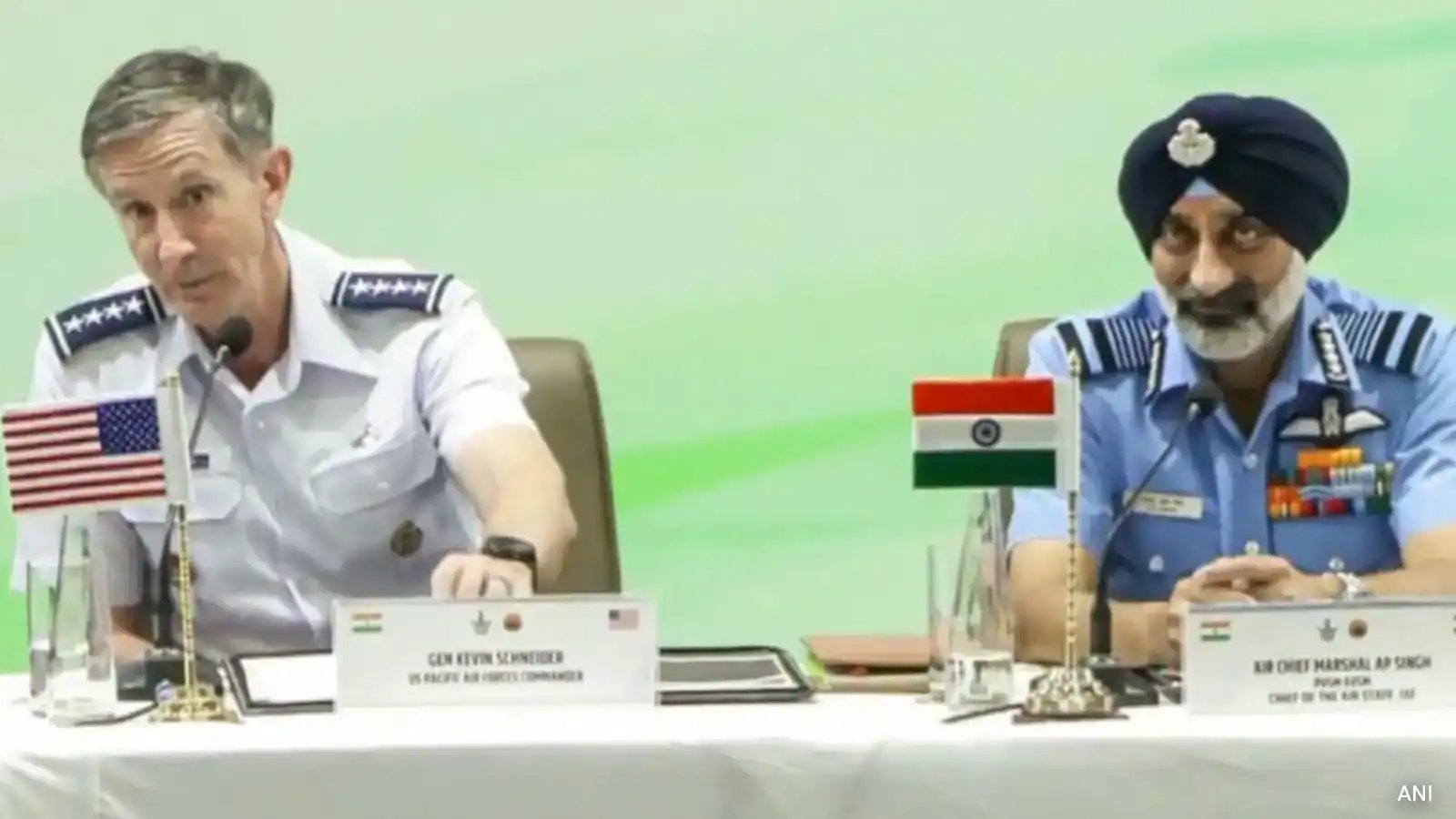
Air Chief Marshal AP Singh did not mince words when standing next to General Kevin Schneider, Commander of US Pacific Air Forces. "Your people don't even let us go near the aircraft, and you are talking about selling it to us," the IAF chief told reporters at the concluding press conference of Exercise Tarang Shakti-2026 in Jodhpur. It was a blunt assessment of the friction in US-India defense trade, delivered live on stage.
Six F-35 Lightning II jets touched down in Rajasthan for their first-ever participation in the multinational drill. Yet, the access remained strictly limited. Singh clarified that while Indian pilots flew in close formation, the US did not allow them to inspect the cockpit. He noted this is standard procedure for nations protecting sensitive military technology. Schneider, standing beside him, nodded along. "There are programme-level security classification guides that determine what we are able to share, when we share it, as well as how we protect it," the US general said, emphasizing that the decision was not his to make but governed by rigid protocols.
The conversation quickly shifted to the other side of the geopolitical spectrum. Singh confirmed that Russia has offered its Su-57 fighter, though no decision has been made. "Yes, the Russians have offered. But there has been no decision yet," he stated. This leaves New Delhi in a delicate balancing act. India is seeking an interim fifth-generation capability while its indigenous Advanced Medium Combat Aircraft (AMCA) remains years away from induction. The urgency is palpable. China is expanding its stealth fleet with J-20 and J-35 jets, and Beijing is reportedly set to supply 40 J-35s to Pakistan. Such a deployment would place advanced stealth technology directly on India's western border.
The stakes extend beyond the jet itself. A purchase involves technology transfer, weapons integration, maintenance, and long-term strategic dependence. For India, the challenge is acquiring this capability now without compromising the long-term goal of building its own fifth-generation fighters. The next step involves internal deliberations on whether to pursue interim options from the US or Russia, a decision that will shape air superiority dynamics in the region for the next decade.