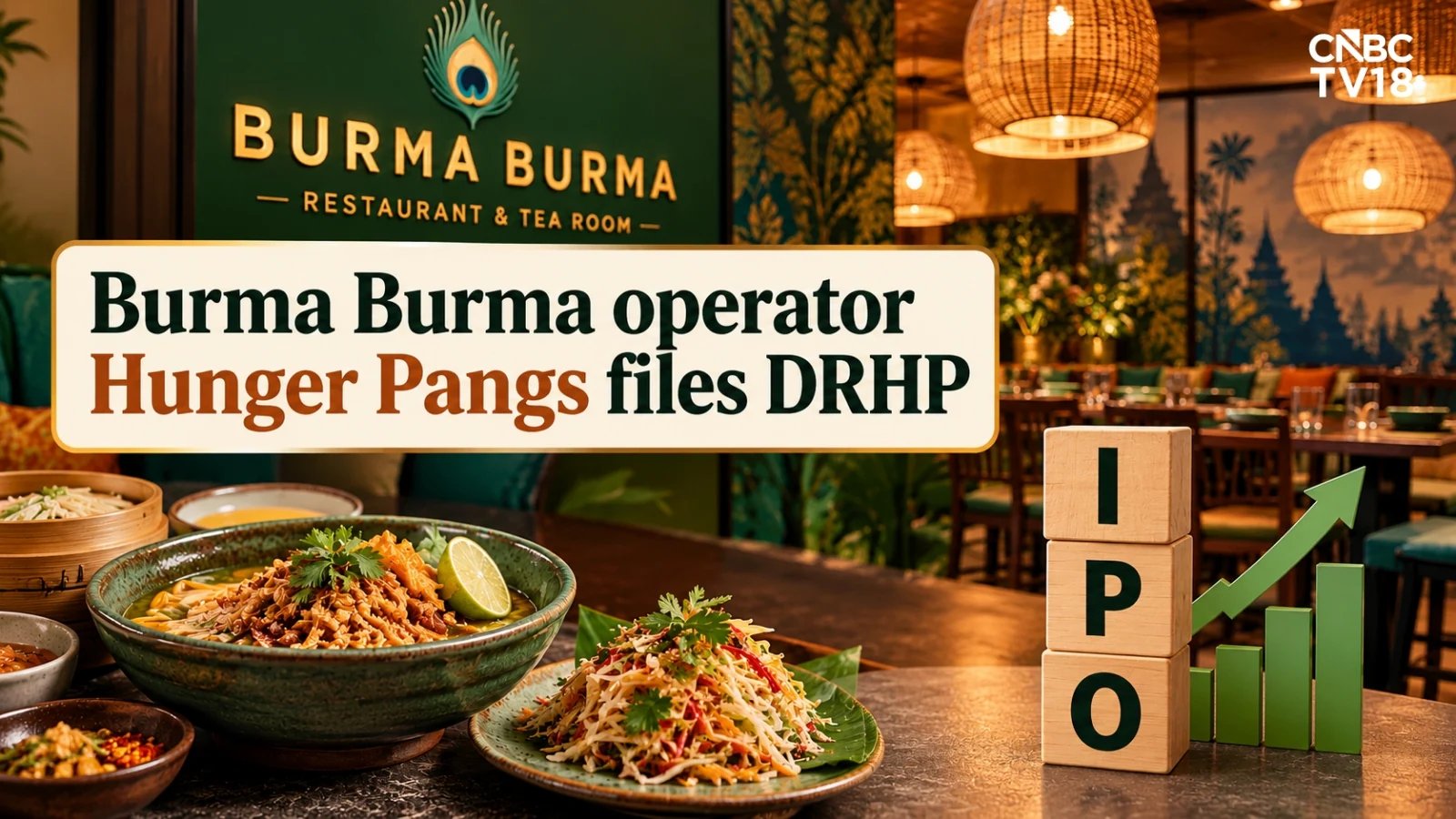
The draft red herring prospectus landed with SEBI on October 17. Hunger Pangs, the entity behind the all-vegetarian Burma Burma chain, is seeking up to ₹150 crore through a fresh issue, alongside an offer for sale of 2.79 crore shares by existing stakeholders. Panthomath Capital Advisors is the sole book-running lead manager. The price band and final size remain TBD, but the intent to raise capital for expansion is clear.
The numbers tell a story of scale without yet hitting the bottom line. Revenue from operations jumped 46.56% to ₹155.50 crore in FY26, up from ₹106.10 crore in FY25. Yet, the net loss ballooned to ₹15.37 crore, a stark contrast to the ₹1.53 crore loss in the prior year. This widening deficit highlights the capital-intensive nature of their expansion, where lease liabilities and depreciation hit the P&L before a new restaurant reaches full efficiency.
As of July 31, 2026, the brand operates 22 restaurants across nine cities, including Mumbai, Delhi, and Bengaluru. The average bill value sits at ₹2,400. Occupancy costs are a heavy burden, consuming ₹35.57 crore in FY26—nearly 23% of top-line revenue. The DRHP flags a critical risk: dependence on a single brand and format. If customer interest wanes or food safety issues arise, the impact is magnified because there’s no other revenue stream to cushion the blow.
Proceeds from the fresh issue will go toward new restaurants and general corporate purposes. Existing shareholders like Ankit Virendra Gupta and Chirag Narendra Chhajer are offloading up to 60 lakh shares each. The company is also betting on a pivot beyond dine-in, planning to launch packaged food and ready-to-eat products. This move aims to decouple growth from the capex-heavy restaurant model, though delivery aggregator commissions (10.76% of FY26 revenue) remain a persistent margin dragger.
Investors will likely scrutinize the path to profitability. The Q4 FY26 results showed a small profit of ₹1.09 crore, a glimmer of hope after full-year losses. But with occupancy costs fixed and new outlets taking 3-6 months to mature, the next few quarters will be a stress test for management’s ability to balance aggressive expansion with cost control.