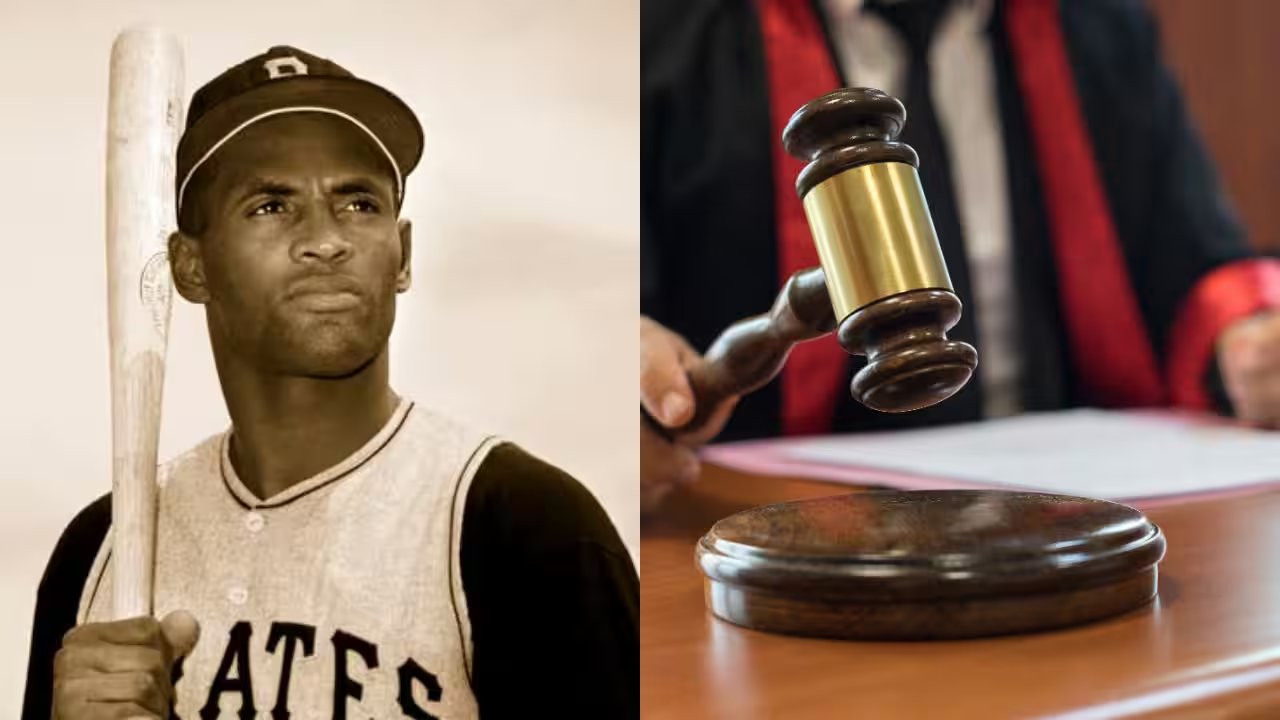
The US Supreme Court rejected an appeal by the three sons of Hall of Fame baseball icon Roberto Clemente on November 9, refusing to intervene in their fight against Puerto Rico over commemorative license plates bearing their father's likeness.
Lawyers for Roberto Clemente Jr., Luis Roberto Clemente, and Roberto Enrique Clemente had asked the justices to rule that the territorial government seized private property without compensation when it printed the legend's face on vehicle registration tags. The high court turned away the petition without explanation. The standoff centers on millions of dollars. The family sought $45 million in damages alongside $3.15 million in statutory trademark compensation, accusing the government of monetizing a guarded family brand to fill depleted public accounts.
Puerto Rico launched the specialty registration drive in 2022 to commemorate the 50th anniversary of Clemente's death. Officials plastered Clemente's portrait across plates and registration tags alongside his iconic Pittsburgh Pirates jersey number 21 and his milestone 3,000th career hit. Drivers paid mandatory add-on fees of $21 and $5, generating approximately $15 million for government coffers as the island fought through bankruptcy recovery.
Yet not a dollar went to the family.
Clemente's sons, alongside two family-owned commercial entities established to oversee their father's intellectual property and philanthropic estate, filed suit to freeze the initiative and recover the proceeds. The administration in San Juan discontinued the specialty plates at the end of 2022, but the financial dispute intensified. The family maintained that Puerto Rico's commercial exploitation of Clemente's name and likeness breached the Fifth Amendment of the US Constitution, which bars the government from taking private property for public use without just compensation.
Federal judges repeatedly pushed back against the sons' constitutional theory. Presiding over the US District Court in San Juan, Judge Gina Méndez-Miró dismissed the lawsuit. The Boston-based 1st US Circuit Court of Appeals subsequently affirmed parts of that dismissal, ruling that Puerto Rico's temporary use of the trademark did not amount to an unconstitutional physical taking under the Fifth Amendment.
Petitioning the Supreme Court, attorneys for the Clemente estate argued that the appellate ruling carved a dangerous exception into constitutional safeguards by stripping intangible commercial assets of standard property protections. Puerto Rico countered that the appellate judges acted strictly within settled constitutional doctrine, insisting the territory operated inside legitimate legal boundaries.
| Dispute Parameter | Official Detail |
|---|---|
| Petitioners | Roberto Clemente Jr., Luis Roberto Clemente, Roberto Enrique Clemente |
| Respondent | Government of Puerto Rico |
| Disputed Program | 2022 Commemorative 50th Anniversary License Plates & Tags |
| Total Government Revenue Generated | Approximately $15 million |
| Damages Sought by Family | $45 million in damages, $3.15 million in trademark penalties |
| Initial Dismissal Ruling | US District Judge Gina Méndez-Miró (San Juan) |
Clemente remains Puerto Rico's ultimate sports hero. Born in Carolina, the right fielder spent 18 seasons with the Pittsburgh Pirates from 1955 to 1972, collecting 15 All-Star selections, two World Series rings, and a lifetime .317 batting average. His final regular-season swing on September 30, 1972, delivered his exact 3,000th career hit.
Three months later, on December 31, 1972, Clemente boarded an overloaded cargo plane in San Juan carrying emergency food, medicine, and relief supplies to victims of a catastrophic earthquake in Managua, Nicaragua. The aircraft crashed into the Atlantic Ocean shortly after takeoff, killing the 38-year-old superstar. The National Baseball Hall of Fame waived its traditional five-year waiting window, inducting him in 1973.
Legal counsel for the Clemente brothers confirmed that while the Supreme Court avenue is closed, the family will press forward with their remaining statutory trademark claims still pending in the lower federal courts.
| Appellate Ruling | 1st US Circuit Court of Appeals (Boston) |
| US Supreme Court Action | Appeal denied without comment (Nov. 9) |