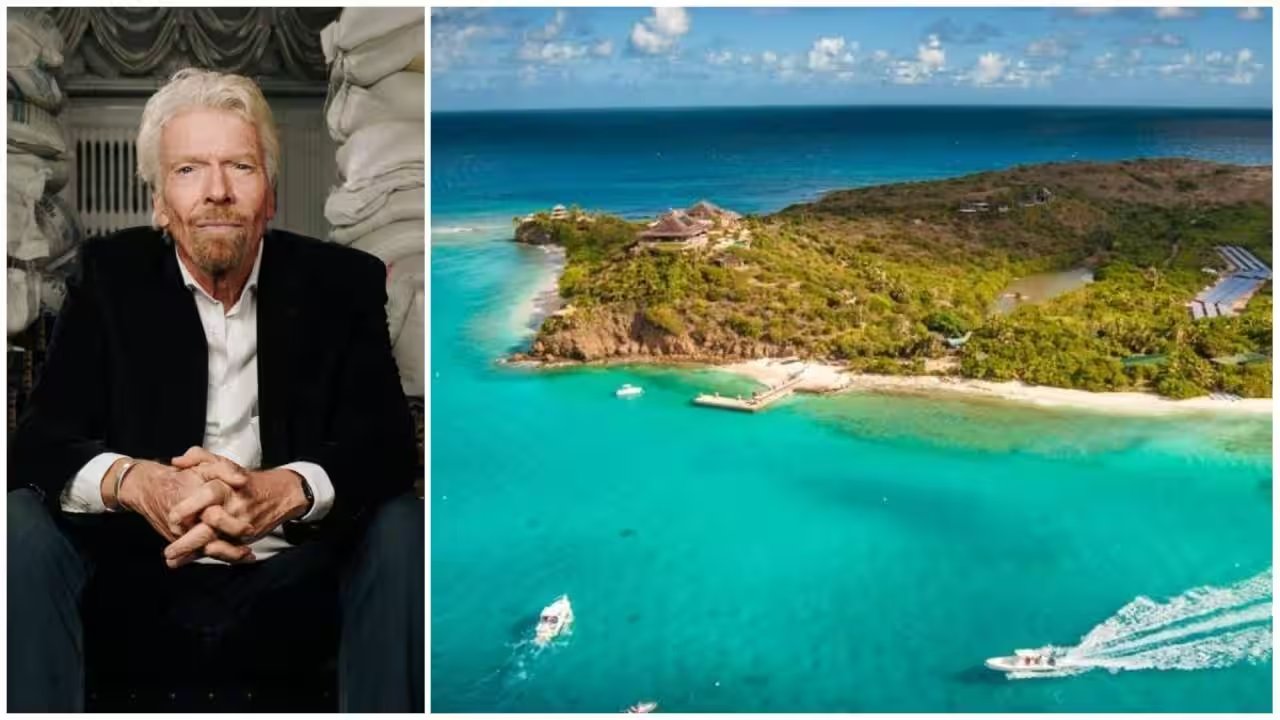
The deal closed in 2007. Richard Branson paid $15 million for 125 acres of coastal real estate in the British Virgin Islands. This acquisition, known as Moskito Island, sits just two miles from his earlier purchase, Necker Island. Unlike Necker, which remains a private resort, Branson divided Moskito into ten residential lots. He sold nine of them. The result is a gated community of the ultra-wealthy.
This second purchase contrasts sharply with the chaotic origin of his first island. In 1978, a young Branson, still building Virgin Records, attempted to buy Necker Island to impress his girlfriend, Joan Templeman. He offered $100,000 against a $6 million asking price. The realtor rejected the bid. Branson returned a year later with a $180,000 offer, which the seller accepted on the condition that a resort be built within four years. That gamble transformed a flimsy romantic gesture into a cornerstone of his global brand.
Moskito Island, however, was a calculated expansion. Branson began developing the property in the mid-2010s. He marketed the ten lots to select buyers, creating a shared ownership model. The island now hosts nine private families. Among them are Erika Hammond and her husband Ankur Jain, discussed on Real Housewives of New York, and Paul Salem, chairman of MGM Resorts. Also present are tech entrepreneurs Michael and Xochi Birch. The residents jointly maintain the beaches and common areas, blending private luxury with communal stewardship.
The distinction between the two islands defines Branson’s Caribbean footprint. Necker Island operates as a hospitality asset, available for exclusive hire or individual room bookings on select dates. Moskito functions as a residential estate. This split allows Branson to leverage the brand recognition of Necker while maintaining a private sanctuary on Moskito. The strategic separation maximizes both commercial revenue and personal seclusion.
Branson describes the 1978 Necker purchase as one of his best decisions, a move driven initially by love. The 2007 Moskito deal, by contrast, reflects a matured business strategy focused on asset diversification within a controlled environment. As the 2020s progress, the island’s exclusivity remains its primary value proposition. Future developments on the island will likely follow the established pattern of low-density, high-value residential use, with no indication of commercial resort expansion on the Moskito property itself.