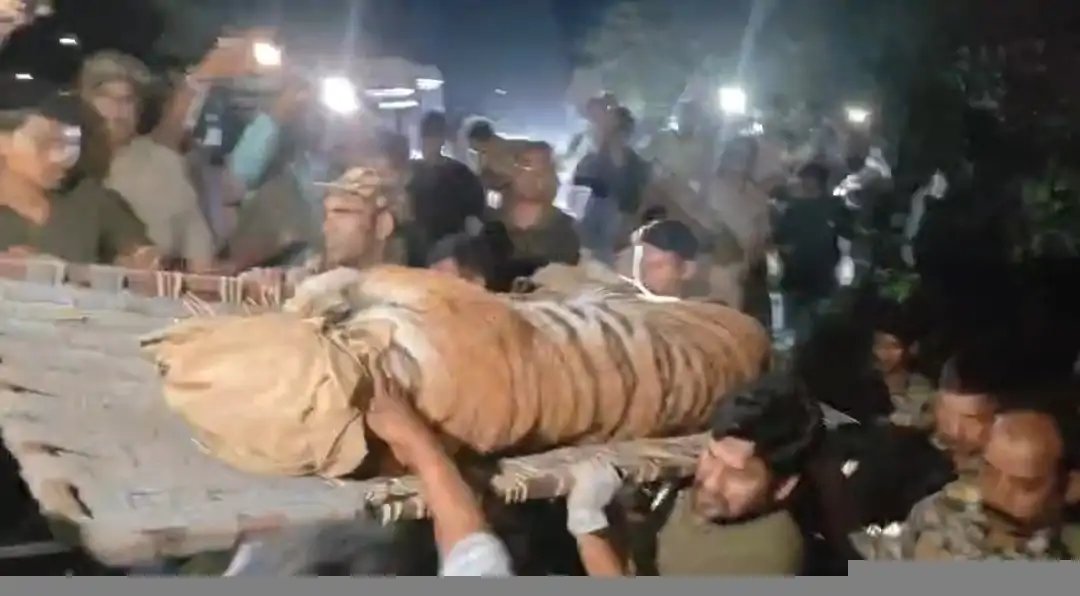
The tigress known as 'Duwar Rani' is back home. West Bengal and Assam forest officials tranquilized BT1 on Wednesday at Gilaguri village under Dotma in Kokrajhar, ending a tense standoff that had local residents on edge for days. The operation required three elephants and three JCB machines to secure the area, a logistical feat that highlighted the sheer scale of managing large predators in human-dominated landscapes.
BT1 wasn't always a problem. The forest department released her into the wild at Buxa Tiger Reserve on October 2, 2026. She didn't stay put. The tigress pushed over 100 kilometers across state lines, passing through Assam’s Raimona National Park before drifting south into Kokrajhar. By October 23, she was close enough to human settlements that the risk of conflict became unavoidable.
Assam Environment and Forest Minister Jayanta Mallabaruah issued a statement praising the joint effort. He called it a "commendable example of inter-state coordination," a phrase that sounds bureaucratic but carries weight in a region where wildlife doesn't respect political maps. The district administration, police, and local communities monitored her movements closely, a collaborative watch that prevented what could have been a tragedy.
The tigress has been transported back to West Bengal. For the families in Kokrajhar who lived under the shadow of a predator for weeks, the relief is palpable. But the incident underscores a growing reality: as forest corridors shrink, animals like BT1 are forced to roam further, making cross-border conservation not just an ideal, but a necessity for public safety.