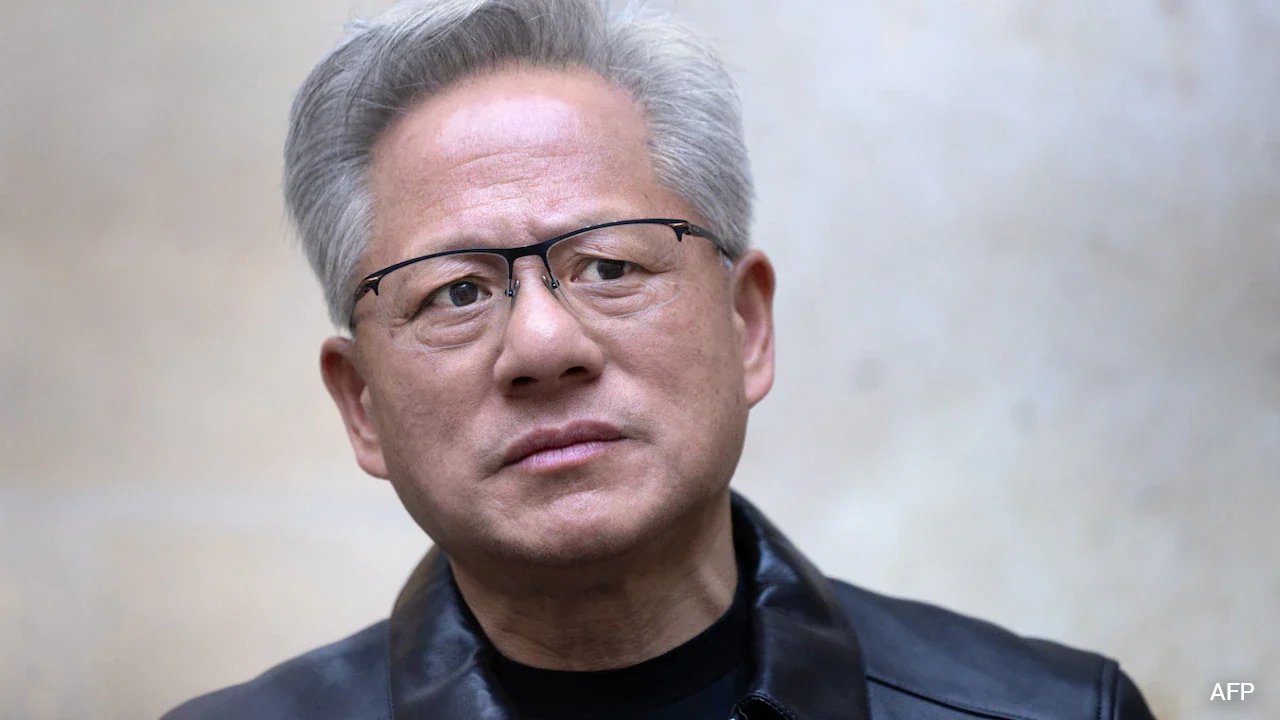
Nvidia’s board of directors has launched an internal probe into co-founder and chief executive Jensen Huang following United States intelligence warnings over an extramarital relationship with an alleged Chinese operative.
Huang acknowledged the infidelity on Sunday, declaring he was "deeply sorry" for breaking faith with his family. The scandal hit fast. Intelligence assessments indicate the 63-year-old chief grew intimately close to Alice Huang, a Singapore-based data center executive suspected of funneling sensitive technological information to Beijing. Despite sharing a surname, the two are unrelated.
Yet the national security fallout extends straight to Washington. Huang has served as an informal artificial intelligence advisor to Donald Trump, securing unprecedented geopolitical proximity that included traveling alongside the US president aboard Air Force One during an official trip to Beijing earlier this year. That direct corridor between high-level statecraft and the commercial helm of the world's primary artificial intelligence architect has rattled federal oversight bodies.
The stakes are immense.
Nvidia currently anchors a staggering $4.5 trillion valuation, driven by insatiable global demand for its graphics processing units. Huang himself holds an estimated personal fortune of $160 billion through his roughly four percent equity stake, commanding stadium-sized audiences across global tech capitals in his trademark black leather jacket.
| Corporate Parameter | Metric / Details |
|---|---|
| Market Capitalisation | $4.5 Trillion |
| CEO Equity Ownership | Approximately 4% Stake |
| Huang Estimated Net Worth | ~$160 Billion |
| Core Product Architecture | Graphics Processing Units (GPUs) |
| Corporate Establishment | 1993 (Diner founding, Silicon Valley) |
Born Jen-Hsun Huang in Taipei in 1963, the semiconductor pioneer built his empire from scratch. Sent at age nine to a reform boarding school in rural Kentucky after his Taiwanese parents mistook it for an elite academy, he cleaned bathrooms, confronted relentless bullying, and learned English before reuniting with his family in Oregon. He graduated from university at 20, designed microprocessors at AMD and LSI Logic, and eventually founded Nvidia inside a Silicon Valley diner in 1993 alongside two engineering partners.
Had he played it safe, Nvidia would have remained a niche PC gaming component vendor. Instead, the company rolled out the first commercial GPU in 1999, positioning itself precisely at the crossroads of video game graphics, cloud server networks, and the current generative AI boom powering tools like ChatGPT.
But inside corporate headquarters, colleagues know him as a demanding taskmaster. Former senior deputies describe a leader protective of his rank-and-file engineers yet ruthless toward strategic blunders, capable of shredding executive presentations to pieces over minor miscalculations. He has consistently dismissed urgent calls from external tech critics demanding a moratorium on advanced machine learning architectures, insisting engineering labs must accelerate deployment while ensuring end-product safety.
The board's governance review now proceeds behind closed doors, with directors examining internal communications, external meetings, and data protocols to determine whether corporate proprietary assets or state secrets faced exposure during the relationship.