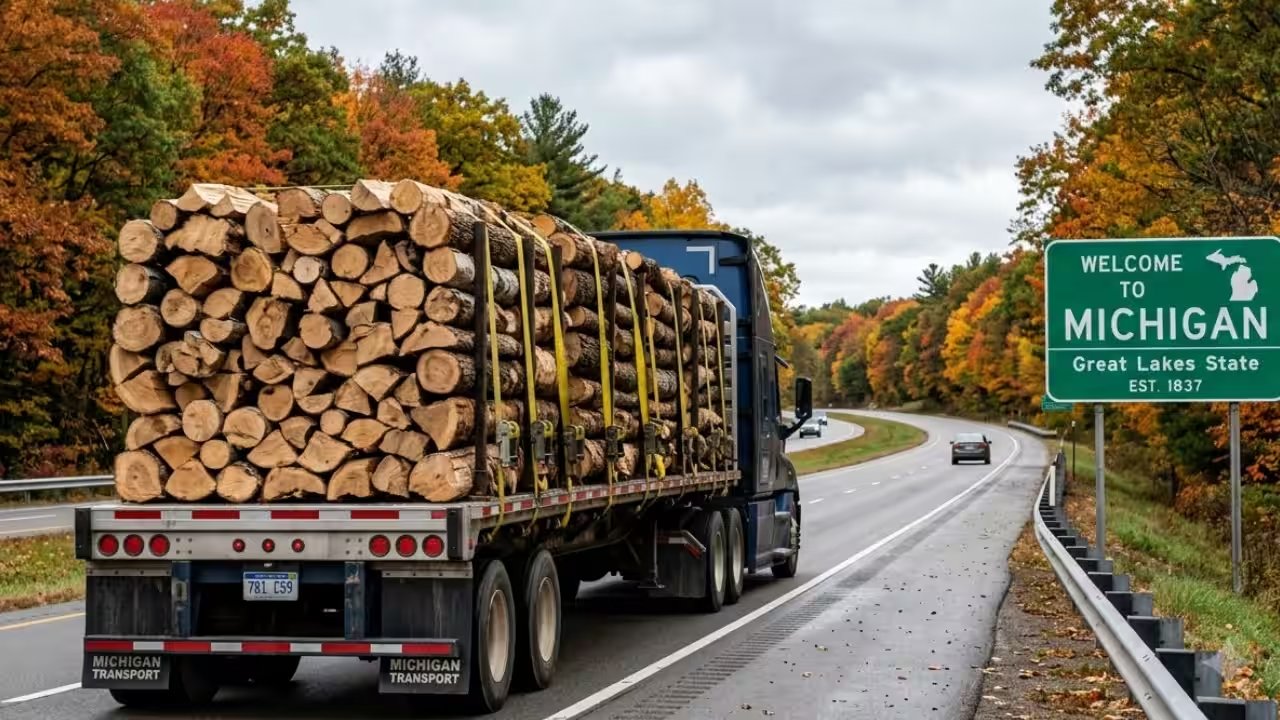
The Michigan Department of Agriculture and Rural Development announced a new quarantine that will ban untreated firewood brought into the state from outside, effective Jan. 1, 2027. The rule targets more than 140 plant pests and diseases that hitch rides in hidden insects and microscopic pathogens.
But Michigan’s forests have already paid the price. The emerald ash borer, a beetle that has killed an estimated 60% to 75% of ash trees, is just one of the invasive threats that the state fears could spread unchecked if firewood moves freely across borders. Emily Silver from Michigan State University’s Forestry Department warned that weakened trees are far less able to cope with drought or heat once infested.
The new regulation requires imported firewood to undergo heat treatment that brings the core temperature to at least 140 °F (60 °C) for 60 consecutive minutes, and the treatment must be certified by MDARD, another state’s agriculture department or the USDA. Drying alone does not meet the requirement because it does not guarantee the internal temperature threshold.
From 2027 to 2027, enforcement will focus on public awareness, but the first enforcement actions will begin on Jan. 1, 2028. Violators will receive warning letters, and repeat offenses could trigger fines ranging from $1,000 to $10,000. Those who voluntarily report a violation may be penalized up to $500.
Michigan is urging residents to buy firewood locally—ideally within 10 miles of its intended use—and to leave any unused wood at that site rather than transporting it elsewhere. The state also launched a voluntary Invasive-Free Firewood Certification Program, allowing producers who meet treatment standards to display a "Certified Invasive-Free" seal.
Other states such as Minnesota, New York and Wisconsin already enforce similar rules, but Michigan’s focus on out-of-state imports marks a new level of precaution. Enforcement officials say the next step is a statewide rollout of the certification system and the first warning letters issued in 2028.