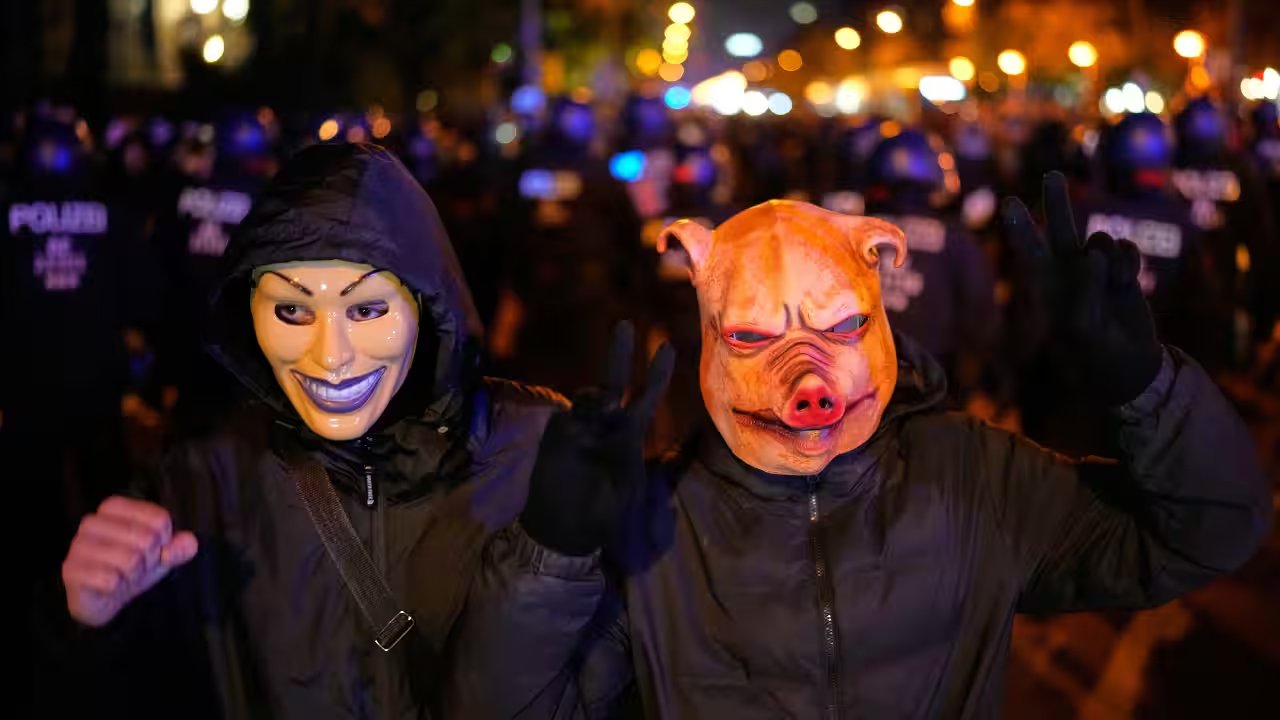
Thousands of young people flooded the streets of 34 German cities on Saturday, but the energy shifted sharply from policy demands to property destruction as night fell. The 'GenZ regelt!' (Gen Z takes charge) movement targeted rising living costs and military spending, yet in Frankfurt, Cologne, and Berlin, the mood curdled into chaos. Rioters smashed windows, looted goods, and threw petrol bombs at security forces, transforming a youth-led rally into a public order crisis.
The violence was most severe in Frankfurt, where masked assailants targeted a gun store, a perfume shop, and a trainer outlet, according to the German daily Bild. Police utilized water cannons and pepper spray to disperse crowds that hurled stones and fireworks at emergency workers. One officer sustained injuries in Frankfurt, while others were attacked in Bonn and Berlin. The federal interior ministry had predicted this escalation, warning that foreign-linked extremist groups were attempting to hijack the movement.
Roman Poseck, the interior minister of Hesse, condemned the turn of events, labeling the behavior "shameful." He identified approximately 100 left-wing extremists among the Frankfurt crowd, drawing a direct line to the unrest seen in France. "France must not be held up as a model in this regard," Poseck told Reuters, citing fears of burning vehicles and systemic attacks on police. Businesses along Berlin's Kurfuerstendamm had boarded up windows in anticipation of such scenes.
The 'GenZ regelt!' organizers distanced themselves immediately, stating that anti-constitutional symbols and hate speech have no place in their demonstrations. The core grievances remain economic and structural: opposition to the return of compulsory military service, dissatisfaction with school infrastructure, and frustration over pension system pressures on the working-age population. For many participants, the fight is about who bears the financial burden of Germany's demographic decline.
Police are now investigating the looting and assaults, with arrests already made in Frankfurt. The federal government faces mounting pressure to address the underlying economic anxieties driving this demographic to the streets. Without a concrete response to the cost-of-living crisis, the next wave of protests could prove even harder to contain.